
Lophodermium needle cast
Lophodermium foliicola
Description
Symptoms
Initial symptoms include the appearance of yellow-brown spots on the needles, which eventually expand to cover the entire needle surface.
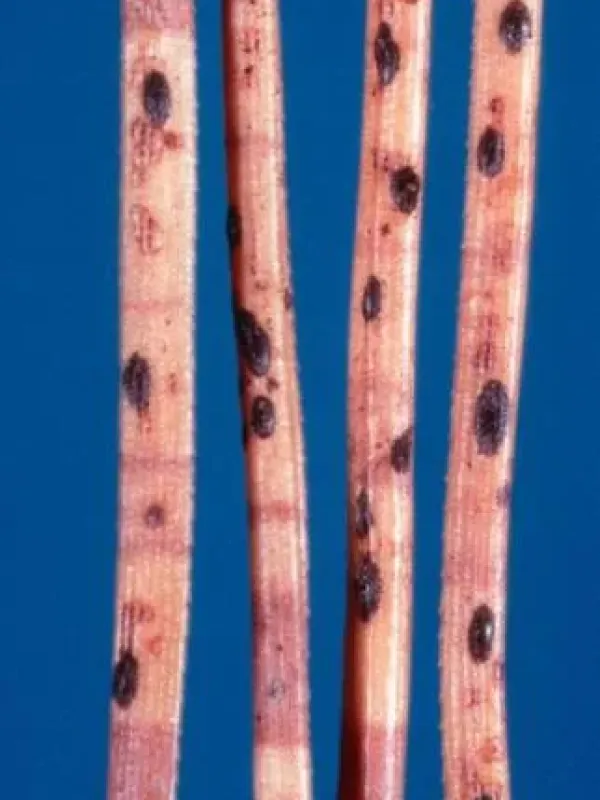
A distinctive sign is the development of transverse black lines across the width of the needles, caused by the fungal mycelium.
Needles turn brown, lose their luster, and fall prematurely, often resulting in a sparse and unhealthy appearance of the branch.
In cases of severe infestation, entire branches or even the entire crown of the tree may turn brown and wither within a few months.
Affected trees may exhibit stunted growth, as the loss of photosynthetic area severely impacts the plant's metabolic capacity.
Pathogen
The disease is caused by the fungus Lophodermium foliicola (often identified as part of the Lophodermium pinastri complex), an ascomycete that specifically targets pine needles.
The fungus produces apothecia, which appear as small, shiny black, oval-shaped structures on the surface of infected pine needles.
Ascospores are released from these fruiting bodies during periods of high humidity and rainfall, primarily in late summer and autumn.
The pathogen overwinter within the needles, allowing it to survive in the forest litter and reinfect the canopy the following season.
This fungus is particularly aggressive in nurseries where young, succulent needles provide a perfect host for infection.
Conditions for development
High relative humidity and frequent rainfall are the primary factors that favor the germination and spread of Lophodermium spores.
Temperatures ranging from 15°C to 20°C in the presence of moisture create an optimal environment for infection development.
Poor air circulation in dense plantations significantly increases the duration of needle wetness, promoting rapid pathogen proliferation.
Trees that are under stress from environmental factors, such as drought or nutrient deficiency, are much more susceptible to the disease.
Late-season rainy spells significantly increase the inoculum pressure for the next growing cycle.
Why it matters
Lophodermium needle cast can cause widespread mortality among young pine seedlings, leading to significant economic losses in silviculture.
By causing premature defoliation, the disease weakens the host tree, making it vulnerable to secondary infestations by bark beetles and other borers.
The reduction in photosynthetic capacity leads to reduced growth rates and poor vitality of the stands.
In landscaping and ornamental settings, the disease causes severe aesthetic damage, rendering trees unsuitable for public areas.
Repeated annual infections can lead to the slow decline and eventual death of older trees in susceptible species.
Protection
The most effective management strategy involves sanitation practices, such as removing and destroying fallen needles to reduce the inoculum load.
Chemical control with fungicides, particularly those containing active ingredients like copper or triazoles, should be applied during the infection window.
Ensuring proper spacing between plants in nurseries helps to reduce humidity levels and improves natural ventilation.
Promoting tree health through proper fertilization and watering can improve natural resistance to the pathogen.
- Regular monitoring of pine plantations for early signs of needle discoloration.
- Applying preventive fungicides at the peak of spore release seasons.
- Selecting resistant varieties when planting new forest areas or gardens.
Discussion
No discussions yet — be the first.