
Lophodermium needle cast
Lophodermium durilabrum
Description
Symptoms
Initial symptoms include the appearance of yellow spots on the needles, which eventually turn brown. The needles often show a mottled appearance before full browning occurs.
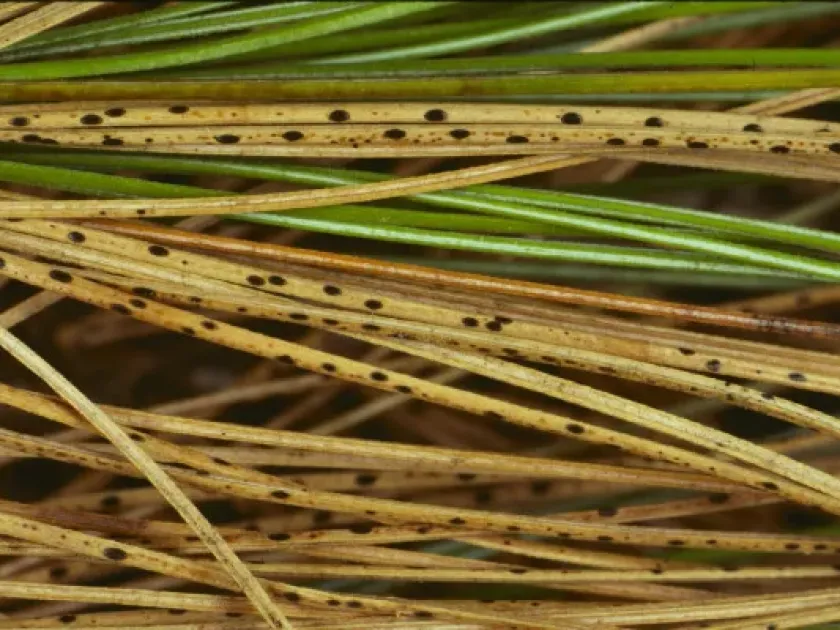
The most diagnostic feature is the presence of distinct black, transverse lines on the infected needles. These lines are associated with the developing fruiting bodies of the fungus.
Premature needle cast is a hallmark of the disease. In severe cases, the needles turn reddish-brown and shed well before their natural lifespan ends, leaving the branches bare.
Infections typically start in the lower part of the tree canopy. This is because the microclimate near the forest floor is usually more humid and shielded from direct sunlight.
Needles may remain on the tree for some time after they have died, creating a striking visual contrast between healthy green foliage and the discolored, blighted branches.
Pathogen
The causal agent is the ascomycete fungus Lophodermium durilabrum (often associated with the Lophodermium pinastri complex). It primarily targets various pine species, especially in nurseries and young plantations.
The fungus is a specialized parasite that completes its life cycle on pine needles. During the winter, it persists as mycelium within infected needles, producing fruiting bodies in the spring.
The fruiting bodies, known as apothecia, are small, black, elongated structures that develop on the needle surface. When mature, they split open under moist conditions to release spores into the air.
Spores are disseminated primarily by wind and rain splashes. They require a film of moisture on the needle surface to germinate and penetrate the host tissue through the stomata.
The biological success of the pathogen is highly dependent on humidity levels. Persistent dampness in the lower canopy creates an optimal environment for the colonization of needles.
Conditions for development
Extended periods of cool, wet weather, especially in late summer and autumn, provide the perfect conditions for spore germination and widespread infection of new needles.
Dense plant spacing in forest nurseries significantly increases the risk of infection. Poor air circulation prevents needles from drying out, allowing the fungus to thrive.
Sites with heavy shade and poor drainage are particularly susceptible. The accumulation of fallen needles (litter) serves as a persistent reservoir for the pathogen.
Tree stress, whether from poor soil quality, drought, or insect damage, weakens the host's natural defenses, making it easier for the fungus to establish itself.
Conversely, sunny, dry, and well-ventilated conditions are unfavorable for the fungus, as they limit the duration of moisture needed for spore development.
Why it matters
The disease causes significant mortality in nursery seedlings, leading to high economic losses for forest restoration projects and the horticultural industry.
In young plantations, repeated defoliation weakens trees significantly, making them more prone to opportunistic pests, such as bark beetles and stem borers.
Persistent infection results in reduced annual growth increments, stunted development, and in some cases, the total death of young saplings over a few seasons.
The aesthetic value of ornamental pine trees is severely degraded by needle cast, which ruins the dense, healthy appearance typical of vibrant conifers.
Management of the disease requires intensive efforts, including sanitation and chemical controls, which increase the overall costs of maintaining healthy tree populations.
Protection
Effective management begins with strict sanitation practices, such as removing and destroying fallen needles to break the pathogen's lifecycle and reduce spore load.
Improving air circulation is crucial. In nurseries, this means maintaining optimal plant spacing and controlling weeds to ensure the canopy dries quickly after rain.
Fungicide treatments, particularly those containing copper or systemic active ingredients, can protect healthy foliage if applied at the correct time during the sporulation period.
Selecting resistant pine species and varieties is the most sustainable approach for long-term plantations, reducing the need for continuous chemical intervention.
- Pruning lower branches to increase airflow around the base of the tree.
- Ensuring proper soil drainage in planting sites.
- Applying preventive fungicides during high-risk humid months.
- Monitoring nursery stock regularly to identify and remove infected plants early.
Discussion
No discussions yet — be the first.