
Lophodermium needle cast
Lophodermium canberrianum
Description
Symptoms
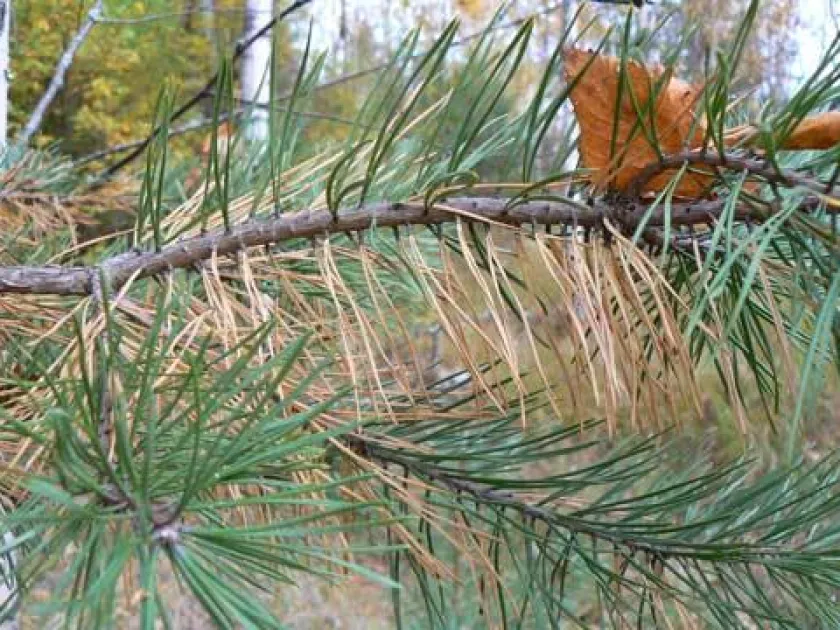
Initial symptoms include the yellowing of needles, which typically occurs in late summer or early autumn. These needles then gradually turn a reddish-brown or dull brown color.
A distinctive feature of the disease is the presence of thin, black, horizontal lines across the needle surface. These marks indicate zones of fungal activity and tissue colonization.
Upon closer inspection, small, black, elongated fruiting bodies (apothecia) appear on fallen or dead needles. These structures are most noticeable when they swell after rainfall.
Heavy infections result in premature needle shedding, leaving the tree with sparse foliage. In severe cases, the branches may appear almost bare, which significantly weakens the overall vitality of the tree.
The lower branches of the pine trees, which have less airflow and higher relative humidity, are usually the first parts of the plant to show signs of significant infection.
Pathogen
The disease is caused by an ascomycete fungus of the order Rhytismatales. Its life cycle involves the formation of apothecia, which are small fruiting bodies appearing on the infected needles.
The fungus overwinters in the needles on the forest floor, where it continues to develop. When environmental conditions become favorable, spores are released and dispersed by wind or splashing rain to new healthy needles.
Upon infection, the mycelium grows through the stomata and colonizes the internal tissues of the needle. This activity disrupts the plant's metabolic processes and leads to the eventual death of the needle tissue.
The biology of this pathogen is strictly tied to moisture levels. The fungus requires persistent humidity to form successful infection structures and to complete its reproductive cycle effectively.
Accurate identification of the fungus often requires microscopic examination of the apothecia, as many Lophodermium species share similar morphological characteristics.
Conditions for development
High relative humidity and frequent rainfall are the primary factors that trigger outbreaks. The fungus flourishes during periods when the canopy stays wet for extended durations.
Dense, overcrowded planting sites restrict air movement and slow down the drying process of needles. These microclimates provide perfect conditions for spore germination and fungal growth.
Shaded environments, such as those found in dense forest understories or poorly managed nurseries, stay damp for longer periods, which increases the likelihood of a major infestation.
Weakened trees that are already suffering from nutritional deficiencies or drought stress are more susceptible to the fungal invasion compared to healthy, vigorously growing specimens.
The ideal temperature range for fungal propagation and the development of the mycelium is generally between 15°C and 22°C, which coincides with the autumn growth season of the fungus.
Why it matters
Lophodermium needle cast causes devastating damage in forest nurseries, where entire crops of young seedlings can be lost if not treated promptly, leading to significant economic losses.
In mature forest stands, the disease causes growth inhibition due to the loss of photosynthetic tissue. It also predisposes trees to secondary attacks by bark beetles and other wood-boring insects.
The premature loss of needles drastically reduces the aesthetic value of pines, making them unsuitable for landscaping or urban forestry purposes where appearance is a priority.
Chronic infection drains the tree's energy reserves, leaving it less capable of surviving extreme winter conditions or surviving periods of severe drought in subsequent years.
The cumulative effect of continuous defoliation is a significant decline in wood production and can eventually result in the dieback of entire sections of the forest stand.
Protection
The first line of defense is proper forest management, which includes removing and destroying infected fallen needles to eliminate the primary sources of fungal inoculum.
In nursery settings, timely application of systemic or contact fungicides is essential. Treatment programs should be timed to coincide with peak spore dispersal periods.
Maintaining appropriate tree spacing is crucial to ensure good ventilation and rapid drying of the canopy, which makes the environment inhospitable for the development of fungal spores.
Regular monitoring and site scouting help in the early detection of the disease, allowing for localized treatments before the infection has the chance to spread throughout the stand.
Ensuring that pines are planted on suitable, well-draining sites with adequate light exposure is a key preventative measure for building resistant and healthy forest stands.
Discussion
No discussions yet — be the first.