
Lophodermium needle cast
Lophodermium australe
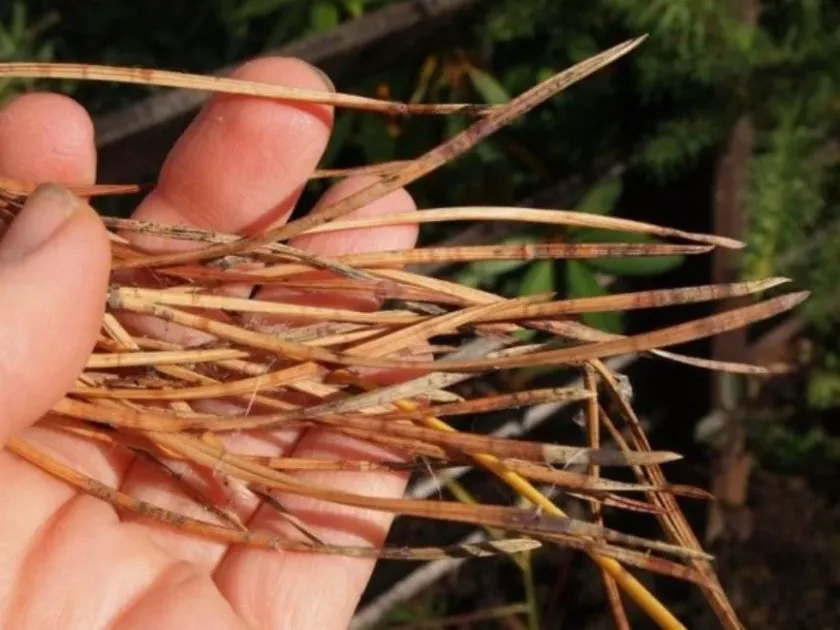
Description
Symptoms
Initial symptoms include the appearance of yellow spots on the needles, which eventually transition into necrotic brown or reddish-brown lesions.
As the disease progresses, the entire needle may turn brown or grey, leading to premature needle drop throughout the lower portion of the canopy.
Diagnostic signs include the presence of small, black, oval-shaped apothecia on the surface of fallen needles, which appear during moist conditions.
The infection usually starts from the lowest branches and spreads upwards, creating a visible gradient of damage within the tree's foliage.
In severe cases, the tree may lose a significant portion of its needles, leading to a thinning appearance and overall loss of vitality.
Pathogen
The disease is caused by the fungus Lophodermium australe, an ascomycete pathogen that primarily targets various species of pine trees.
The life cycle involves the formation of fruiting bodies called apothecia, which develop on the surfaces of infected, dying, or dead pine needles.
This fungus survives within the needle tissues, actively disrupting plant metabolism and leading to the eventual death of the affected parts.
The pathogen is highly specialized and utilizes the needles as a substrate for both nutrient acquisition and reproduction throughout the season.
Environmental conditions dictate the timing of spore release, which is critical for the infection of new, healthy needle growth.
Conditions for development
Lophodermium needle cast thrives in environments characterized by high humidity, prolonged rainfall, and moderate temperatures.
Dense planting schemes that lack proper air circulation prevent needles from drying out, creating the perfect environment for fungal colonization.
Trees that are already stressed by poor soil quality, drought, or nutrient deficiencies are significantly more susceptible to infection outbreaks.
Spore dispersal occurs primarily via wind and water splashing, facilitating the rapid spread of the fungus among closely spaced trees.
The presence of infected needle litter beneath the tree provides a persistent inoculum source for future infection cycles in subsequent years.
Why it matters
The primary impact of this disease is the degradation of the aesthetic value of ornamental pines and the reduction of tree growth rates.
In nursery settings, Lophodermium can cause widespread seedling mortality, resulting in significant commercial losses for growers.
Severe and chronic infections weaken the tree, leaving it highly vulnerable to secondary pests such as bark beetles and wood-boring insects.
Long-term defoliation reduces the photosynthetic capacity of the tree, hindering its ability to withstand environmental stress and winter frost.
Without intervention, heavily infested trees may suffer from complete canopy dieback, ultimately leading to the death of the entire specimen.
Protection
Sanitation is the most effective management strategy; this involves removing and disposing of fallen needles to eliminate the fungal reservoir.
Ensuring proper spacing and selective pruning of branches improves air circulation, which helps keep the foliage dry and inhibits fungal growth.
Applying preventative fungicide treatments during the spring and early summer can protect new needles from initial infection during spore release.
Maintaining tree vigor through appropriate fertilization and water management helps boost natural defenses against the pathogen.
- Remove and destroy fallen, infected needle debris.
- Prune branches to improve airflow and drying.
- Use copper-based or systemic fungicides as a preventative.
Discussion
No discussions yet — be the first.