
Lophodermium needle cast of rowan
Lophodermium aucupariae
Description
Symptoms
Early symptoms appear as small, chlorotic yellow or light-brown spots scattered across the surface of the rowan leaf blades.
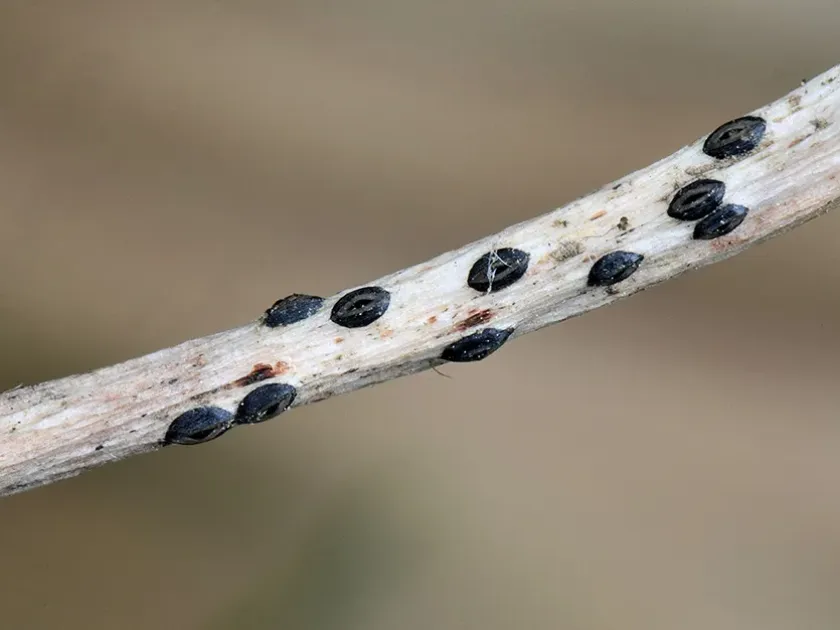
A distinctive diagnostic feature is the development of small, elongated black lines, which are the fruiting bodies of the fungus, arranged linearly on the leaves.
As the disease progresses, these spots expand, leading to the browning and eventual death of the affected leaf tissues.
Premature leaf drop is a classic sign of severe infection, often leaving the rowan tree sparse and struggling mid-season.
Under magnification, one can observe the characteristic dark fruiting structures (apothecia) on the lower or upper surfaces of the necrotic leaf areas.
Pathogen
The causative agent of this disease is the ascomycete fungus Lophodermium aucupariae, which specializes in parasitizing the foliage of Sorbus species.
The fungus overwinters as mycelium and fruiting bodies within the tissues of fallen leaves, which act as a reservoir for infection in the spring season.
During wet weather, the mature fruiting bodies release spores into the air, which are then carried by wind and rain droplets to healthy leaves.
Once settled on a leaf, the fungal spores germinate and penetrate the tissue, beginning the colonization process that leads to necrotic spots.
The pathogen's life cycle is strictly dependent on climatic factors, with high humidity serving as the primary driver for its rapid development and spread.
Conditions for development
Prolonged wet weather and high atmospheric humidity during the spring and summer are the most favorable conditions for Lophodermium aucupariae.
Overcrowded plantings that lack proper airflow prevent leaves from drying quickly after rain, which creates an optimal incubation environment for the fungus.
Poorly maintained sites with accumulated leaf debris provide a continuous source of inoculum, fueling the infection cycle year after year.
Shaded areas within the garden, where moisture persists longer, are typically the first to show signs of a severe outbreak.
Trees that are already stressed due to drought, poor soil fertility, or insect infestation are significantly more susceptible to the initial fungal colonization.
Why it matters
The primary damage is caused by the premature loss of foliage, which reduces the tree's photosynthetic capacity and weakens its physiological condition.
Because the tree cannot store enough nutrients before dormancy, its winter hardiness is compromised, leading to frost damage during severe winters.
Infection results in reduced annual shoot growth and lower aesthetic value, which is particularly concerning for decorative ornamental rowan trees.
Chronic infection weakens the tree's immune system, making it more prone to secondary infections by other pathogens and attack by wood-boring insects.
In nurseries, this disease can cause significant economic losses by reducing the growth rate and quality of the planting stock.
Protection
Sanitation is the most critical management practice, requiring the collection and disposal of all fallen leaves to destroy the pathogen's overwintering sites.
Implementing a proper pruning schedule helps improve air circulation and light penetration throughout the crown, reducing the duration of leaf wetness.
Preventive application of fungicides, particularly copper-based formulations, in the spring can effectively protect young leaves from infection.
Balanced fertilization, particularly with potassium, helps strengthen the tree's cuticle and leaf tissues, making them more resistant to fungal penetration.
In cases of severe outbreaks, systemic fungicides applied during the growing season can help control the spread and allow the tree to recover.
Discussion
No discussions yet — be the first.