
Pine needle cast
Lophodermella sulcigena
Description
Symptoms
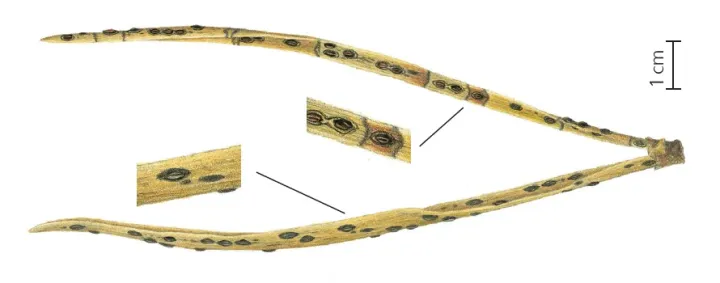
The primary symptom of pine needle cast is the premature yellowing and browning of current-year needles. Initial signs typically appear in late summer as scattered yellow spots along the needle surface.
As the infection progresses, the needles turn a dull greyish-brown or reddish-brown color. A sharp, distinct margin usually separates the healthy green part of the needle from the necrotic, infected tissue.
By the following spring, small, elongated black fruiting bodies known as hysterothecia develop on the dead portions of the needles. These appear as tiny, narrow lines running parallel to the needle axis.
During wet weather, these fruiting bodies absorb moisture and release spores, which are then dispersed by wind and rain splashes to new growth. Severely infected trees often take on a scorched, rusted appearance.
Unlike some other needle cast diseases, the infected needles often remain attached to the branches for a significant time, which contributes to the prolonged visual decline of the tree.
Pathogen
The causative agent of this disease is the ascomycete fungus Lophodermella sulcigena. It is a specialized pathogen that primarily targets species within the genus Pinus.
The life cycle of the fungus is characterized by the production of ascospores within the fruiting bodies formed on the needles. This allows the pathogen to survive during winter months within fallen needles.
Ascospores are released in early summer, coinciding with the development of new needles, which are the most susceptible tissue for colonization. High humidity is a critical trigger for the spore release mechanism.
Upon landing on a susceptible needle, the fungal spores germinate and penetrate the host tissue. The mycelium grows intercellularly, eventually causing the collapse of mesophyll cells and needle tissue death.
The specificity of the pathogen means that it often causes localized outbreaks in stands where environmental conditions favor fungal growth and spore dispersal.
Conditions for development
Persistent wet weather and moderate temperatures are the most favorable conditions for the development of Lophodermella sulcigena. Prolonged rainfall in early summer promotes high infection rates.
Dense plantations with limited air circulation provide a stable, humid microclimate that allows spores to thrive and infect needles more effectively. Poor ventilation is a major risk factor.
Trees stressed by drought, nutrient deficiencies, or soil compaction are generally more susceptible to infection. A healthy, vigorous tree is better equipped to resist the initial stages of fungal colonization.
The presence of old, infected needles beneath the canopy serves as a primary inoculum source. Accumulation of needle debris creates a reservoir that fuels the disease cycle year after year.
Environmental stressors, including industrial air pollution and high concentrations of ozone, can weaken the pine trees, making them more vulnerable to fungal pathogens like needle cast.
Why it matters
The main impact of pine needle cast is the premature loss of foliage, which reduces the photosynthetic capacity of the tree. This depletion of energy reserves leads to stunted growth and reduced vigor.
Chronic infection weakens the overall health of the tree, making it significantly more susceptible to secondary pests, such as bark beetles, which can ultimately lead to tree mortality.
In nurseries, the disease can cause devastating losses, potentially killing young seedlings before they reach a plantable age, which represents a significant economic blow to forestry operations.
In landscape and ornamental settings, the aesthetic value of the trees is severely compromised. Defoliated and brown-crowned pines are unattractive and often perceived as dying or neglected.
Widespread outbreaks in forests lead to reduced timber increment and lower quality wood production. The cumulative effect of annual foliage loss hinders the economic viability of pine forest management.
Protection
Sanitation is the cornerstone of management. Removing and destroying infected fallen needles helps to break the disease cycle and reduce the inoculum load in the plantation.
Ensuring proper spacing between trees is essential to improve airflow and reduce the duration of needle wetness. This is a critical preventive measure in nursery and forest stand establishment.
Chemical control, including the application of copper-based fungicides or systemic triazoles, may be utilized in high-value ornamental trees or nursery settings during the early summer.
Proper silvicultural practices, including balanced fertilization, help maintain tree vigor. Avoiding excessive irrigation that keeps the canopy wet can also help limit disease spread.
- Monitor stands for early symptoms during spring and summer.
- Remove and burn heavily infected seedlings or branches.
- Select resistant pine species for replanting efforts.
- Use appropriate fungicides if the disease threshold is exceeded.
Discussion
No discussions yet — be the first.