
Lophodermella orientalis
Lophodermella orientalis
Description
Symptoms
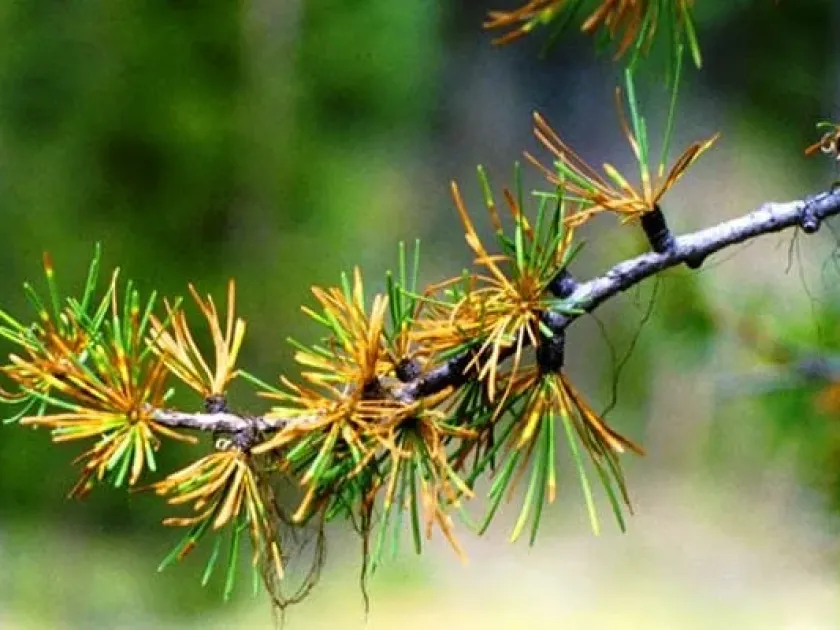
The primary symptom is needle discoloration, appearing as yellowish or reddish-brown patches that gradually spread across the entire needle surface.
Small, dark, elongated spots or bands appear on the needles, representing the developing fruiting bodies of the fungus visible to the naked eye.
Premature needle cast is a common indicator of a severe infection, as the tree sheds the dead needles earlier than usual, leading to sparse crowns.
Infected branches exhibit a distinct color difference compared to healthy foliage, often making affected trees easy to spot from a distance.
The boundaries of infected zones on the needles are often blurred, which helps distinguish this disease from other similar fungal needle blights.
Pathogen
The disease is caused by the fungus Lophodermella orientalis, a member of the Rhytismatales order. This pathogen is a specialized parasite that targets various species of pine trees.
The fungus develops inside the needles, colonizing the tissue and extracting nutrients, which eventually leads to the death of the needles and their premature fall.
Its biological cycle is strictly synchronized with the seasons, involving the production of fruiting bodies called hysterothecia that erupt through the needle surface.
Dispersal is primarily mediated by wind and rain splashes, which facilitate the spread of ascospores to neighboring trees during the growing season.
The pathogen is highly adapted to pine hosts, allowing it to survive in the forest environment by overwintering in fallen debris.
Conditions for development
High humidity and prolonged periods of rainfall are the most critical factors driving the spread and germination of fungal spores.
Dense plantation stands often experience restricted airflow, creating a humid microclimate that significantly favors the development of Lophodermella orientalis.
Moderate temperatures during the spring and summer seasons provide the optimal conditions for the active vegetative stage of the fungal mycelium.
Trees experiencing physiological stress, such as drought or nutrient deficiencies, show increased susceptibility to the colonization of this fungus.
Early spring weather conditions are decisive for the primary infection of new, developing needle flushes, which are most vulnerable at that stage.
Why it matters
The disease significantly hampers the tree's photosynthetic capacity by causing premature loss of its foliage, leading to reduced annual growth.
Persistent infection weakens the overall vigor of the pine, making it highly susceptible to secondary attacks by bark beetles and other borers.
In forest nurseries, the pathogen causes substantial economic losses by ruining the marketability of seedlings and causing mass mortality.
Long-term infestation leads to a decline in timber quality and negatively impacts the aesthetic and ecological value of pine forest stands.
Repeated needle loss over several consecutive years may eventually result in the death of weakened individual trees, contributing to forest stand degradation.
Protection
Management should focus on cultural practices such as pruning and removing infected debris to reduce the overall inoculum load in the plantation.
Plantation density must be optimized to encourage better aeration, which helps keep the foliage dry and suppresses fungal germination.
Chemical control using systemic or contact fungicides can be effective if applied during the critical stages of spore release and development.
- Regular monitoring of tree health to detect early infection outbreaks.
- Ensuring proper soil nutrition to bolster the tree's natural defense systems.
- Using healthy, disease-free nursery stock for all new reforestation projects.
An integrated strategy combining thinning, sanitary cleaning, and targeted fungicide use provides the most reliable protection against this disease.
Discussion
No discussions yet — be the first.