
Pine needle cast
Lophodermella concolor
Description
Symptoms
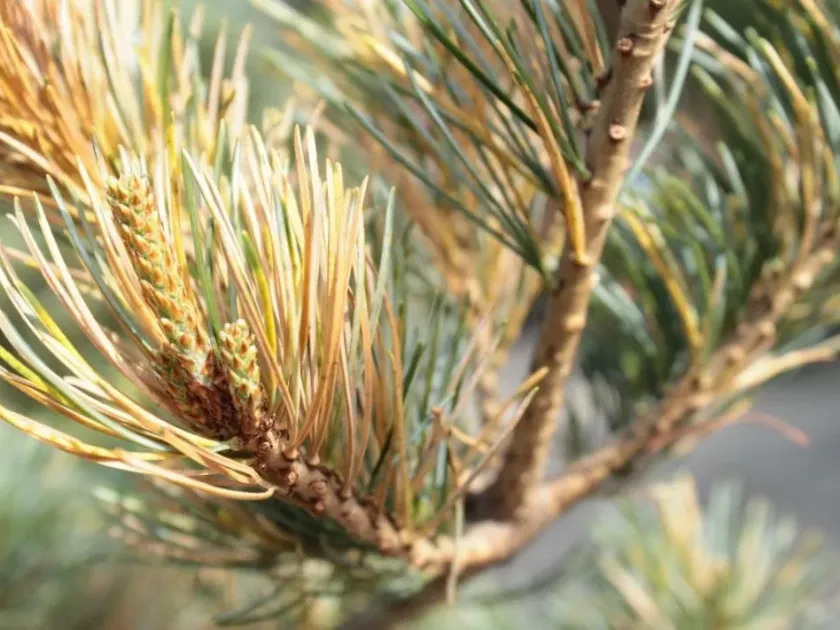
Initial infection manifests as yellow spots on the needles, which eventually enlarge and turn brown as the needle tissues begin to die.
A diagnostic characteristic is the presence of dark, narrow, line-like fruiting structures that develop along the length of the infected needle.
Affected needles lose their flexibility, become brittle, and exhibit a distinct scorched appearance that can impact entire branches.
Premature needle cast is a common observation, particularly affecting the lower crown, leading to significant foliage loss in late summer.
In severe cases, the entire year's foliage can become discolored, leading to a thin crown that lacks the typical density of healthy pine trees.
Pathogen
The disease is caused by the fungus Lophodermella concolor, an ascomycete pathogen specifically targeting pine needles.
The lifecycle involves the production of spores during the summer months, which are disseminated primarily via wind and splashing water.
Upon landing on healthy needles, the spores germinate and penetrate the epidermal tissues, establishing a mycelial network within the needle.
The fungus develops internally, eventually producing black, elongated fruiting bodies known as hysterothecia on the surface of the infected needles.
The pathogen overwinters as mycelium within the infected needles, ensuring its persistence in the environment from one season to the next.
Conditions for development
The spread of Lophodermella concolor is highly dependent on periods of prolonged high humidity and moderate temperatures.
Dense, poorly managed pine stands with limited air movement are particularly susceptible to infection due to the microclimate favorable to fungal growth.
Stressed trees, particularly those suffering from drought or nutrient deficiencies, show a lower capacity to resist the fungal invasion.
Rainy weather during early summer facilitates the dispersal of conidia, allowing the infection to spread rapidly between branches and adjacent trees.
Continuous presence of infected plant debris on the forest floor provides an inoculum reservoir that sustains the disease cycle over multiple years.
Why it matters
The primary impact of the disease is the reduction of the tree's photosynthetic capacity due to premature needle loss, which impairs growth.
Chronic infestation results in stunted height and diameter increment, significantly reducing the economic value of the affected timber.
Weakened trees are significantly more susceptible to secondary attacks by wood-boring insects and other pests that exploit tree stress.
In forest nurseries, this disease can cause high mortality rates among seedlings, leading to substantial financial losses and failed reforestation efforts.
Widespread infection disrupts the health of forest ecosystems, potentially leading to the decline of local pine populations over extended periods.
Protection
Sanitation practices, including the removal and destruction of infected needles and branches, are essential to reduce the inoculum level in the area.
Silvicultural management should focus on maintaining adequate spacing between trees to improve airflow and reduce humidity levels within the canopy.
Fungicidal applications may be necessary in nurseries or high-value stands to protect trees during the critical period of spore dispersal.
- Selection of resistant pine genotypes for planting programs.
- Monitoring of forest health to identify infection hotspots early.
- Implementation of balanced fertilization to support tree vigor.
Integrated pest management strategies that combine cultural, biological, and chemical methods provide the best results for sustainable pine health.
Discussion
No discussions yet — be the first.