
Pine needle cast
Lophodermella arcuata
Description
Symptoms
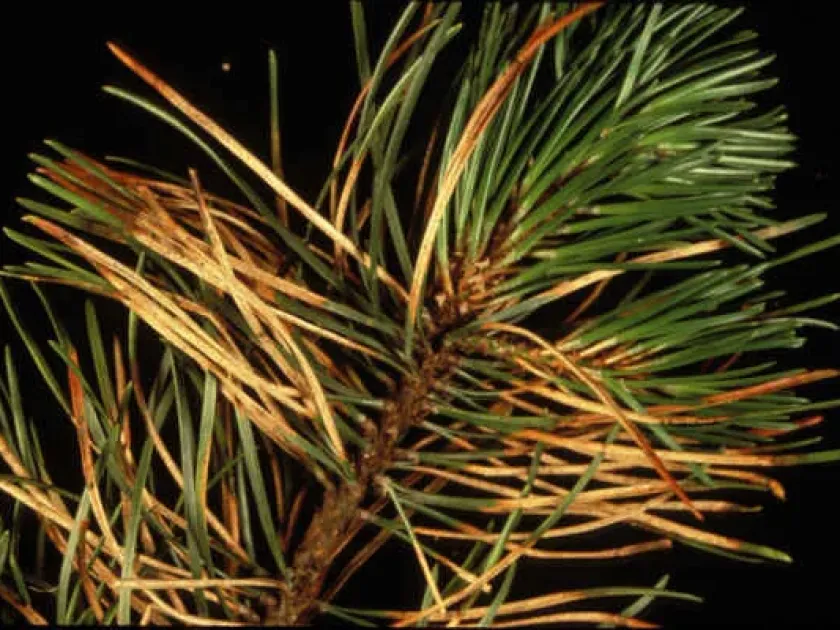
Initial symptoms include the yellowing or browning of needles, which typically starts at the tips and progresses downward towards the needle base over time.
A distinctive feature of Lophodermella arcuata is the characteristic arcuate (curved) shape of the infected needles, which often wither and fall prematurely.
Small, dark, elongated spots or bands are clearly visible on the surface of the infected needles, representing the developing fruiting bodies of the fungus.
The disease typically affects the previous year's needles, resulting in a thin, sparse crown that significantly diminishes the visual aesthetic of the pine trees.
Heavy infections can cause the entire canopy to appear discolored and stressed, especially during the humid spring and early summer months.
Pathogen
The disease is caused by the ascomycete fungus Lophodermella arcuata, which is a specialized pathogen affecting the needles of various pine species.
The life cycle of the pathogen is closely tied to the tree's growing season. Infection begins when spores are released and land on healthy, developing pine needles.
The fungus develops mycelia within the needle tissues, causing significant structural and physiological damage to the host, eventually killing the infected needle tissue.
As the needles die, the fungus produces fruiting bodies known as apothecia, which appear as dark, elongated stripes along the needle axis during the later stages of infection.
The pathogen survives on shed needles or dead needles still attached to the branches, serving as a persistent inoculum source for the following season's spread.
Conditions for development
The fungus thrives in environments with high humidity and moderate temperatures, which are essential for spore germination and successful colonization of the needles.
Densely planted forests or poorly managed nurseries are highly susceptible, as limited airflow prevents needles from drying out quickly after rain.
Young pine stands under 15 years old are particularly vulnerable, especially when grown in monocultures with limited species diversity or improper spacing.
Excessive rainfall during the spring and early summer facilitates the mass release of spores, often leading to rapid and widespread infection across a plantation.
Stress factors, such as nutrient deficiency or drought followed by excessive moisture, can lower the trees' natural defenses, making them more prone to the disease.
Why it matters
Premature needle loss significantly impairs the tree's photosynthetic capacity, leading to a marked decrease in height and diameter growth increments.
Chronic infestation weakens the host tree, making it susceptible to secondary invaders such as bark beetles and other wood-boring insects, which can be fatal.
In nurseries, this disease can cause severe damage, leading to the loss of large quantities of seedlings and significant financial impacts on the forest industry.
The disease reduces the long-term vitality of the forest stand, and severe outbreaks may lead to the total decline and mortality of young pine trees over time.
Affected stands lose their decorative value, which is particularly concerning in recreational areas, urban landscapes, and scenic roadside forest belts.
Protection
Effective management begins with proper silvicultural practices, such as thinning stands to promote better air circulation and sunlight penetration into the canopy.
Sanitation is critical; all infected needles and debris should be collected and destroyed to reduce the amount of inoculum available for future infections.
Fungicide applications may be necessary in high-value nurseries or young plantations to protect sensitive trees during periods of high spore activity.
Strategic planning, including planting resistant species or maintaining genetic diversity, can help minimize the impact of the fungus on new forest projects.
- Thinning of dense forest stands.
- Sanitary disposal of infected needles.
- Fungicide use in nursery settings.
- Monitoring of young plantations.
Discussion
No discussions yet — be the first.