
Pine needle cast
Lophodermella
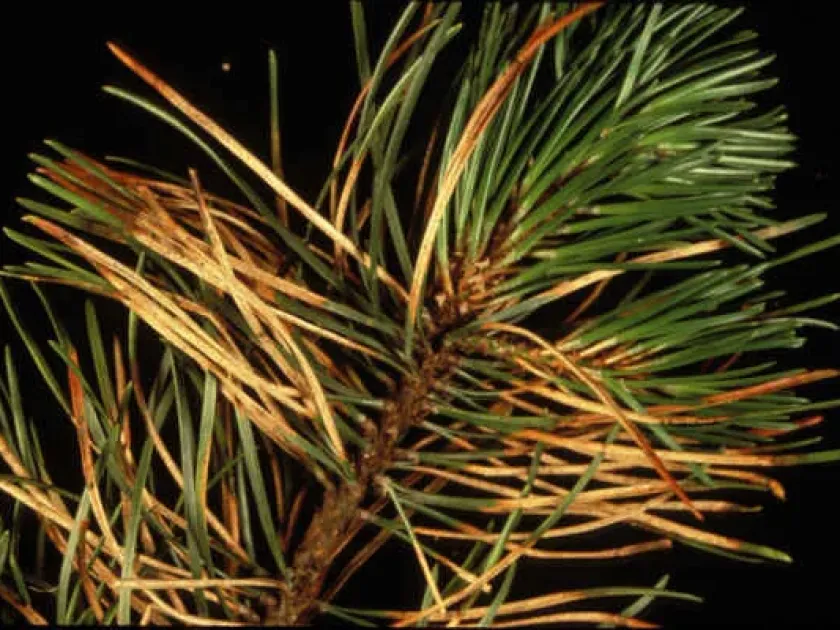
Description
Symptoms
The earliest symptom is the appearance of small yellowish spots on young needles, which eventually expand across the entire surface of the needle.
Over time, the affected needles turn a characteristic reddish-brown or rusty color, creating a striking contrast against the healthy green foliage.
A distinctive sign of this infection is the curling or bending of the affected needles, which helps differentiate it from other types of needle blights.
By late summer or early autumn, black, elongated lines become visible on the needles; these are the fruiting bodies of the pathogenic fungus.
Infected needles tend to shed prematurely, leading to sparse foliage and significantly affecting the tree's overall density and vitality.
Pathogen
The disease is caused by the ascomycete fungus Lophodermella sulcigena, which is a specialized pathogen affecting various species of pine trees.
The fungus completes its life cycle primarily on the needles, where it develops from the initial infection stage to the production of spores.
In spring, during periods of high humidity and rainfall, spores are disseminated by wind and splashing water to infect newly emerged pine needles.
Throughout the summer, the fungal mycelium grows within the needle tissue, gradually causing physiological damage and necrosis of the plant cells.
The cycle culminates in the formation of dark, elongated fruiting bodies known as hysterothecia, which serve as the overwintering structure of the fungus.
Conditions for development
The disease development is heavily dependent on specific environmental conditions, particularly prolonged wet and cool weather in the spring.
High humidity within the canopy, often caused by poor airflow in dense plantings, provides the perfect environment for spore germination and growth.
Trees that are under stress due to poor soil fertility or lack of sunlight are significantly more susceptible to successful fungal colonization.
The presence of infected needle debris from previous seasons serves as a primary inoculum source, ensuring the continuation of the disease cycle.
Optimal conditions for the fungus often coincide with the flushing of new needles, making them highly vulnerable during their early growth stage.
Why it matters
Widespread infection significantly reduces the photosynthetic capacity of the tree, leading to severe depletion of energy reserves.
In nursery settings, needle cast can cause high mortality rates among seedlings, resulting in substantial financial losses for forestry operations.
Trees weakened by the disease are more susceptible to secondary infestations by pests such as bark beetles or other opportunistic pathogens.
Chronic annual infection cycles lead to stunted growth and reduced timber quality, making the trees less productive over time.
The aesthetic value of trees in ornamental landscapes is severely compromised, requiring long-term care to restore the visual appeal of the canopy.
Protection
Sanitation is the most critical management practice, involving the regular collection and removal of fallen needles to reduce inoculum load.
Improving air circulation through proper spacing and pruning of dense stands can significantly reduce the moisture levels needed for fungal growth.
Application of copper-based or systemic fungicides during the early spring growth flush can effectively prevent spore germination and protect new needles.
Maintaining tree vigor through appropriate fertilization and site selection is essential to boost the natural defense mechanisms of the pines.
- Monitor plantations regularly for early signs of yellowing or needle distortion.
- Select resistant pine varieties for planting in areas with a history of fungal diseases.
- Implement thinning programs to ensure optimal tree spacing and airflow.
Discussion
No discussions yet — be the first.