
Lethariella intricata
Lethariella intricata
Description
Symptoms
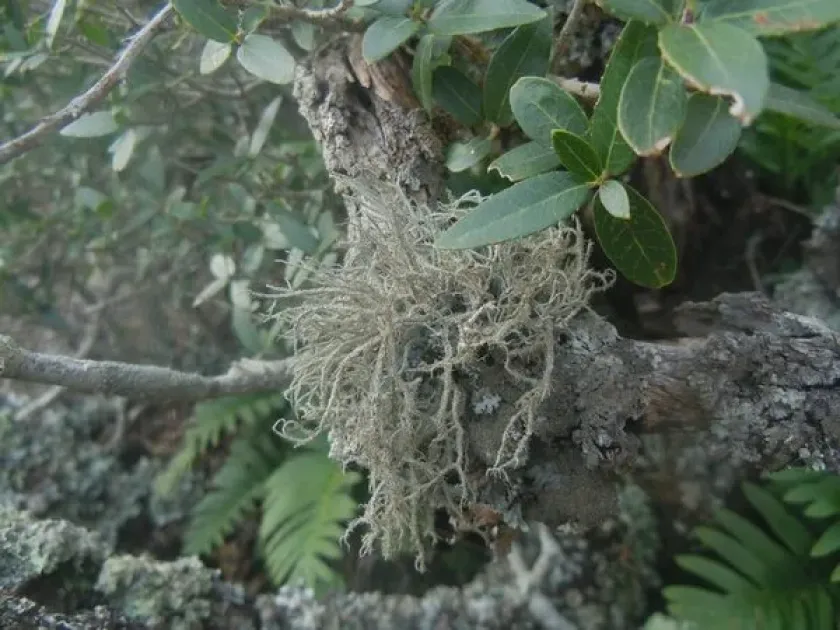
The thallus of the lichen is shrubby, featuring a complex, tangled arrangement of branches that can reach several centimeters in length.
The coloration ranges from grayish-green to yellowish-brown, often shifting based on hydration levels and solar radiation exposure.
Its surface is often textured with soredia, small granular structures that assist in vegetative reproduction by fragmenting from the main body.
The lichen lacks distinct, large fruit bodies (apothecia) in many populations, making it identifiable primarily by its vegetative form.
It has a somewhat brittle texture when dry, becoming more flexible and pliable when dampened by dew or mist.
Pathogen
Lethariella intricata is not a plant pathogen or a disease. It is a rare species of shrubby lichen within the Parmeliaceae family.
Unlike parasitic fungi that cause plant diseases, this lichen does not penetrate or feed on the tissues of its host tree.
It is a composite organism formed by a symbiotic relationship between a fungus and a photosynthetic algal partner.
The lichen simply uses the bark of trees as a physical anchor and does not extract nutrients or moisture from the tree itself.
Therefore, it possesses no pathogenic capabilities and does not contribute to the decline of trees or agricultural crops.
Conditions for development
The survival of Lethariella intricata depends strictly on pristine environmental conditions and mature forest ecosystems.
The species is highly intolerant of air pollution, especially sulfur dioxide, which makes it a classic indicator of high air quality.
It thrives in humid, cool environments where fog and stable air moisture provide the necessary hydration for its metabolic processes.
Moderate light intensity is required; it generally avoids direct, harsh sunlight and prefers the filtered light of old-growth forest canopies.
It typically colonizes the branches of conifers, requiring long periods of time and stable environmental stability to establish its colonies.
Why it matters
This species is completely harmless and poses no threat to timber, agricultural yields, or garden plants.
It serves as an essential part of the forest biodiversity, contributing to the overall complexity of the epiphytic flora.
It does not compete with trees for resources, nor does it cause chemical or mechanical damage to the host bark.
There is no economic damage associated with this organism, and it is frequently protected under environmental laws.
In fact, the loss of Lethariella intricata is a warning sign of atmospheric degradation rather than a symptom of plant health issues.
Protection
There is no need for control measures, as Lethariella intricata is not a pest or a disease agent.
Conservation efforts should focus on preserving old-growth forests and reducing local industrial air emissions.
Forestry management practices should prevent physical disturbance to the branches of trees where lichen colonies have been observed.
The presence of this lichen should be viewed as a positive sign of a healthy ecosystem rather than an object for eradication.
Avoid the use of agricultural or silvicultural pesticides in regions where this sensitive lichen is present, as it is highly susceptible to chemical toxicity.
Discussion
No discussions yet — be the first.