
Onion leaf spot
Leptotrochila porri
Description
Symptoms
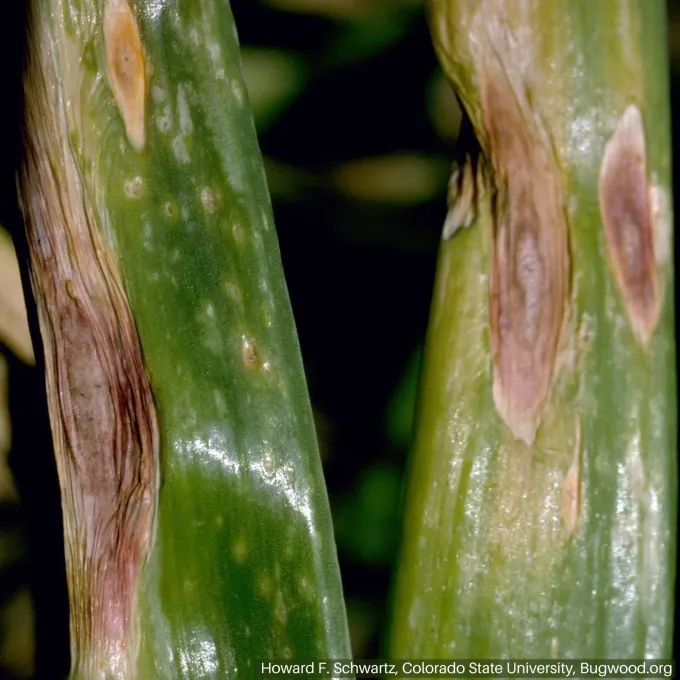
The primary symptom of the disease is the appearance of elongated spots on onion leaves. Initially, these spots are yellowish or whitish, eventually turning brown as the tissue becomes necrotic.
Over time, small, dark dots appear in the center of the lesions; these are the fungal apothecia, which serve as a diagnostic feature. These structures are easily visible upon close inspection of the leaf surface.
With severe infection, the foliage turns yellow, withers, and dies prematurely, significantly reducing the plant's photosynthetic surface. This decline often starts on the older, lower leaves and gradually moves upward.
On bulbs in storage, the disease may manifest as grayish-brown spots that eventually lead to soft rot. Infected tissues lose their firmness and emit a distinct odor as secondary infections take hold.
Plants affected by this fungus show stunted growth and produce smaller, lower-quality bulbs. Widespread symptoms in the field result in patchy drying of the canopy, which reduces the marketability of the entire yield.
Pathogen
The disease is caused by the fungus Leptotrochila porri, which belongs to the class of Ascomycetes. During its life cycle, the pathogen produces fruiting bodies known as apothecia, where spores mature to initiate primary infection in crops.
The fungal mycelium can survive in soil on infected crop residues. The pathogen overwinters as sclerotia or mycelium within plant tissues, which provides high resistance against harsh environmental conditions during the off-season.
The spread of infection throughout the growing season occurs primarily via conidia, which are dispersed by wind or splashing rain. The pathogen enters the plant through natural openings, such as stomata, or through mechanical damage on leaves.
The biology of this fungus is closely linked to the physiological needs of onion crops, allowing it to parasitize these tissues efficiently. Understanding the morphology and life cycle of the pathogen is essential for correct diagnosis and management.
The long-term survival of the fungus in soil makes crop rotation an essential practice to limit its spread. Ignoring rotation protocols leads to a significant increase in the inoculum pressure in the field over several years.
Conditions for development
Leptotrochila porri development is favored by cool and humid weather conditions during the growing season. Frequent rainfall, morning dew, and fog provide the ideal moist environment for spore germination.
The optimal temperature range for the pathogen's development is 15–20°C. While activity slows down during hot, dry weather, dense planting patterns can maintain a humid microclimate that continues to support the fungus.
Poor aeration within the crop stand promotes prolonged leaf wetness, which significantly increases the risk of infection. This is especially true in overcrowded fields where air circulation is restricted.
Imbalanced nutrient management, particularly an excess of nitrogen combined with a deficiency in potassium, reduces the plant's natural resistance. This makes the tissues more susceptible to fungal penetration.
The presence of free water on the leaf surface for several hours is a critical requirement for infection. Consequently, minimizing leaf wetness through site selection and proper spacing is a key preventative strategy.
Why it matters
The main damage caused by this disease is the premature loss of leaf tissue, which hinders the accumulation of nutrients in the bulb. This results in significantly lower yields and smaller bulb sizes.
Infected products have a short shelf life and are prone to secondary rots in storage. This leads to substantial post-harvest losses and reduced profitability for onion producers.
The economic impact is further exacerbated by the reduction in crop quality, making the onions unsuitable for premium retail markets. Sorting out diseased bulbs increases labor costs and further lowers profit margins.
Damaged onions in storage can act as a source of infection for healthy bulbs, potentially causing the loss of an entire batch. This makes post-harvest management as critical as field-level control.
Reduced seed vigor and the potential for seed-borne transmission make Leptotrochila porri a serious threat in professional onion cultivation, necessitating strict adherence to sanitation protocols.
Protection
The foundation of control is a rigorous crop rotation program, ensuring that onions are not replanted in the same area for at least 3–4 years. Avoiding proximity to other susceptible Allium species is also recommended.
Thorough removal and destruction of crop debris after harvest are crucial to reducing the primary inoculum source in the soil. Deep plowing helps facilitate the rapid decomposition of infected tissues and destroys resting fungal structures.
- Use only certified, disease-free planting material.
- Ensure optimal plant spacing to promote better airflow.
- Apply fungicides preventively when conditions favor infection.
- Control weeds that may serve as alternative hosts for the pathogen.
- Harvest during dry weather and cure onions thoroughly before storage.
Preventive fungicide applications are recommended during the growing season when environmental conditions favor disease development. Alternating chemical classes is essential to prevent the buildup of fungicide resistance.
Maintaining proper storage conditions, specifically low temperatures and controlled humidity, is vital for preventing the disease from spreading in warehouses. Regular disinfection of storage facilities is also required.
Discussion
No discussions yet — be the first.