
Leptosphaerulina leaf spot
Leptosphaerulina americana
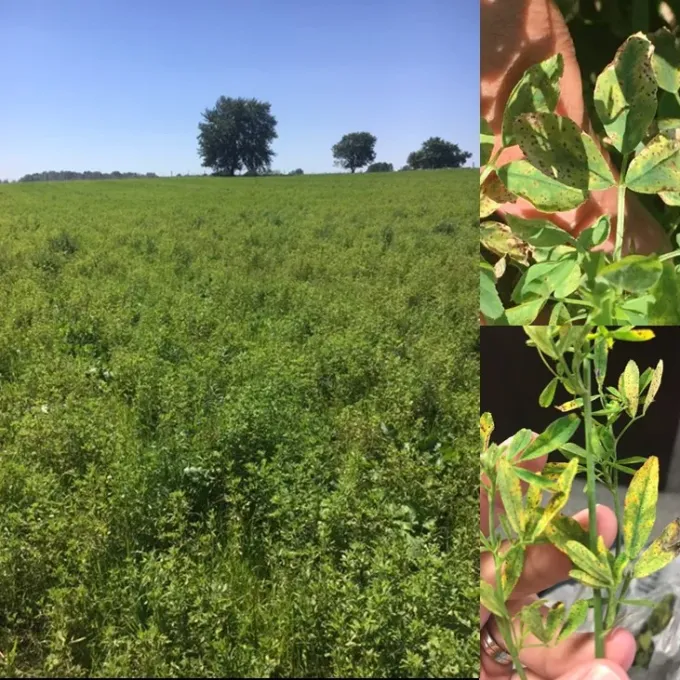
Description
Symptoms
Initial symptoms of Leptosphaerulina leaf spot appear as tiny, pale yellow to light brown lesions on the leaves. These spots are typically 1–3 mm in diameter and are often surrounded by a chlorotic halo.
As the disease progresses, the lesions darken to a brown or black color. A diagnostic feature is the appearance of small, black, pinhead-sized structures in the center of the spots, which are the pseudothecia of the fungus.
Severe infections lead to the coalescence of lesions, causing leaves to turn yellow, curl, and drop prematurely. This results in significant defoliation, leaving the stems bare and reducing the forage quality.
In addition to foliage, stems and petioles can also be affected. Elongated necrotic lesions on the stems may weaken the plant, making it more prone to lodging and reducing overall structural integrity.
Symptoms are most visible during periods of high humidity. In drier conditions, the disease may seem to slow down, but the pathogen remains viable within the tissues, ready to resume activity once moisture levels increase.
Pathogen
The disease is caused by the ascomycete fungus Leptosphaerulina americana (also referred to as Leptosphaerulina briosiana). It primarily affects legume crops, with alfalfa being the most susceptible host for this pathogen.
The fungus survives the winter as mycelium and pseudothecia within infected plant debris remaining in the field. When warm and wet conditions return, the pathogen releases ascospores that serve as primary inoculum.
Leptosphaerulina americana is a specialized parasite that invades plant tissues through stomata or mechanical wounds. Its life cycle is closely synchronized with the growth stages of alfalfa, especially during spring regrowth.
Ascospores are dispersed by wind currents and rain splashes, allowing the fungus to spread rapidly across fields. Once on the leaf surface, the spores germinate in the presence of free moisture and begin the infection process.
As a facultative saprophyte, the fungus can also thrive on dead organic matter, which contributes to its persistence in the soil and on crop residues, ensuring a continuous supply of inoculum for subsequent seasons.
Conditions for development
High relative humidity and frequent rainfall are the most critical factors for the development of Leptosphaerulina leaf spot. Free water on the leaf surface is mandatory for spore germination and successful infection.
The fungus Leptosphaerulina americana thrives at temperatures between 20°C and 28°C. During these conditions, the incubation period is significantly shortened, facilitating the rapid spread of the disease.
Dense, poorly ventilated alfalfa stands create a microclimate that traps moisture, which provides an ideal environment for the fungus to multiply and colonize neighboring plants effectively.
Mechanical damage caused by harvesting operations or pest activity creates entry points for the pathogen. Frequent cutting can stress the plants, making them more vulnerable to infection during the regrowth phase.
Large amounts of crop debris left on the soil surface serve as a major reservoir for the pathogen. Effective moisture management and sanitation are necessary to break the cycle of infection in affected fields.
Why it matters
The primary economic impact of this disease is the reduction in alfalfa yield and forage quality. Significant defoliation removes the most protein-rich parts of the plant, lowering the nutritional value of the harvested hay.
Photosynthetic capacity is drastically reduced due to extensive necrosis of the leaf area. This leads to stunted growth, reduced biomass production, and lower total dry matter yields per hectare.
Infected plants are weakened and may show reduced cold tolerance, leading to stand thinning over winter. This forces farmers to perform premature replanting, increasing operational costs significantly.
The presence of fungal metabolites in the forage can affect its palatability for livestock. While not usually toxic, the lower quality feed necessitates the use of more expensive supplements to meet nutritional requirements.
Increased susceptibility to secondary pathogens can occur in weakened stands. Overall, Leptosphaerulina leaf spot compromises the longevity and profitability of long-term alfalfa stands.
Protection
Crop rotation is the most effective cultural practice to manage the disease. Avoiding planting alfalfa in the same field for several years helps deplete the population of the pathogen in the soil.
Utilizing resistant or tolerant cultivars is a key component of integrated pest management. Breeding programs continue to prioritize resistance to leaf spot diseases to maintain high forage productivity.
Cultural methods include timely harvesting to reduce the accumulation of infected debris. Burying crop residues through deep plowing after harvest can help sanitize the field and reduce the primary inoculum load.
Fungicide applications are generally limited in forage crops due to pre-harvest intervals and cost-effectiveness. They are typically reserved for seed production fields where protecting the foliage is critical.
- Maintaining proper field sanitation and removing infected plant residues.
- Providing balanced soil fertility to enhance natural plant resistance.
- Adjusting seeding rates to ensure adequate airflow within the stand.
- Implementing regular scouting to identify early stages of infection and manage outbreaks.
Discussion
No discussions yet — be the first.