
Leptosphaerulina leaf spot
Leptosphaerulina
Description
Symptoms
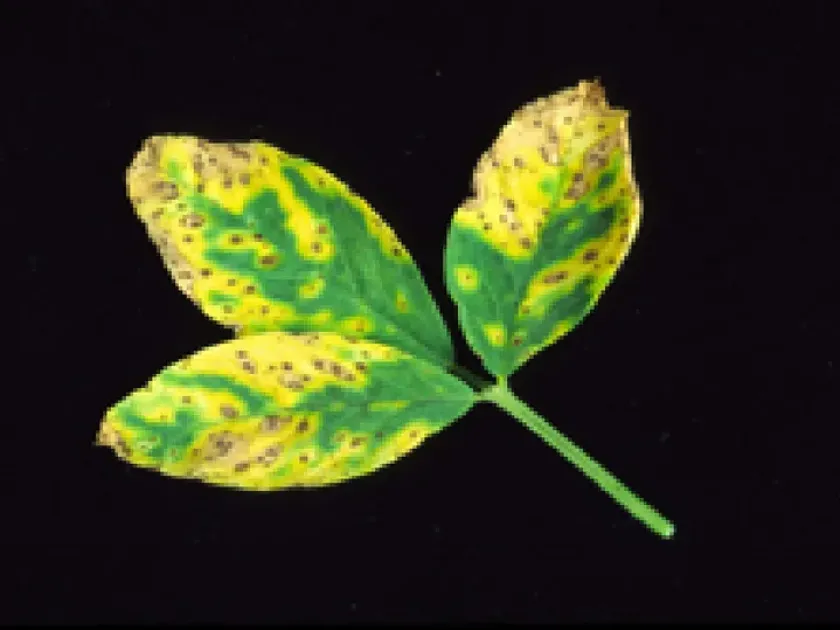
Initial symptoms include the appearance of small, water-soaked, or light-colored specks on the leaves that later develop into distinct lesions.
As the infection progresses, these spots expand, often becoming gray or brown with a dark, prominent border, sometimes surrounded by a chlorotic halo.
A key diagnostic feature is the presence of tiny, black, pimple-like structures (pseudothecia) scattered within the center of the necrotic leaf spots.
Severe infestations lead to extensive leaf yellowing, premature senescence, and dropping of lower leaves, reducing the plant's overall photosynthetic capacity.
Stems may also show symptoms, manifesting as brown lesions that weaken the stalk and can lead to structural collapse or lodging of the crop.
Pathogen
The disease is caused by the ascomycete fungus Leptosphaerulina, with Leptosphaerulina trifolii being the most prevalent species affecting various legume crops.
The pathogen survives in crop debris and soil as pseudothecia, which are small, dark, flask-shaped fruit bodies that release ascospores.
Upon maturity and in the presence of moisture, these ascospores are forcibly discharged into the air, landing on host plant tissues to initiate infection.
The fungus penetrates the plant tissue, colonizing intercellular spaces and producing toxins that lead to necrotic lesion formation.
Leptosphaerulina is a hemibiotroph, capable of surviving on dead organic matter, which ensures its persistence in fields between growing seasons.
Conditions for development
The disease development is highly dependent on environmental conditions, with temperatures between 15 °C and 25 °C being optimal for fungal growth.
Prolonged periods of high humidity and rainfall are essential for the release of spores and the subsequent infection of susceptible plant hosts.
Dense canopies, which restrict air movement and increase the duration of leaf wetness, create the perfect microclimate for disease outbreaks.
Inadequate field sanitation, such as leaving harvested crop residues on the surface, provides a continuous reservoir for pathogen spores.
Plants under physiological stress, due to nutrient deficiencies or mechanical damage, are significantly more prone to rapid infection by the fungus.
Why it matters
The economic impact of Leptosphaerulina is primarily reflected in the reduction of forage yield and the deterioration of nutritional quality.
Loss of foliage directly translates to decreased crude protein and vitamin content, which significantly lowers the feed value for livestock.
In seed production fields, the disease can cause shriveled or underdeveloped seeds, leading to lower seed quality and reduced germination rates.
Chronic infections weaken the plant stand, eventually leading to reduced longevity of perennial forage crops and increased weed encroachment.
In severe cases, yield losses for sensitive crops like alfalfa can be substantial, especially in regions with consistent wet weather during the growing season.
Protection
Effective management strategies emphasize prevention through cultural practices, including crop rotation and the use of resistant or tolerant cultivars.
Deep plowing and proper field sanitation to bury or remove crop debris are critical for reducing the primary inoculum source at the start of the season.
Optimizing plant density and ensuring adequate spacing can improve air circulation within the canopy, thereby shortening the leaf wetness period.
Chemical control using systemic fungicides can be applied when conditions are highly conducive to the disease and symptoms appear early in the development.
- Monitoring crop fields regularly, especially during cool and wet springs.
- Ensuring balanced fertilization to promote plant vigor and disease resistance.
- Cleaning equipment to prevent the spread of spores between infested and clean fields.
Discussion
No discussions yet — be the first.