
Leptosphaeriosis
Leptosphaeria sydowii
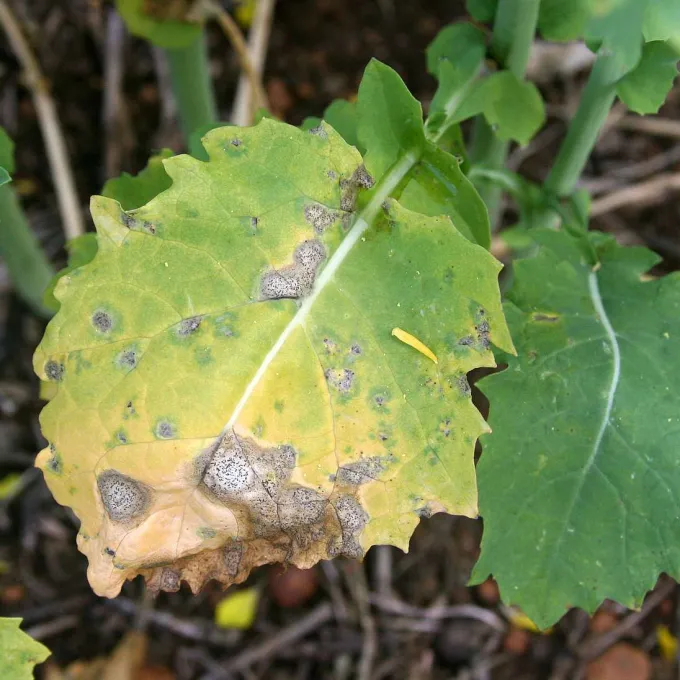
Description
Symptoms
Initial symptoms are characterized by small, irregular light-colored spots on leaves, which often develop a distinct dark brown or necrotic margin.
As the infection progresses, the center of these lesions may show small black speckles, which are the pycnidia containing the fungal spores.
Severe infestations lead to premature leaf senescence and dieback, significantly reducing the green surface area necessary for photosynthesis.
On stems and sheaths, the disease causes elongated necrotic streaks that may weaken the structural integrity of the plant, potentially leading to lodging.
High humidity conditions favor the growth of a grayish mycelial mat on the surface of the lesions, especially under dense canopy conditions.
Pathogen
The causative agent of the disease is the fungus Leptosphaeria sydowii (anamorph: Phoma sydowii), which belongs to the family of Ascomycota.
This fungus is characterized by its ability to survive in both sexual and asexual forms, ensuring its longevity in agricultural ecosystems.
The pathogen primarily overwinters on crop debris, such as stubble and straw, where it develops its fruiting bodies (pseudothecia) during the dormant season.
During the growing season, conidia are produced and disseminated through rain splashes and wind, facilitating the spread of the disease to new plant tissues.
The biology of the fungus allows it to adapt to various environmental conditions, making it a persistent challenge for crop production management.
Conditions for development
Leptosphaeria sydowii thrives in environments characterized by frequent rainfall, high humidity, and moderate temperature ranges.
Periods of prolonged dew and fog are particularly conducive to the germination of conidia and the establishment of new infection sites on the host plants.
Agronomic practices that lead to dense, overcrowded plant populations create a humid microclimate that favors the rapid multiplication of the pathogen.
Improper crop rotation, especially the continuous planting of susceptible crops, leads to a significant accumulation of inoculum in the field soil.
Stress factors such as nutrient deficiencies or pest infestations make plants more susceptible to initial colonization by the fungus.
Why it matters
The primary economic damage caused by leptosphaeriosis is the reduction in grain yield due to impaired photosynthetic capacity and plant health.
The disease affects the translocation of water and nutrients, resulting in shriveled grains and reduced quality of the harvested crop.
In cases of heavy stem infection, the mechanical strength of the plant is compromised, leading to stalk breakage and harvesting difficulties.
Seed quality can be negatively impacted, as the pathogen may infect the grain, leading to poor germination rates and weaker seedlings in the next season.
Additional costs associated with fungicide applications and potential loss of market value for damaged grain constitute major economic concerns for farmers.
Protection
Managing leptosphaeriosis requires an integrated pest management (IPM) approach to minimize infection pressure and protect crop health.
- Implement diverse crop rotations to disrupt the pathogen life cycle and reduce soil-borne inoculum.
- Incorporate crop residues deeply into the soil to accelerate decomposition and destroy overwintering fungal structures.
- Use high-quality, certified seeds treated with effective fungicides to ensure disease-free establishment.
- Regularly monitor fields for disease symptoms and apply recommended fungicides timely during high-risk weather conditions.
- Maintain optimal plant spacing and balanced fertilization to promote vigorous, resistant growth.
Discussion
No discussions yet — be the first.