
Leptosphaeria leaf spot
Leptosphaeria slovacica
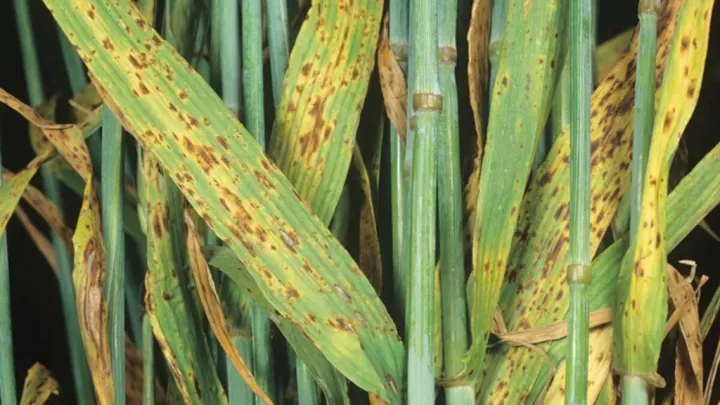
Description
Symptoms
The primary symptoms of the disease appear as circular or oval spots on the leaf blades, which may merge over time as the infection progresses.
Initial lesions often feature a light center and a dark border, which is a key diagnostic feature for this type of fungal spotting.
As the disease progresses, tiny black dots known as pycnidia (the fungus's fruiting bodies) form within the necrotic tissue and are visible to the naked eye.
Under high humidity, infected leaves turn yellow prematurely and wither, which significantly impairs the plant's photosynthetic capacity.
- Yellowing of the leaf blade.
- Development of necrotic spots with a dark rim.
- Formation of black pycnidia within lesions.
- Premature senescence of lower leaves.
Pathogen
The causative agent of the disease is the ascomycete fungus Leptosphaeria slovacica (anamorph Hendersonia crastophila). This pathogen belongs to the Dothideomycetes class and is widely distributed in temperate climate regions.
The fungus overwinters in infected crop residues as perithecia or mycelium, which serve as the primary source of infection at the beginning of the growing season.
Throughout the growing season, the infection is spread by conidia, which are dispersed by wind or rain splashes onto healthy plant tissues.
The biology of the pathogen requires moisture for spore germination and successful penetration of the fungus into the epidermis of the host plant.
Because the fungus has a well-adapted overwintering stage, long-term crop rotation and residue management are crucial for effective disease control.
Conditions for development
The most favorable conditions for the development of Leptosphaeria leaf spot are cool and rainy weather during the early spring or late autumn.
High relative humidity (above 80%) and moderate temperatures provide the ideal environment for the rapid germination of Leptosphaeria slovacica spores.
Poor agricultural practices, such as dense sowing and excessive nitrogen fertilization, create a microclimate that encourages the spread of the disease.
Stressed plants, whether due to frost damage or insect infestation, are significantly more susceptible to fungal infection.
Persistent wet weather during the tillering or stem elongation stages of cereal development creates high risks for epidemic outbreaks in fields.
Why it matters
The damage caused by the disease includes a significant reduction in the photosynthetic surface area, which leads to decreased crop yields.
Infection results in reduced grain weight and quality, often causing shriveled grains that lower the overall commercial value of the harvest.
Premature leaf senescence prevents the plant from accumulating sufficient energy reserves, negatively impacting the development of the ear and grain filling.
Severe infection, particularly of the flag leaf, can lead to substantial yield losses, sometimes ranging from 10% to 25% under favorable conditions for the fungus.
Leptosphaeria leaf spot is often found in combination with other leaf spotting diseases, compounding the negative impact on the overall productivity of the crop.
Protection
The primary control measure is crop rotation, which helps interrupt the pathogen's life cycle and reduces the infection load in the soil.
Thorough soil cultivation, including the deep burial of crop residues, is essential to accelerate decomposition and destroy the primary inoculum.
Selecting and planting resistant cereal varieties is the most effective and environmentally friendly method for managing the disease.
When the risk of infection is high, systemic fungicides, particularly those containing triazoles or strobilurins, should be applied during critical plant growth stages.
Maintaining balanced mineral nutrition, especially with phosphorus and potassium, helps strengthen plant cell walls and enhances natural resistance to the pathogen.
Discussion
No discussions yet — be the first.