
Leptosphaeria leaf spot
Leptosphaeria rubicunda
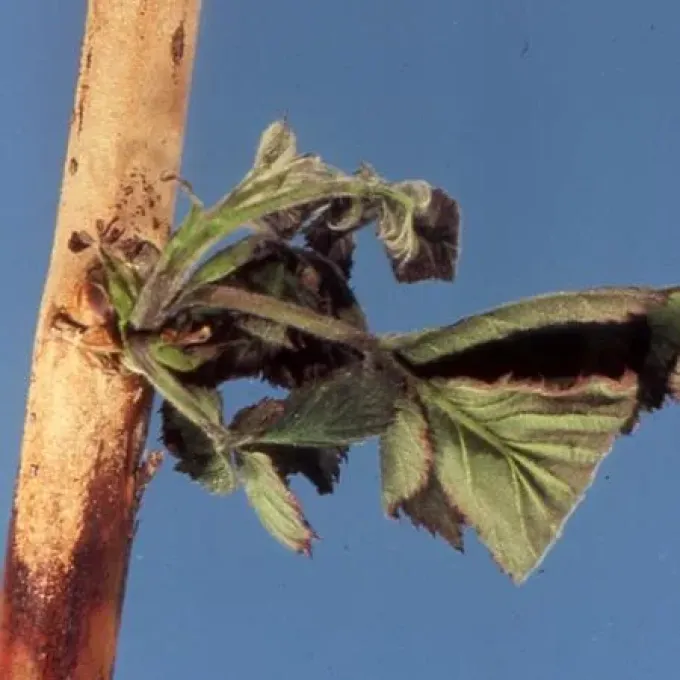
Description
Symptoms
Symptoms initially appear as small chlorotic spots on leaves, which gradually enlarge and turn necrotic, often showing a distinct border.
As the infection progresses, tiny black structures called pycnidia become visible on the surface of the lesions, indicating active sporulation.
Stem infections can lead to discolored lesions or longitudinal cracking, compromising the structural integrity of the plant as it matures.
In severe cases, the entire leaf or stem tissue may dry out and wither, leading to premature senescence of the affected plant parts.
Early-season symptoms on seedlings may include damping-off or distinct lesions on the hypocotyl, which can result in stunted growth.
Pathogen
The causal agent of this disease is the ascomycete fungus Leptosphaeria rubicunda, which is known for its role in causing various necrotrophic infections in crops.
The fungus survives primarily as mycelium or as reproductive structures on infected crop residues left in the field after harvest.
Its life cycle includes the production of asexual conidia and sexual ascospores, which are spread by rain splash and wind across the field.
Leptosphaeria species exhibit significant pathogenic diversity, allowing them to adapt to various hosts and changing environmental conditions effectively.
Upon infection, the fungus colonizes host tissues, releasing enzymes that break down cell walls to facilitate nutrient uptake and colonization.
Conditions for development
The development of Leptosphaeria rubicunda is heavily favored by cool to moderate temperatures and high atmospheric humidity.
Prolonged periods of leaf wetness, such as dew or frequent rain, are essential for the germination of fungal spores on plant surfaces.
Dense planting patterns reduce airflow within the canopy, creating a humid microclimate that accelerates the spread of fungal spores.
Plants under physiological stress, such as nutrient imbalances or environmental fluctuations, are significantly more susceptible to successful colonization.
High levels of residual crop debris from previous seasons serve as the primary reservoir for inoculum, ensuring disease persistence.
Why it matters
The economic impact of this disease is significant, as it leads to reduced photosynthetic capacity and overall lower biomass production.
Stem damage caused by the pathogen reduces the plant's ability to transport water and nutrients, resulting in grain shriveling and yield loss.
Lodging is a common consequence of advanced infections, which complicates mechanical harvesting and leads to further yield wastage.
The quality of the harvested grain is often compromised, leading to lower test weights and potential marketability issues for producers.
Chronic infections can drain energy reserves from the plant, weakening its overall vigor and making it vulnerable to secondary infections.
Protection
Crop rotation is the most effective cultural practice to manage inoculum levels and reduce the risk of widespread disease outbreaks.
Incorporating crop residues into the soil through tillage helps to speed up the decomposition process and destroy the pathogen's habitat.
Seed treatments using broad-spectrum fungicides are essential to protect developing seedlings during the vulnerable early growth stages.
Regular field scouting is critical for early detection, allowing for the timely application of foliar fungicides when thresholds are met.
Genetic resistance remains the foundation of management, as planting resistant varieties provides the most sustainable defense against the disease.
Discussion
No discussions yet — be the first.