
Phoma stem canker
Leptosphaeria macrocapsa
Description
Symptoms
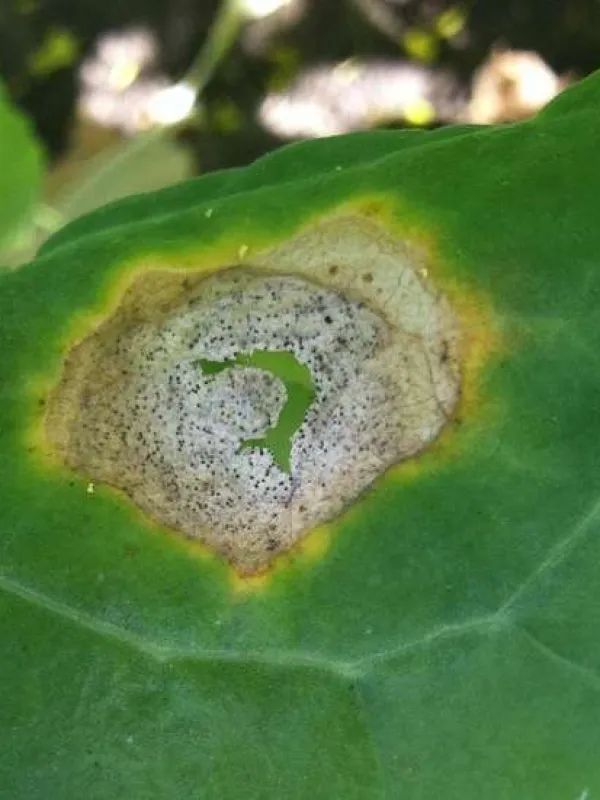
Early symptoms include light-colored leaf spots on seedlings, which are often covered with numerous tiny black dots known as pycnidia.
As the disease progresses, necrotic spots develop on the leaves, usually showing a grey center surrounded by a dark, well-defined margin.
The most severe sign is the development of a dark, sunken lesion (canker) at the stem base, which can eventually girdle the entire stem.
In mature plants, stem infection leads to lodging, as the vascular system becomes compromised and the tissue loses its structural integrity.
Pod infection can also occur, resulting in premature splitting, shriveled seeds, and reduced grain quality, often leading to yield loss before harvest.
Pathogen
The pathogen responsible for this disease is the ascomycete fungus Leptosphaeria maculans (anamorph: Phoma lingam), which primarily attacks brassica crops.
The disease cycle involves the formation of perithecia on infested crop residues, which serve as the primary source of inoculum during the early season.
Pycnidia produced on infected living tissues release conidia, which are spread by rain splash and wind, causing secondary cycles of infection throughout the field.
The fungus is capable of persisting in the soil on infected plant debris for several years, making long-term rotation essential for management.
After penetration through wounds or natural openings, the pathogen grows systemically, eventually forming distinct cankers at the base of the plant stem.
Conditions for development
Phoma stem canker thrives in cool to moderate temperatures ranging from 15°C to 20°C combined with high moisture levels.
Periods of frequent rainfall are critical for the spread of fungal spores and for the successful infection of host tissues during the vegetative stage.
Increased planting density creates a favorable microclimate for the disease, limiting airflow and maintaining high humidity levels within the canopy.
Insect feeding damage provides entry points for the pathogen, significantly increasing the severity of the infection in vulnerable fields.
Minimal tillage practices that leave significant amounts of crop residues on the soil surface maintain a high inoculum reservoir for subsequent seasons.
Why it matters
This disease is a major limiting factor for oilseed rape production worldwide, often causing substantial yield reductions due to plant death and lodging.
Severe stem cankers block nutrient and water uptake, leading to stunted plants, uneven crop development, and lower seed oil content.
Premature senescence caused by the infection triggers early pod shattering, which results in significant grain loss during mechanical harvesting operations.
Seed-borne transmission of the pathogen contributes to the establishment of the disease in new areas, posing a long-term threat to production regions.
The reduction in plant stand density due to seedling blight forces farmers to incur additional costs for reseeding or results in suboptimal yields.
Protection
Implementing a crop rotation of at least three to four years without brassica crops is the most effective cultural practice to reduce inoculum.
The selection and cultivation of resistant cultivars are critical components of an integrated pest management strategy against Phoma stem canker.
Deep plowing and proper management of crop residues facilitate the decomposition of infected debris, thereby lowering the initial infection pressure.
Fungicide application during the early growth stages is essential for protecting the crop from initial infection and subsequent stem colonization.
- Integrated programs should prioritize monitoring of insect populations to minimize plant wounding and limit potential pathogen entry points.
Discussion
No discussions yet — be the first.