
Leptosphaeria stem canker
Leptosphaeria doliolum
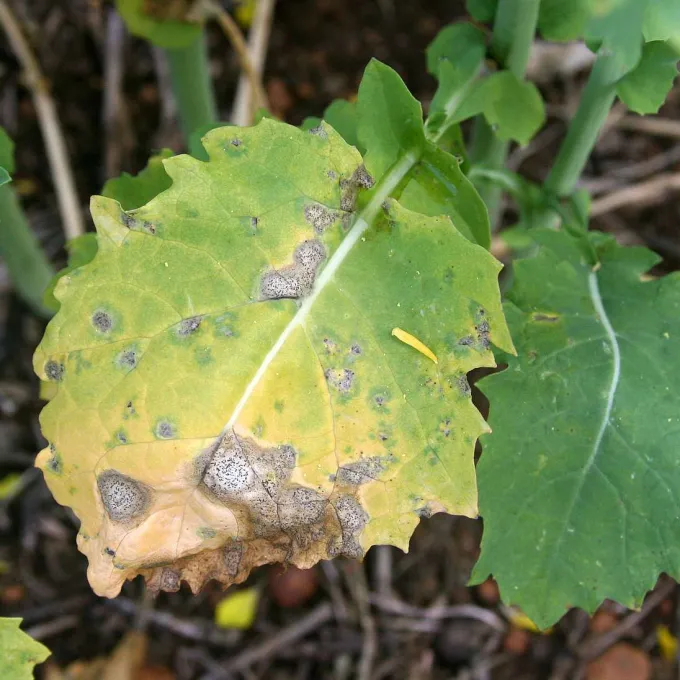
Description
Symptoms
Initial symptoms are often observed on the stems and leaf petioles. These appear as small, irregular lesions that eventually develop into necrotic spots.
A distinctive feature of the disease is the development of tiny, dark, flask-shaped structures called pycnidia within the centers of the lesions, which are visible to the naked eye.
As the infection progresses, the lesions expand and can cause the stem to weaken, crack, or even snap under moderate physical pressure.
Leaves associated with the infected stems often yellow and wither prematurely, significantly reducing the surface area available for photosynthesis.
- Development of necrotic stem lesions.
- Presence of black pycnidia on the surface of spots.
- Weakening and cracking of the stem tissue.
- Premature yellowing and wilting of foliage.
Pathogen
The pathogen responsible for the disease is the fungus Leptosphaeria doliolum, a member of the Ascomycota phylum. It is known to affect a wide variety of plant species.
The fungus survives the winter on crop residues within the soil, forming perithecia where spores develop. During the growing season, these spores are released and serve as the primary source of infection.
This fungus behaves as a necrotrophic parasite, producing enzymes that degrade plant tissue to obtain nutrients. It transitions from a saprophytic state in dead organic matter to an active parasite.
Dissemination is primarily through wind and rain splash, which spread spores onto healthy leaf and stem tissues, facilitating rapid colonization of the crop.
The biological success of this fungus is linked to its ability to persist in diverse environmental conditions and its capacity to switch between hosts effectively.
Conditions for development
The development of the disease is highly dependent on moisture. Prolonged rainy weather, high humidity, and heavy dews create an optimal environment for infection.
The ideal temperature range for fungal spore germination and mycelial growth is between +15°C and +22°C, which often coincides with the peak spring growing season.
Poor field management, such as dense sowing, limits airflow and traps humidity within the canopy, providing a microclimate conducive to rapid fungal colonization.
Accumulation of infected plant debris from previous harvests is a critical factor for the disease, as it sustains the fungus and provides inoculum for new crops.
Plants weakened by nutrient deficiencies, insect damage, or environmental stress are significantly more susceptible to infection by the pathogen.
Why it matters
The primary damage caused by the fungus is the disruption of the plant's vascular system, which hinders the transport of essential water and nutrients.
Severe infestations result in stunted plant growth, lodging of stems, and significantly reduced yield quality, often leading to shriveled or lightweight seeds.
Economic losses can be substantial, as affected crops may suffer from lower marketability and increased susceptibility to other opportunistic secondary pathogens.
Because the disease can affect the structural integrity of the plant, it poses a risk of total loss in cases of extreme infestation during the flowering phase.
Ongoing infection in the soil makes it difficult for farmers to rotate susceptible crops, necessitating long intervals between plantings to manage the inoculum load.
Protection
Effective management begins with strict crop rotation. Avoiding the planting of susceptible crops in the same field for at least three seasons is highly recommended.
Sanitation practices, such as the deep burial of crop residues after harvest, are essential to destroy the source of the fungus and reduce the risk of future outbreaks.
Farmers should prioritize the use of disease-resistant cultivars and ensure that all seeds used are certified and free from potential fungal contamination.
Application of fungicides during the active growth phases can help suppress the spread of the disease if the first signs are detected early enough.
Proper fertilization and pest management strategies should be employed to improve the overall health and vigor of the plants, making them more resilient to attacks.
Discussion
No discussions yet — be the first.