
Phoma stem canker
Leptosphaeria conoidea
Description
Symptoms
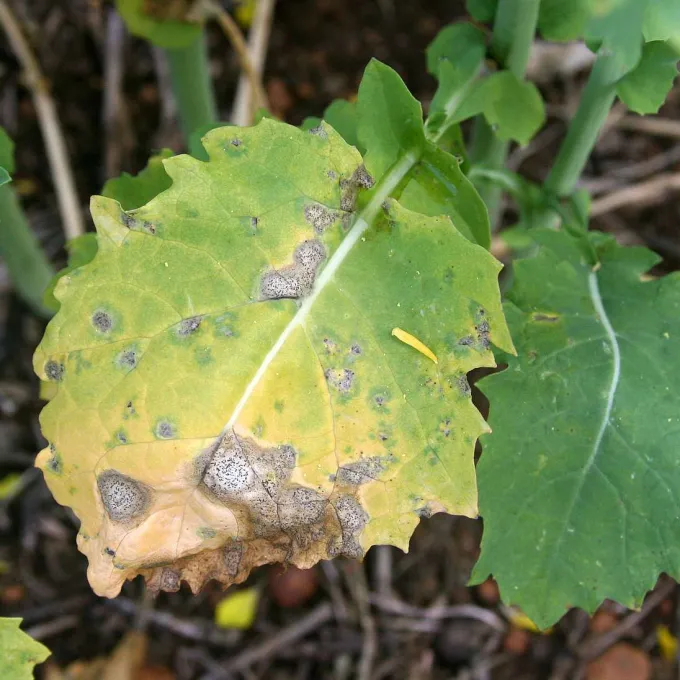
Initial symptoms appear on leaves as round, light-grey to whitish lesions speckled with tiny, black, flask-shaped pycnidia, which are diagnostic of the disease.
The most damaging phase is the stem canker, which develops at the base of the plant near the root collar. The lesion becomes dark brown, sunken, and necrotic, weakening the plant structure.
In severe infections, the fungus penetrates the vascular tissues of the stem, causing internal browning and tissue decay, which restricts the flow of water and nutrients.
Plants affected by stem canker often exhibit stunted growth, premature ripening, and are highly susceptible to lodging, especially during windy conditions close to harvest.
Seedling blight, often referred to as damping-off, can occur in young plants, leading to patches of missing plants in the field shortly after emergence.
Pathogen
The causal agent of phoma stem canker is the fungus Leptosphaeria maculans (asexual state: Phoma lingam), which is a significant pathogen of oilseed rape and other Brassica species.
The fungus survives on infected crop residues in the field, in the soil, and on seed, allowing it to remain in the environment for several years even in the absence of a host crop.
The disease cycle involves both sexual and asexual stages. Ascospores are produced in pseudothecia on old stubble and are wind-dispersed over long distances, causing primary infections in the autumn.
Secondary spread occurs through splash-dispersed conidia (pycnidiospores) produced in pycnidia, which thrive in moist conditions and facilitate the rapid spread of the pathogen within the crop canopy.
The fungus is highly diverse, and different races of L. maculans exist, which makes durable resistance breeding a continuous challenge for agronomists worldwide.
Conditions for development
Phoma stem canker development is strongly influenced by temperature and humidity, with the fungus preferring mild temperatures between 15°C and 25°C.
High relative humidity and frequent rainfall are essential for the production and release of ascospores from overwintering stubble and for the subsequent infection of leaves.
The density of the crop canopy significantly affects the microclimate; dense canopies trap moisture, which creates an ideal environment for conidial spread and infection.
In regions with autumns characterized by early, wet, and warm weather, the risk of severe phoma leaf spotting and subsequent stem canker is significantly elevated.
Poor soil drainage and suboptimal agronomic practices that stress the plant make crops more prone to the successful colonization by the fungus.
Why it matters
The economic impact of phoma stem canker is substantial, as it can cause yield losses ranging from 10% to 50% depending on the severity of the infection and the timing of the disease.
Lodging caused by weakened stems results in mechanical harvest losses, as combine headers struggle to pick up fallen or collapsed plants.
Seed quality is severely compromised; infected plants often produce smaller, shriveled seeds with reduced oil content, affecting the market value of the harvest.
Early infections are generally more damaging than late infections, as they allow more time for the fungus to girdle the stem base and disrupt vascular function.
Increased expenditure on fungicide applications to manage the disease adds to the production costs for farmers growing susceptible varieties.
Protection
Integrated pest management (IPM) is the most effective approach, focusing on the use of resistant cultivars that carry specific resistance genes against L. maculans.
Effective stubble management, including deep tillage or the removal of crop residues, is critical to reduce the primary inoculum pressure for the following season.
A break of at least three to four years between brassica crops in the rotation is highly recommended to starve the pathogen and reduce the soil-borne inoculum.
Fungicide applications, timed based on crop growth stages and disease monitoring, are standard in commercial production to limit leaf-to-stem infection progress.
- Selection of varieties with known quantitative or qualitative resistance.
- Ensuring high-quality, fungicide-treated seed is used during planting.
- Monitoring leaf spot levels in autumn to trigger chemical interventions.
- Control of volunteer brassica plants that harbor the fungus between crops.
Discussion
No discussions yet — be the first.