
Leptosphaeria leaf spot
Leptosilliaceae
Description
Symptoms
Initial symptoms include small, irregular light-colored spots on leaves, which often develop a dark border and eventually merge to form large necrotic patches.
Tiny black fruiting bodies, known as pycnidia, appear within the lesions, serving as a diagnostic sign for the presence of the pathogen on the plant tissue.
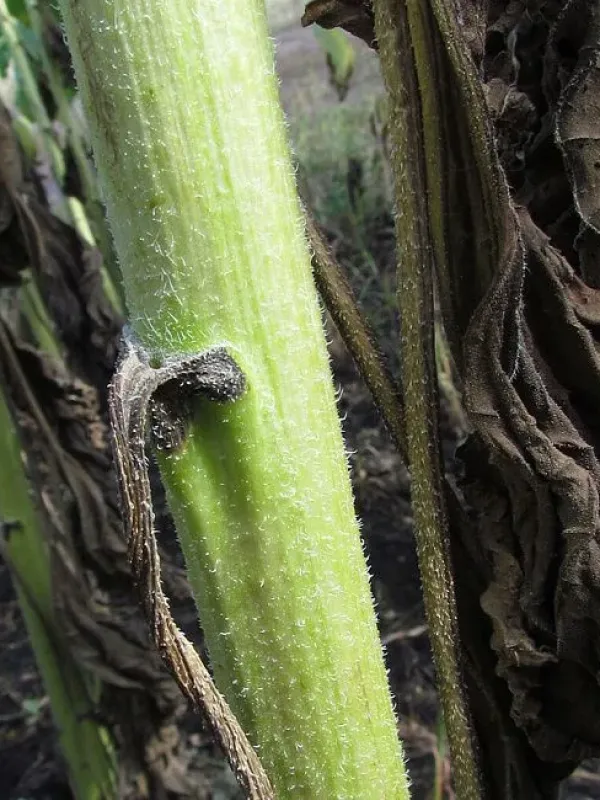
On stems, the infection can develop into cankers, causing longitudinal cracking and weakening of the structure, which may lead to plant lodging.
Infection often progresses from the lower leaves upwards, causing premature yellowing and senescence of the entire plant when the disease pressure is high.
The weakening of the root collar and lower stem area often restricts nutrient transport, resulting in stunted plant growth and poor grain fill.
Pathogen
The disease is caused by fungi of the genus Leptosphaeria, such as Leptosphaeria maculans. These pathogens belong to the Ascomycota phylum and have a complex lifecycle with both sexual and asexual stages.
The fungus survives on crop residues in the form of pseudothecia, which release ascospores during periods of rain and high humidity, spreading the infection to new host plants.
These pathogens are highly specialized and can infect various crops, causing necrosis in leaf tissues and stems through enzymatic degradation of cell walls.
The pathogen utilizes asexual spores, known as pycnidiospores, to spread rapidly within a crop canopy during the growing season under favorable moist conditions.
Biological persistence in soil and on plant debris makes Leptosphaeria a significant challenge for growers worldwide, requiring a multifaceted management approach.
Conditions for development
The development of Leptosphaeria is heavily dependent on high moisture levels, specifically frequent rainfall or heavy dew during the early growth stages of crops.
Temperatures ranging from 15°C to 22°C are considered optimal for the germination of ascospores and the subsequent infection of susceptible plant tissues.
High planting densities create a microclimate with stagnant air and elevated humidity, which significantly accelerates the spread of spores between individual plants.
Poor field hygiene, particularly the presence of surface crop debris from previous susceptible crops, provides a continuous reservoir for the pathogen.
Stressed plants, whether due to pest damage, nutrient imbalances, or environmental extremes, exhibit higher susceptibility to infection compared to healthy, vigorous crops.
Why it matters
The primary damage is caused by the reduction of photosynthetic area, which leads to a significant decrease in biomass production and final yield potential.
Stem canker development compromises the plant's structural integrity, causing lodging and making mechanical harvesting difficult, leading to increased harvest losses.
Quality of the harvested yield is often reduced, with thinner grain or seeds showing lower germination rates and vigor, impacting the subsequent season.
Severe infestations can lead to partial or total field failure, resulting in significant economic losses for farmers and the need for costly disease management interventions.
Secondary infections often take advantage of the tissue weakened by Leptosphaeria, further exacerbating the decline of the overall crop health.
Protection
Implementing a rigorous crop rotation cycle, keeping a minimum 3-year interval between host crops, is the most effective strategy to manage inoculum buildup.
Deep tillage or incorporation of crop residues helps to accelerate the decomposition of infected material, effectively killing the overwintering structures of the fungus.
The use of certified disease-free seeds and the application of systemic seed treatment fungicides provide essential protection during the early establishment phase.
Foliar application of fungicides, such as triazoles or strobilurins, during the vegetative stages is recommended when environmental conditions favor disease outbreaks.
Selecting and planting resistant or tolerant varieties is a cornerstone of integrated pest management (IPM) to reduce reliance on chemical inputs and ensure yield stability.
Discussion
No discussions yet — be the first.