
Leptoporus
Leptoporus
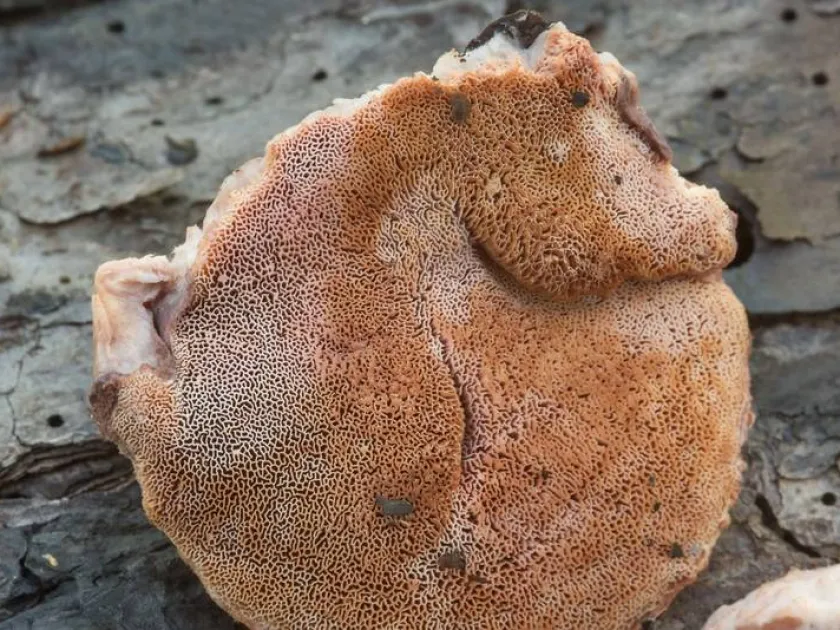
Description
Symptoms
The most visible sign of Leptoporus infection is the emergence of fruit bodies on the trunk or large branches. These fungal structures typically appear in clusters and can vary in color from pale white to ochre.
Internally, the wood undergoes a process known as brown rot. The affected timber becomes brownish, brittle, and tends to break into cubical pieces as it dries out, signaling that the cellular structure is being destroyed.
Initial tree symptoms are often subtle, but as the decay progresses, the foliage may exhibit yellowing or premature leaf drop. The overall growth rate of the tree often declines due to the impairment of water and nutrient transport.
Cracks in the bark are common entrance points for the fungus. If these cracks are accompanied by visible fungal growth or oozing, it is a strong indication that the tree is suffering from an advanced stage of internal decay.
Structural integrity loss is a dangerous symptom of this disease. As the internal wood is degraded, the tree becomes increasingly unstable and prone to snapping or falling during heavy wind or snowfall events.
Pathogen
The disease is caused by the wood-decaying fungus Leptoporus mollis, which belongs to the Basidiomycetes division. This fungus acts as a facultative parasite or saprotroph, specifically targeting the structural components of wood.
The pathogen produces annual fruit bodies that appear on tree trunks or stumps. These bodies have a soft, gelatinous texture when young and eventually become brittle, showing characteristic pores that serve as a diagnostic feature for identification.
The life cycle involves the production of microscopic spores released into the air. When these spores land on open wounds or damaged bark, they germinate and form a mycelium that begins to colonize the xylem of the host plant.
The fungus secretes specialized enzymes capable of decomposing cellulose and lignin. This chemical degradation of the wood structure is what leads to the weakening of the tree and the characteristic symptoms of wood rot.
The pathogen is highly resilient and can remain dormant within the woody tissue under unfavorable conditions. As soon as moisture levels rise to a sufficient point, the fungus resumes its growth and destructive activity.
Conditions for development
High humidity and consistent moisture are essential for the development of Leptoporus. Damp environments, such as shaded forest edges or neglected gardens, provide the perfect setting for spore germination and infection.
Mechanical wounds are the primary gateways for the pathogen. Damage from pruning, storm impact, or rodent activity creates open surfaces that are highly vulnerable to airborne fungal spores if not protected.
Fungal activity peaks within a temperature range of +15 to +25 degrees Celsius. During this period, the mycelium spreads most rapidly through the interior tissues of the tree, utilizing the available nutrients for its development.
Poor airflow, caused by dense planting or lack of proper pruning, creates microclimates with stagnant air and high humidity. This environment supports the survival and proliferation of the fungus on tree trunks.
Trees that are already under stress due to soil nutrient deficiencies or pest attacks are much more susceptible to colonization. A compromised immune system leaves the tree unable to contain the fungal growth effectively.
Why it matters
Leptoporus causes severe economic and ecological damage by destroying wood quality. In forestry, this leads to significant losses as the timber loses its structural strength and commercial value.
In garden settings, the disease is life-threatening for ornamental and fruit trees. The infection is often progressive, leading to the eventual death of the entire tree if effective management is not implemented.
The presence of an infected tree poses a risk to the entire ecosystem, as it serves as a persistent source of spores. This increases the danger of spread to neighboring healthy trees, creating potential disease outbreaks.
Falling branches or whole trees present a significant safety hazard to property and people. The degradation of the heartwood makes the tree unpredictable and prone to failure, especially during extreme weather conditions.
Furthermore, the tree's health is severely depleted as its vascular system is obstructed by decay. This makes it impossible for the plant to recover and leaves it defenseless against secondary infestations of bark beetles and borers.
Protection
The most effective strategy is proactive sanitation. Regular removal of dead, damaged, or diseased branches prevents the accumulation of material that might serve as a breeding ground for the fungus.
Always disinfect tools after pruning to avoid spreading spores between different trees. Apply a protective sealant, such as wound paint or specialized fungicidal paste, to all significant cuts to block the entry of pathogens.
If fruit bodies are identified, they should be removed and disposed of away from the site, preferably by burning. This helps reduce the immediate inoculum load in the vicinity of healthy trees.
Maintain optimal tree vigor through proper fertilization and irrigation schedules. Healthy trees possess natural defenses that can help limit the spread of fungal mycelium within the stem.
If the infection has caused extensive structural damage, removal of the entire tree and its roots is recommended. This is crucial to stop the spread of the pathogen to neighboring healthy plants in the orchard or landscape.
Discussion
No discussions yet — be the first.