
Leptographium terebrantis
Leptographium terebrantis
Description
Symptoms
The first external sign of infection is the presence of pitch tubes or resin droplets on the bark, which the tree produces as a defense mechanism against beetle attacks.
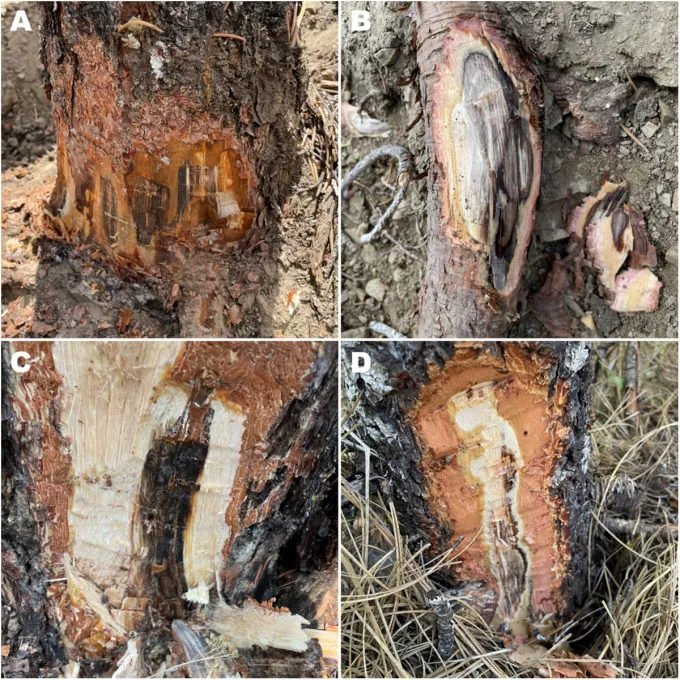
Under the bark, the wood displays characteristic dark blue, black, or brown staining. This discoloration is a definitive indicator of the mycelial growth within the sapwood.
As the disease progresses, the tree's foliage begins to fade, eventually turning yellow or reddish-brown. The crown dieback typically starts from the top and moves downwards.
Reduced annual growth and sparse needle density indicate that the tree is severely stressed. Often, there is a visible lack of new buds on the terminal branches.
In advanced cases, the internal tissues become necrotic, effectively killing the conductive system and leading to the eventual death of the entire tree.
Pathogen
Leptographium terebrantis is a microscopic ascomycete fungus known for its association with conifer-infesting beetles. It is a key pathogen that significantly impacts the health of pine trees.
The fungus colonizes the phloem and xylem of the tree, invading the conductive tissues. Once introduced, the mycelium spreads rapidly, obstructing the flow of essential fluids.
This pathogen relies heavily on bark beetles as primary vectors. The spores are carried on the bodies of these insects, allowing the fungus to enter new host trees during beetle attacks.
The fungus can survive for extended periods within the galleries of dead or dying trees, ensuring its persistence in forest environments over several growing seasons.
Its biological cycle is inextricably linked to the infestation patterns of beetles, making it a critical component of the decline syndrome in conifer forests.
Conditions for development
The primary factor for disease development is the population level of bark beetles. A higher frequency of insect attacks directly correlates with an increased incidence of the fungus.
Warm and humid weather conditions are ideal for the development of Leptographium terebrantis. These factors encourage rapid mycelial growth and spore production.
Trees that are physically stressed by drought, wind damage, or competition for resources are more susceptible to colonization. A weakened immune system prevents the tree from producing enough resin to flush out the beetles.
Poor forestry practices, such as failing to remove infected material from a site, provide a reservoir for the pathogen to spread to healthy neighboring trees.
Optimal conditions often coincide with periods of mass beetle flight, when the beetles actively search for suitable hosts to colonize and breed.
Why it matters
The disease causes significant physiological disruption, preventing the transport of water and nutrients throughout the tree. This leads to chronic decline and death.
The fungus reduces the economic value of timber by causing significant blue stain in the wood, making it unsuitable for high-quality lumber or construction purposes.
Widespread outbreaks can result in the loss of large forest stands, leading to negative ecological consequences and the loss of biodiversity in the affected area.
Trees weakened by this fungus are frequently colonized by secondary pests, which can further aggravate the decline of the forest ecosystem.
The cumulative damage requires costly mitigation efforts, including large-scale sanitation harvesting and the restoration of dead or affected forest patches.
Protection
Effective management begins with strict forest sanitation. Removing and disposing of infested trees quickly is essential to breaking the lifecycle of the beetles and the fungus.
Regular monitoring of forest stands helps identify early outbreaks, allowing for rapid intervention before the disease spreads to a larger scale.
The use of pheromone-based traps is an effective method for monitoring and reducing beetle populations, which directly limits the introduction of fungal spores.
Promoting stand health through proper silvicultural practices reduces the vulnerability of trees to colonization, ensuring the long-term resilience of the forest.
- Sanitary harvesting of infested trees.
- Monitoring beetle populations using traps.
- Regular forest health surveys.
- Maintaining healthy tree density.
Discussion
No discussions yet — be the first.