
Leptographium conifer disease
Leptographium rostrocylindricum
Description
Symptoms
The primary symptom of infection is a change in needle color, which gradually turns yellow, then acquires a reddish-brown hue, starting from the crown or individual branches.
Resin exudation is observed on the trunks of infected trees, accumulating as streaks at the points of insect entry or in zones of active mycelial development.
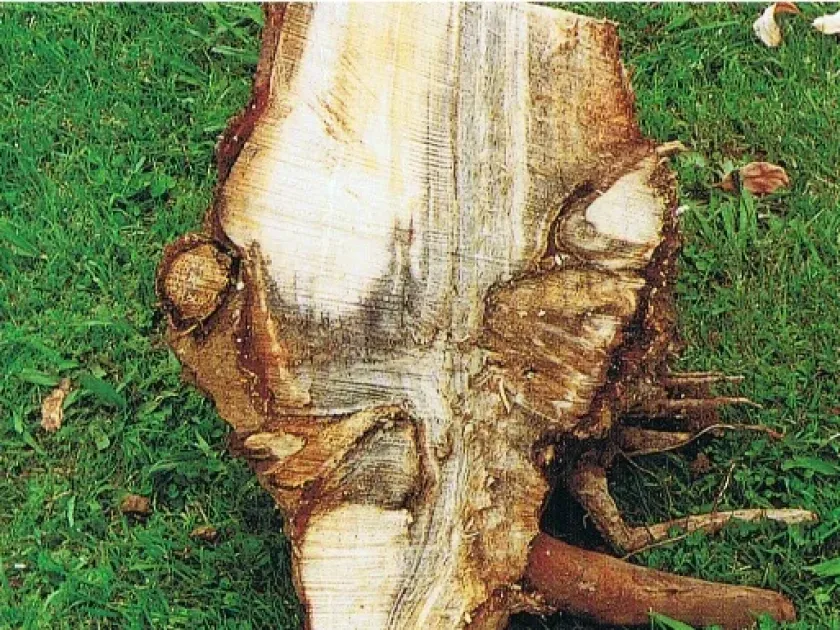
Upon removing the bark, specific changes in the wood can be observed, such as dark spots, streaks, or a general darkening of the sapwood area.
In advanced cases, progressive crown drying is observed, which covers the entire tree, turning it into a standing dead tree in a relatively short period.
A characteristic indicator is the presence of signs of stem pest activity on or under the bark surface, which often precedes the active phase of the disease.
Pathogen
The causative agent of this disease is the fungus Leptographium rostrocylindricum. It is a microscopic ascomycete belonging to the group of imperfect fungi, leading a parasitic lifestyle.
The pathogen primarily affects the vascular system of conifers, entering the tissues through mechanical damage to the bark or tunnels created by xylophagous insects.
The fungus's life cycle is intrinsically linked to the activity of bark beetles and wood-boring insects, which act as primary vectors for spreading fungal spores to healthy trees.
The fungus develops actively in the sapwood, gradually destroying the conductive tissues of the tree, which leads to the disruption of normal water and nutrient supply to the plant.
A special role in the biology of the pathogen is played by the formation of specific conidia, which allow the infection to spread rapidly within the population of conifer stands.
Conditions for development
The development of the disease is favored by stress factors for the tree, such as prolonged drought, unfavorable weather conditions, or mechanical damage to the trunk.
The spread of infection occurs most intensely during periods of high humidity and moderate temperatures, which favor the germination of fungal spores.
The presence of a vector insect population is a critical condition for the onset of an epiphytotic in a coniferous forest or nursery.
The density of stands directly affects the rate of infection: in monocultures or weakened forest areas, the infection spreads significantly faster.
Weakening of the tree's immunity due to air pollution or root system damage also significantly increases the risk of developing this disease.
Why it matters
The disease causes serious economic damage to forestry by triggering mass mortality of conifer species, including spruce, pine, and fir.
The wood of infected trees loses its commercial quality due to discoloration and disruption of internal structure, rendering it unsuitable for industrial use.
This fungal pathogen can lead to the formation of drying foci, which increase in area annually, destroying significant forest tracts.
The death of trees changes the local ecosystem, increasing fire hazards and creating a breeding base for new generations of harmful insects.
Restoring affected areas requires significant time and financial investment in reforestation efforts.
Protection
A key preventive measure is maintaining high sanitary standards in forest stands and the timely removal of infected trees.
Regular monitoring of xylophagous insect populations is necessary, with active measures taken for their localization and control when required.
For the protection of nurseries and valuable plantings, the use of fungicides affecting spore formation and fungal hyphae development is recommended.
It is important to monitor the health status of trees and avoid any mechanical damage to the bark during forestry operations.
- Regular sanitary logging of deadwood.
- Use of traps for monitoring insect vectors.
- Stimulation of natural tree immunity.
Discussion
No discussions yet — be the first.