
Leptographium root disease
Leptographium procerum
Description
Symptoms
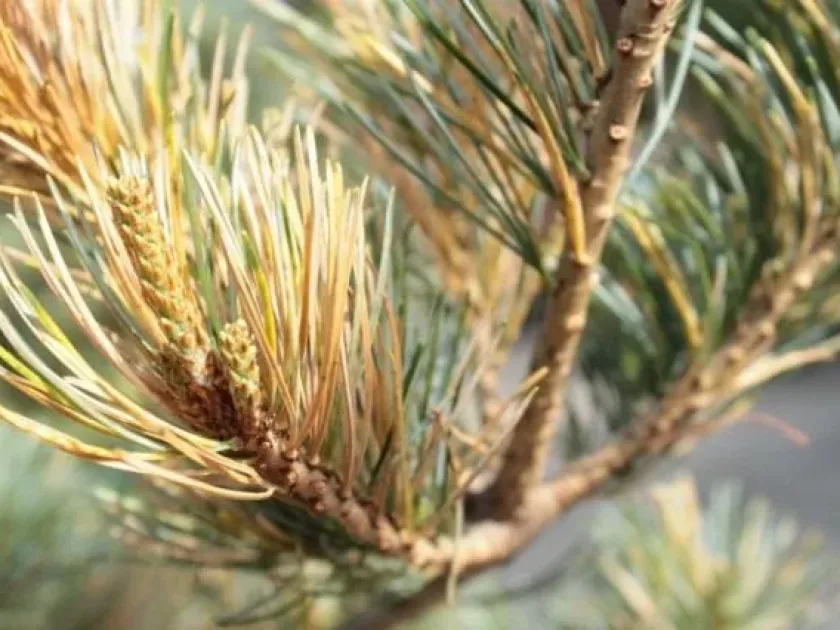
The initial symptom of the disease is the chlorosis and subsequent browning of needles, starting in the lower part of the crown and gradually progressing upwards.
Resinosis, characterized by excessive flow of resin from the base of the trunk, is a hallmark sign. The resin often hardens into streaks on the bark, signaling internal tissue distress.
When the bark is removed, distinct blue-black necrotic streaks or stains can be observed on the sapwood, which are caused by the fungal mycelium colonizing the wood.
In advanced stages of the disease, the tree exhibits significant crown dieback and rapid needle shedding, eventually leading to the death of the entire tree.
Secondary colonization by bark beetles or wood-boring insects is common, as these pests are attracted to the volatile compounds emitted by the stressed or dying trees.
Pathogen
The disease is caused by the microscopic ascomycete fungus Leptographium procerum, which is known for infecting root systems and the vascular tissues of various coniferous tree species.
The fungus is closely associated with bark beetles and weevils, which act as primary vectors by carrying fungal spores from tree to tree during their feeding and breeding activities.
Classified as a vascular wilt and root rot disease, the pathogen typically enters the host plant through wounds in the bark, root injuries, or galleries created by wood-boring insects.
Inside the tree, the mycelium colonizes the cambium and phloem, eventually spreading into the xylem. This colonization obstructs the tree's vascular system, preventing the upward movement of water and nutrients.
The fungus is highly aggressive in stressed stands, producing conidial spores on the surface of the bark, which facilitates rapid secondary spread to nearby trees.
Conditions for development
The infection process is heavily reliant on the presence of wounds or insect-feeding sites, which provide the fungus with entry points into the tree's internal tissues.
Favorable conditions for the disease development include moderate temperatures and high soil or air humidity, which support mycelial growth and spore germination.
Trees under physiological stress, such as those suffering from drought, mechanical root damage, or nutrient deficiencies, show a much higher susceptibility to Leptographium procerum.
Wind-blown spores and the movement of insect vectors between trees serve as the primary pathways for long-distance spread and local dissemination within a forest stand.
In nursery environments, high tree density and poor air circulation create microclimates that are conducive to the spread of the pathogen among young seedlings.
Why it matters
Leptographium procerum is a destructive pathogen that significantly impacts coniferous forests, particularly affecting various pine species like Eastern White Pine and Scotch Pine.
By clogging the vascular vessels, the fungus leads to severe water stress, resulting in the rapid browning and loss of foliage, which eliminates the tree's ability to produce energy via photosynthesis.
In commercial forestry, the disease can cause mass mortality in stands, leading to substantial economic losses and requiring extensive harvesting and sanitation measures.
The infected wood suffers from blue stain, a defect that reduces the aesthetic quality and structural value of the timber, making it less marketable for construction or furniture.
In landscape and urban forestry, the loss of trees to this fungus degrades the ecological value and visual appeal of public parks and residential woodlands.
Protection
Sanitation is the most critical management practice. Infected trees must be identified and removed immediately, followed by the burning or proper disposal of the wood to limit the sporulation source.
Effective control requires an integrated management approach, focusing on reducing the populations of insect vectors that facilitate the introduction and spread of the fungus.
Cultural practices should emphasize the prevention of mechanical damage to tree roots and trunks during forest operations, as wounds are the primary entry points for the pathogen.
In nurseries, preventive applications of systemic fungicides may be necessary during periods of high insect vector activity to protect young, vulnerable stock.
- Regular monitoring of tree health in stands.
- Prompt removal of diseased and dying trees.
- Management of bark beetle and weevil populations.
- Maintaining optimal tree vigor through proper site selection.
- Sanitizing forestry tools to prevent cross-contamination.
Discussion
No discussions yet — be the first.