
Leptographium root disease
Leptographium ponderosum
Description
Symptoms
The most visible sign of infection is the progressive decline of the tree crown. Needles initially turn pale green or yellow before wilting and turning a reddish-brown color.
Resin exudation near the base of the trunk is a common defensive response of the tree. This heavy pitch flow often indicates that the fungal infection is well-established in the root collar.
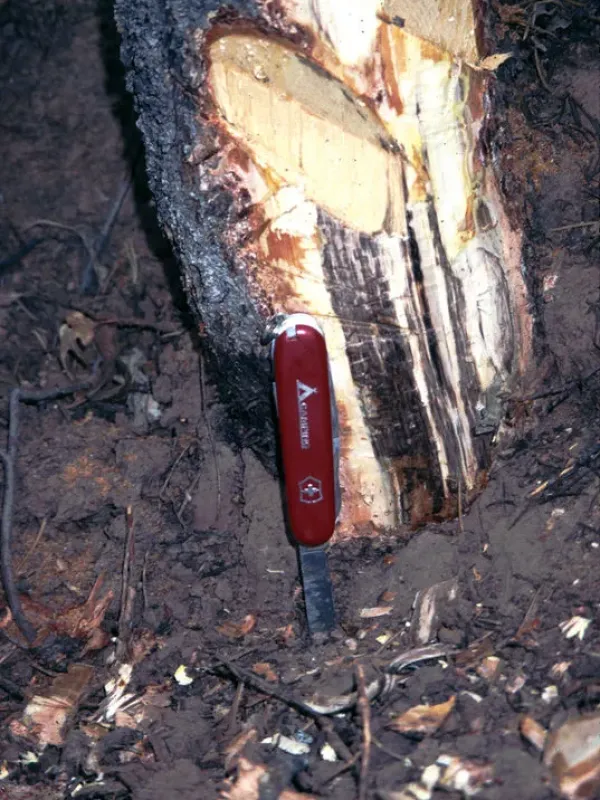
Removing the bark at the base of an infected tree reveals a diagnostic blue-to-black staining of the wood. This discoloration is caused by the dark-pigmented fungal hyphae growing within the tissues.
The presence of insect galleries and frass (sawdust-like material) at the base of the tree is a strong indicator of bark beetle activity, which is often associated with the spread of the disease.
- Crown thinning and needle discoloration.
- Pitch soaking and resin flow at the root collar.
- Blue-black staining of the sapwood.
- Evidence of bark beetle galleries under the bark.
Pathogen
The disease is caused by the fungus Leptographium ponderosum. It is a well-known pathogen that primarily affects the roots and lower stems of pine species, leading to severe vascular damage.
The fungus produces spores (conidia) that are efficiently transported by various bark beetles and wood-boring insects. This association is crucial for the survival and dispersal of the pathogen within forest stands.
Once inside the tree, the fungal mycelium colonizes the xylem, creating dark-colored lesions that disrupt the tree's ability to transport water and essential nutrients from the roots to the needles.
Leptographium ponderosum is persistent in the environment and can survive in stumps, root fragments, and dead timber, acting as a source of inoculum for several consecutive years.
The pathogen's ability to decay and stain wood tissues makes it not only a biological threat to individual trees but also a significant economic problem for the forestry industry.
Conditions for development
The development of the disease is highly correlated with environmental stressors. Drought conditions, soil compaction, and root damage significantly increase tree susceptibility to infection.
Warm and humid weather conditions are favorable for the activity of insect vectors, allowing them to carry the fungal spores effectively from tree to tree during the growing season.
Stands with high planting density are more prone to rapid spread, as the close proximity of root systems facilitates the transmission of the pathogen through root grafts.
Mechanical injuries resulting from logging operations or site preparation provide entry points for the fungal spores, allowing the pathogen to bypass the tree's natural physical defenses.
Poor site management, including the accumulation of fresh slash or woody debris, can support large populations of vector insects, thereby increasing the overall disease pressure in the area.
Why it matters
Leptographium root disease causes systemic damage, leading to the gradual mortality of infected trees. This can result in significant gaps in forest stands, impacting overall productivity.
The economic harm is substantial, as infected timber often exhibits permanent blue-black stains, reducing its value for construction, furniture making, and other wood-based applications.
By weakening the trees, the fungus predisposes them to successful colonization by secondary pests, such as bark beetles, which then accelerate the death of the host tree.
The disease reduces the long-term carbon sequestration potential of the forest and forces landowners to incur costs for unscheduled sanitation logging and replanting operations.
In mature stands, the infection can become endemic, causing continuous tree loss and complicating long-term forest management and harvesting plans.
Protection
Effective management begins with strict forest hygiene. Prompt identification and removal of infected trees are essential to eliminate the primary sources of fungal inoculum.
Forest operators should take precautions during thinning or harvesting to prevent physical damage to the trunks and roots of residual trees, thereby reducing infection entry points.
Controlling bark beetle populations through the use of pheromone traps or trap trees can effectively reduce the vector pressure and limit the rate of disease spread.
Encouraging stand diversity by planting mixed forest species helps create a more resilient ecosystem, making it harder for the pathogen to thrive and spread rapidly.
Regular monitoring of forest stands for early signs of decline or resin flow allows for timely interventions, preventing small clusters of infection from becoming large-scale outbreaks.
Discussion
No discussions yet — be the first.