
Leptographium root disease
Leptographium guttulatum
Description
Symptoms
Initial symptoms of infection include yellowing, thinning, or browning of the needles, which often progress from the lower branches towards the top of the tree.
As the root system becomes severely compromised, trees exhibit reduced leader growth and stunted development compared to healthy neighbors.
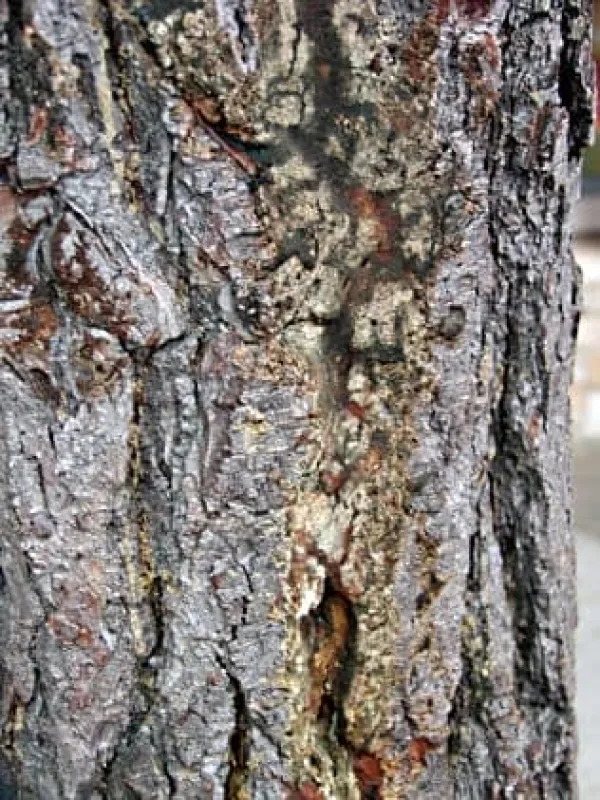
Necrotic lesions can be observed on the roots and root collar, often accompanied by resin exudation as the tree attempts to seal off the fungal invasion.
Internal examination of the sapwood reveals blue or dark brown staining, which indicates the colonization of the fungus within the vascular tissues.
Severe infections eventually lead to tree mortality, characterized by rapid crown death and a noticeable decline in overall forest health within the affected area.
Pathogen
The disease is caused by the fungus Leptographium guttulatum, a pathogen that specifically attacks the vascular and root tissues of various conifer species.
This fungus is an ascomycete that colonizes the cambium and xylem, causing necrotic lesions that significantly disrupt the tree's internal transport systems.
The pathogen produces conidia, which are asexual spores that spread via water splash, wind, or, most commonly, through the action of bark beetles and other wood-boring insects.
Once established, the fungus can persist for many years in stumps, roots, and infected soil, serving as a reservoir for further infection in the plantation.
The biological nature of Leptographium allows it to remain viable even under varying environmental conditions, making it a persistent threat to coniferous forests.
Conditions for development
High soil moisture and poor drainage are the primary environmental triggers that favor the growth and proliferation of Leptographium guttulatum.
Temperatures between 15°C and 22°C provide the optimal range for the fungus to expand its mycelium and produce reproductive structures in host tissues.
Physical trauma to the root system, often caused by heavy machinery or animal browsing, significantly increases the tree's susceptibility to infection.
Stress factors such as drought, nutrient deficiency, or insect infestations weaken the host's defense mechanisms, allowing the fungus to penetrate more easily.
Crowded planting schemes that restrict airflow and increase humidity create a microclimate that facilitates the rapid spread of spores from tree to tree.
Why it matters
Leptographium root disease is highly damaging to timber production and urban landscaping, often leading to the widespread loss of valuable coniferous specimens.
The fungus severely limits the ability of the tree to absorb water and nutrients, ultimately resulting in systemic failure and death of the plant.
Beyond direct tree mortality, the disease causes long-term economic losses by reducing the yield and quality of wood in forestry operations.
Infected trees become attractive targets for secondary pests, such as bark beetles, which can accelerate the decline and death of the entire stand.
The presence of the pathogen creates persistent disease centers that can persist in the environment for decades, limiting land use for future conifer planting.
Protection
The most effective management approach is the sanitation of the site, which includes the prompt removal and destruction of infected trees and their stumps.
Applying preventative fungicides to protect healthy trees in high-risk areas can help suppress the spread of fungal spores during the growing season.
Promoting tree health through appropriate fertilization and site selection is crucial for strengthening natural resistance against root pathogens.
Controlling bark beetle populations is essential, as these insects act as primary vectors for spreading Leptographium spores to healthy trees.
Implementing strict sanitation protocols for forestry tools is necessary to prevent the mechanical transmission of the pathogen between different plantation plots.
Discussion
No discussions yet — be the first.