
Leptographium root disease
Leptographium
Description
Symptoms
The primary symptom of Leptographium infection is crown thinning, where needles turn chlorotic and yellow before eventually shedding. This process often starts from the lower branches and progresses upward.
External signs on the bark include resinosis (excessive resin flow) near the root collar. However, in advanced stages of root decay, the tree may stop producing resin entirely, leading to a sudden, brittle death.
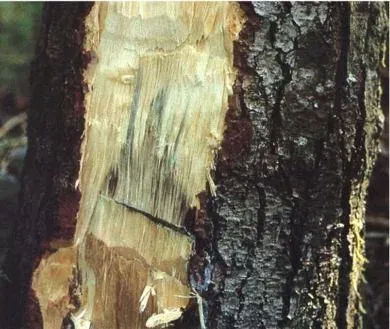
When the bark is removed from the roots or the base of the trunk, characteristic dark, irregular lesions or "black staining" can be seen in the sapwood, which is a diagnostic indicator of the fungus.
Growth rate reduction is a common but often overlooked early warning sign. Infected trees show significantly shorter annual shoot growth compared to healthy neighboring trees of the same age.
In cases of severe root rot, trees may exhibit signs of instability. Because the structural roots are compromised by fungal decay, these trees are more susceptible to windthrow during storms.
Pathogen
Leptographium is a genus of fungi belonging to the Ascomycota phylum, responsible for serious vascular and root diseases in coniferous trees. These pathogens are frequently associated with wood-boring insects, particularly bark beetles and weevils, which assist in fungal transmission.
The fungus colonizes the tree's xylem, obstructing the transport of water and nutrients from the roots to the needles. This leads to internal damage that is often invisible until the symptoms become severe.
Some species, such as Leptographium wageneri, are highly aggressive and can spread through root grafts in dense forest stands. This makes the disease difficult to manage in plantations where root systems are interconnected.
The fungus is characterized by the production of dark, melanized hyphae that cause blue-stain discoloration in the sapwood. This degradation process is a hallmark of the infection cycle.
Leptographium pathogens rely on environmental stressors, such as drought, to successfully infect a host. Once established, they can persist in soil or dead wood for several years, providing a constant reservoir for new infections.
Conditions for development
The development of Leptographium diseases is heavily favored by environmental stress. Periods of drought, high temperatures, or poor soil drainage significantly reduce the defensive capacity of conifer trees.
The presence of insect vectors is a major catalyst for the disease. Beetles that bore into the bark carry fungal spores, introducing the pathogen directly into the inner tissues of the tree.
Soil conditions play a critical role, especially in the transmission of root-infecting species. Compacted or waterlogged soils can weaken root health and facilitate the spread of the fungus via root-to-root contact.
Improper forest management, including the retention of slash or logs from previously infected trees, provides an ideal substrate for fungal growth and the subsequent buildup of inoculum.
High tree density and lack of sunlight reaching the forest floor create humid, stagnant microclimates that are conducive to fungal survival and the movement of spores.
Why it matters
Leptographium infections cause substantial economic damage by killing high-value timber trees and causing widespread mortality in managed forest plantations.
The blue-stain caused by the fungus significantly reduces the market value of the wood. Lumber affected by this staining is often unsuitable for construction or fine woodworking, leading to financial losses.
The disease undermines the structural integrity of forests, turning healthy stands into vulnerable patches of dying trees. This forces landowners to implement costly emergency harvesting or clearing operations.
In ornamental and urban forestry, the loss of mature conifers results in a loss of shade, property value, and landscape beauty, necessitating expensive replanting programs.
Ecological damage is profound, as the infection disrupts the natural succession of forest ecosystems and depletes resources for local wildlife that rely on healthy coniferous habitats.
Protection
- Implement sanitation harvests by removing and destroying infected trees to reduce inoculum.
- Control populations of bark beetles and weevils using pheromone traps and biological methods.
- Maintain tree vigor through appropriate silvicultural practices, including thinning.
- Avoid damaging tree roots during site preparation to prevent infection through wounds.
- Use fungicides in nurseries to protect young seedlings from early-stage infections.
Discussion
No discussions yet — be the first.