
Blue jellyskin
Leptogium cyanescens
Description
Symptoms
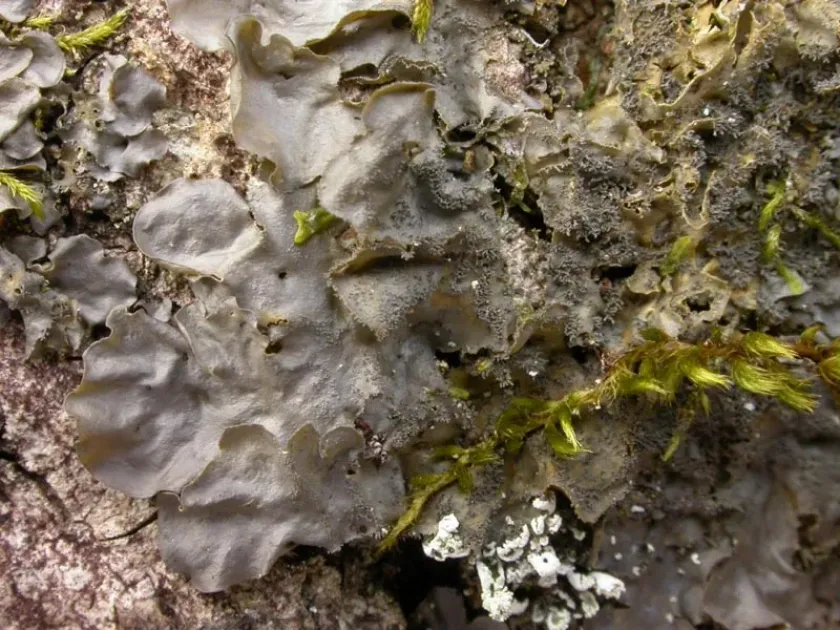
The blue jellyskin (Leptogium cyanescens) is a foliose lichen characterized by its distinct blue-grey or lead-grey appearance.
Upon hydration, the lichen absorbs moisture and turns bright green with a jelly-like texture, which makes it easily identifiable from other species.
The thallus consists of thin, lobes that often lift at the edges, forming circular patterns or complex clusters on the tree bark.
It often features small, saucer-shaped structures known as apothecia, which contain the spores used for the lichen's reproduction.
During dry conditions, the thallus loses its moisture rapidly, becoming brittle, shriveled, and dark, adhering tightly to the surface.
Pathogen
Leptogium cyanescens is not a plant pathogen or a disease; it is a complex organism formed through a symbiosis between fungi and cyanobacteria.
The cyanobacteria within the lichen structure allow it to fix atmospheric nitrogen, contributing to its survival on nutrient-poor surfaces.
The lichen acts solely as an epiphyte, utilizing the bark of trees as a physical support system rather than a source of nutrients.
It lacks haustoria or other parasitic structures that would allow it to penetrate, extract sap, or harm the living tissue of the host tree.
In terms of plant biology, the relationship is neutral, as the lichen derives no benefit or harm from the tree's internal physiological processes.
Conditions for development
Blue jellyskin thrives in environments with consistently high relative humidity, such as sheltered gardens or damp woodlands.
It is sensitive to air pollution and typically grows in areas with excellent air quality, serving as an indicator of a clean environment.
The lichen prefers substrates that retain surface moisture, including the rough, furrowed bark of mature trees found in humid climates.
Shaded locations are ideal for its growth, as excessive direct sunlight can cause the thallus to dry out too quickly to sustain itself.
Dispersal is primarily facilitated by wind or rain splash, allowing spores and thallus fragments to colonize suitable surfaces throughout the area.
Why it matters
While not a parasite, massive colonization of the lichen can potentially hinder the gas exchange of the tree by covering the lenticels.
The presence of extensive lichen cover can trap excess moisture against the bark, creating a habitat for various insect pests and fungal spores.
Heavy lichen growth is often a symptom of an overgrown, poorly pruned canopy, which limits the tree's overall vigor and health.
Secondary infections of bark rot can sometimes occur in the damp environment maintained under the lichen cover, particularly on weakened trees.
Overall, the presence of these organisms is more of an aesthetic issue and an indicator of lack of maintenance rather than a direct threat.
Protection
Proper canopy management, including pruning, is the most effective way to improve air circulation and light penetration to the branches.
Mechanical removal of the lichen can be performed by gently brushing the bark during periods when the tree is dormant and wet.
Applying a lime wash combined with copper-based fungicides can help disinfect the bark surface after physical removal and prevent regrowth.
Healthy, rapidly growing trees are less prone to heavy lichen colonization, making balanced fertilization and proper irrigation key strategies.
Regular inspections of the trunks help identify early colonization, allowing for easy removal before the lichen can cover significant portions of the bark.
Discussion
No discussions yet — be the first.