
Leproloma membranacea
Leproloma membranacea
Description
Symptoms
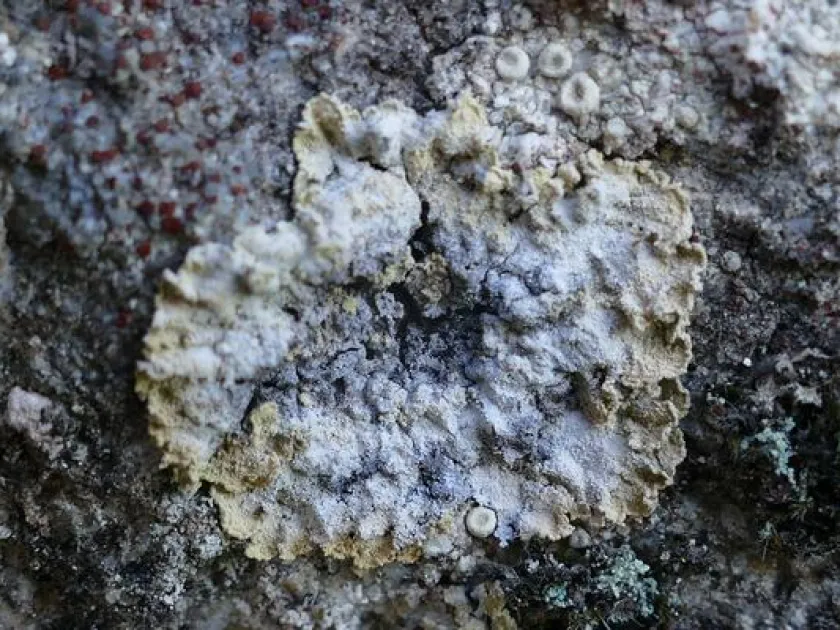
The primary sign of its presence is the appearance of thin, grayish-white to greenish-yellow crusts or films on the bark of tree trunks and branches.
These structures often have a powdery or granular texture and may appear membranous, adhering closely to the substrate without penetrating it.
Unlike pathogenic fungal infections, which are often moist or slimy, the thallus of Leproloma membranacea is typically dry, brittle, and stable.
The patches are most commonly observed on mature trees with deeply fissured bark, providing ample surface area for the lichen to establish.
Observers should note that the edges of the lichen thallus may be slightly raised or frayed, reflecting its slow but steady lateral growth across the bark surface.
Pathogen
Leproloma membranacea is scientifically classified as a lichenized fungus rather than a parasitic plant pathogen or disease agent.
As a symbiotic organism composed of fungal hyphae and algal cells, it obtains energy via photosynthesis and nutrients from the air and rain, not from the tree host.
It does not possess specialized feeding structures and does not damage or consume the plant's vascular system, making it an epiphyte, not a parasite.
In the context of botany and agriculture, it is often misidentified by growers as a fungal disease because it forms visible crusts on tree bark.
Understanding its non-pathogenic nature is essential for correct orchard management and avoiding unnecessary or harmful chemical treatments.
Conditions for development
The development of Leproloma membranacea is heavily dependent on specific microclimatic conditions, specifically high humidity and long periods of moisture.
Because lichens are highly sensitive to air quality, this species is typically found in environments with low levels of sulfur dioxide and industrial pollution.
Orchards with poor ventilation, dense canopies, and inadequate pruning are ideal habitats for the colonization of this lichen species.
Ambient light levels play a crucial role, as the photosynthetic algal component requires consistent, moderate exposure to thrive on the tree surface.
Seasonal moisture patterns and the presence of rough, aged bark provide the necessary stability for the long-term persistence of the lichen colonies.
Why it matters
While not a primary disease agent, significant coverage of Leproloma membranacea can indicate a lack of proper orchard maintenance and sanitation.
Excessive lichen growth may create a microhabitat for various wood-boring insects or other pests to shelter beneath the crust-like structures.
In very thick layers, the lichen can theoretically impede the natural gas exchange of the bark, which may be a concern for highly sensitive young specimens.
The primary economic impact is aesthetic and diagnostic, as it may obscure the early warning signs of actual tree health issues or mechanical bark damage.
Healthy, vigorous trees usually have enough bark shedding mechanisms to limit the excessive growth of these epiphytes naturally.
Protection
Control of Leproloma membranacea is primarily achieved through good orchard hygiene, including the removal of dead wood and old, rough bark.
Mechanical cleaning using a dull-edged tool or a stiff-bristle brush can effectively remove the lichen without damaging the living cambium layer.
Proper pruning practices that open the canopy to air circulation and sunlight naturally discourage the development of lichen colonies on the bark.
White-washing tree trunks with a lime-based mixture can help clean the bark and create a hostile environment for lichen establishment.
- Regular pruning to improve sunlight and air movement within the crown.
- Annual inspection of bark for early identification of dense crust coverage.
- Maintaining tree vigor to support natural bark shedding.
Discussion
No discussions yet — be the first.