
Leprocaulon microscopicus
Leprocaulon microscopicus
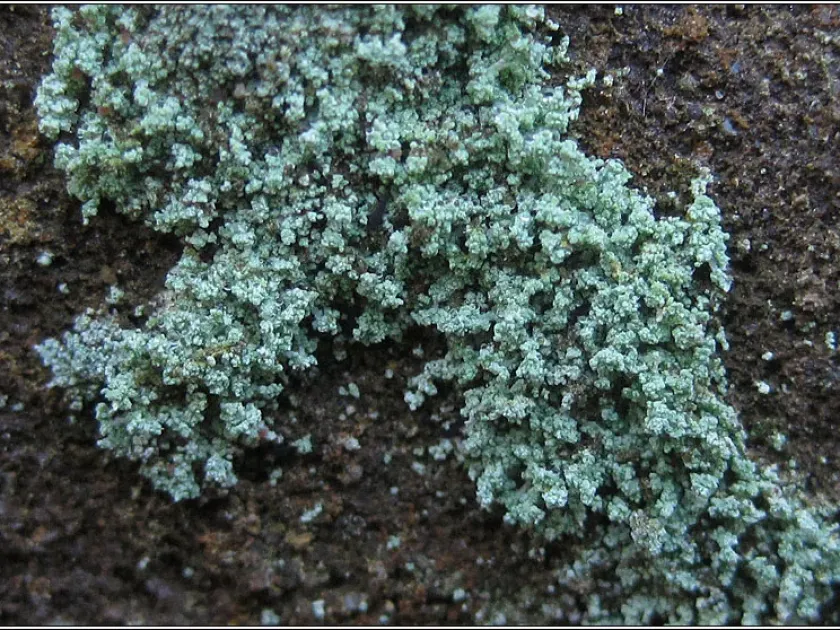
Description
Symptoms
The primary sign of Leprocaulon microscopicus is a fine, powdery or granular coating on the tree bark. It may appear as small patches or tiny, shrub-like structures clinging to the crevices of the bark.
The bark underneath the lichen remains healthy, firm, and undamaged. There are no signs of necrosis, rotting, or sap exudation that would typically accompany a bacterial or fungal disease.
The appearance of the lichen changes significantly with humidity. During dry periods, the growths look brittle and gray, while high-moisture periods cause them to become more elastic and vibrant in color.
Spore dispersal occurs via fragmentation, where small pieces of the thallus are detached by wind or rain, allowing them to take root on other suitable surfaces on the same or neighboring trees.
The colonization is most prominent on older trees with rough bark. Younger trees with smooth, rapidly expanding bark are rarely affected because the lichen cannot establish a stable foothold.
Pathogen
Leprocaulon microscopicus is not a phytopathogenic fungus or bacteria. It is an epiphytic lichen, which means it grows on the surface of plants without deriving nutrients or water from the host tissue.
As a symbiotic organism, it comprises a fungal component and an algal component working together. It is frequently misidentified as a plant disease due to its presence on the bark of fruit trees and woody ornamental plants.
The morphology consists of small, crust-like or shrubby formations that appear gray or greenish-gray. It grows extremely slowly and serves more as an indicator of the environment rather than an active cause of plant decline.
Unlike parasitic fungi, it does not penetrate the cambium or phloem of the tree. It uses the bark simply as a physical substrate for anchoring, relying on atmospheric moisture and nutrient deposits from the air.
In biological classification, it belongs to the family Stereocaulaceae. Its presence confirms that the tree has a stable surface and that the surrounding air quality is generally good enough to support lichen growth.
Conditions for development
Development is entirely dependent on sustained environmental moisture. High relative humidity is a prerequisite for the metabolic activity and reproduction of this species.
Rough bark texture is essential for the colonization of this lichen. Mature trees provide the necessary surface area where dust and moisture can collect, facilitating the survival of the organism.
Shaded or semi-shaded areas of the canopy are preferred environments. A lack of direct sunlight, coupled with poor airflow in dense plantings, creates the perfect microclimate for lichen growth.
The organism is sensitive to air pollution, specifically sulfur dioxide. Consequently, its growth is often found in areas with cleaner air, rather than in heavily industrial or polluted urban settings.
Long periods of rain or heavy fog are critical for the organism to expand its colony. Once established, it becomes highly resilient to temporary dry spells until conditions improve again.
Why it matters
There is minimal direct harm caused to the host tree. The lichen does not consume the host's resources and does not obstruct the tree's vital physiological processes in any significant manner.
The main issue is that dense lichen growth provides a refuge for hibernating insect pests, such as scales, mites, and various larvae. These insects can hide in the lichen structure during winter.
While some argue that the lichen could impede gas exchange through the lenticels, this impact is generally negligible for healthy, vigorous trees. It is mostly a cosmetic or aesthetic concern for orchard owners.
In high-end fruit production, maintaining clean bark is often considered a standard sanitary practice to minimize potential pest hiding spots and to keep the trees looking well-managed.
Ultimately, while not a disease, it serves as a signal to the gardener that the tree density might be too high or that the canopy needs better maintenance and air circulation.
Protection
Preventive maintenance involves regular pruning to improve light penetration and air movement within the crown, which discourages the growth of lichen on the scaffold branches.
Mechanical removal is the most direct and chemical-free method. Using a wire brush or a specialized scraper, one can remove the lichen from the bark during the dormant winter season.
Whitewashing the tree trunks with a lime-based solution is a traditional and highly effective method. The high pH created by the lime effectively prevents lichen spores from establishing themselves.
Applications of 3% iron sulfate or copper-based fungicides during the dormant period can effectively eliminate lichen colonies, as these substances are toxic to the lichen's fungal component.
- Prune trees to increase airflow and light.
- Use a wire brush to gently remove lichen during winter.
- Apply lime whitewash to trunks and main branches.
- Spray with iron sulfate solutions to kill epiphytic growths.
Discussion
No discussions yet — be the first.