
Lepraria
Lepraria
Description
Symptoms
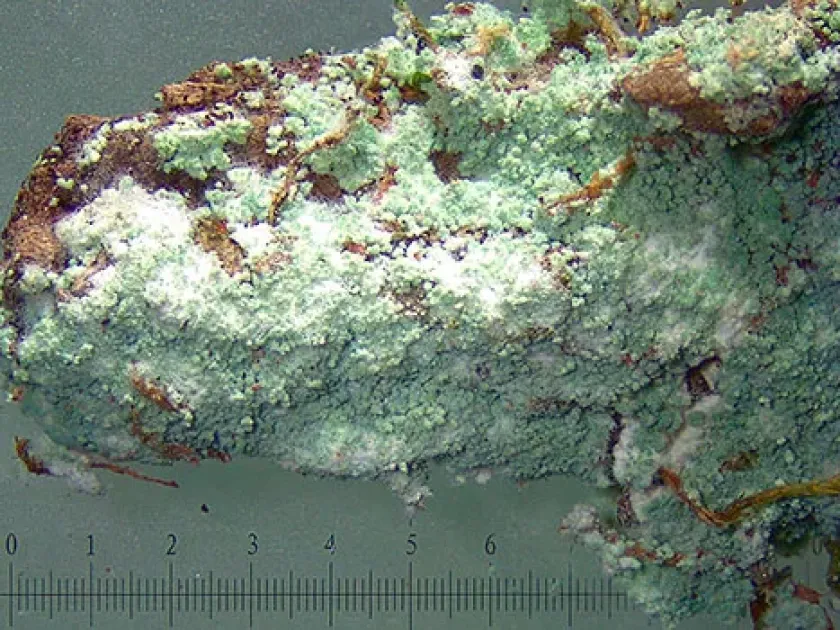
Lepraria is a type of crustose lichen characterized by its distinctive, loose, and powdery or granular appearance on the bark of trees.
The affected areas look like patches of dust or fine powder, typically ranging in color from whitish-grey to bright green or yellow.
It lacks a well-defined thallus structure and instead appears as a diffuse, unorganized layer that coats the surface of trunks and branches.
When touched or scraped, the lichen easily disintegrates into fine particles, revealing that it does not form a hard crust like some other species.
Its presence is often spotted in patches that expand over time, covering more of the tree's surface under conditions of high humidity.
Pathogen
Biologically, Lepraria is not a plant disease in the parasitic sense, but a genus of lichenized fungi living in a mutualistic association.
The structure consists of fungal hyphae that provide physical support and protection to colonies of algae or cyanobacteria.
Reproduction is primarily vegetative, occurring through soredia, which are tiny clusters of algal cells wrapped in fungal filaments.
These soredia are efficiently spread by wind, rain splashes, and insects to new surfaces where they can settle and begin growing.
As an epiphyte, it utilizes the tree bark purely as a substrate, not as a source of nutritional elements for its metabolism.
Conditions for development
Growth of Lepraria is highly dependent on environmental conditions, specifically thriving in areas with consistently high humidity levels.
Gardens or forests with dense canopies that restrict airflow and sunlight provide an ideal, sheltered environment for this lichen to proliferate.
Trees with rough, aging, or slightly damaged bark are more susceptible to colonization because they retain moisture better than smooth surfaces.
Lack of regular maintenance, such as pruning, leads to a stagnant microclimate that encourages the colonization of epiphytes on tree trunks.
Proximity to water sources or areas with poor drainage often results in higher incidences of Lepraria due to persistent ambient moisture.
Why it matters
The primary concern with Lepraria is the obstruction of lenticels, which are the small pores in the bark necessary for gas exchange in trees.
The persistent moisture trapped under the powdery layer of the lichen can create a habitat for secondary pathogens, such as wood-decaying fungi.
Lichen patches often serve as hiding spots or overwintering sites for various insect pests, including scales, mites, and their larvae.
While the lichen itself is not directly parasitic, its widespread presence is often an indicator that the host tree is suffering from poor vitality.
The aesthetic decline of the tree is also a factor, as heavy colonization can detract from the visual health and neatness of ornamental trees.
Protection
Improving the tree's environment through regular pruning and crown thinning is the most effective way to prevent the establishment of Lepraria.
Manual removal of the lichen during the dormant season using a stiff brush can help clear the bark without causing significant injury to the tree.
Following manual cleaning, the application of lime-based washes or copper-containing fungicides can disinfect the bark and slow regrowth.
Encouraging tree health through proper fertilization and watering helps the tree maintain a more resistant surface and active growth.
- Prune crowns to increase light penetration and air circulation throughout the tree.
- Cleanse trunks and branches periodically to remove epiphyte accumulation.
- Address tree health issues that may be contributing to the lack of tree vigor.
Discussion
No discussions yet — be the first.