
Lepista sordida
Lepista sordida
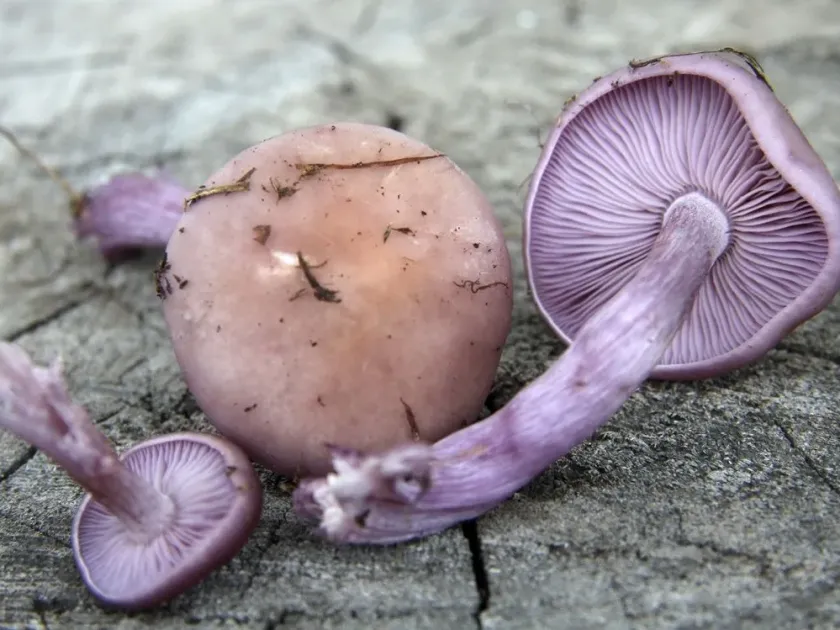
Description
Pathogen
Lepista sordida, commonly known as the squalid blewit, is not a plant disease or a pathogen. It belongs to the Tricholomataceae family and functions primarily as a saprotroph in nature.
Its biological role involves the decomposition of organic matter, such as dead leaves, decaying wood, and humus. It acts as a recycler, breaking down complex organic compounds into simpler forms.
Unlike parasitic fungi that attack living plant tissues, Lepista sordida thrives entirely on non-living substrates. It does not penetrate roots or stems, meaning it poses no threat to plant integrity.
The organism develops a network of mycelium within the soil. This mycelium is beneficial for the soil ecosystem as it contributes to the mineralization process, essential for plant nutrient uptake.
Mycologists classify this species as a decomposer. Consequently, it is incorrectly identified as a "disease" when farmers notice its fruiting bodies growing near crops in nutrient-rich or heavily mulched soil.
Conditions for development
Growth of the Lepista sordida mycelium is driven by environmental moisture and the availability of organic debris. It thrives in humid conditions and temperate climates, often appearing after rainfall.
The fungus prefers humus-rich soil and often colonizes garden beds or forest edges. It is particularly active during the late summer and autumn months when temperature and humidity levels are optimal.
Mulched soils, especially those covered with wood chips or straw, provide a perfect habitat. In such environments, the fungus can form extensive mycelial networks, yet it remains confined to the decomposing matter.
The temperature range for its vegetative growth is typically between 10 and 22 degrees Celsius. It is a resilient species that can survive through various soil conditions provided that organic food sources are present.
Agricultural practices such as heavy organic fertilization create favorable conditions for the appearance of this fungus. However, this is a response to the soil's fertility rather than an indication of plant distress.
Why it matters
Lepista sordida causes no harm to agricultural or horticultural crops. It is not an agent of plant disease, wilt, or root rot. Labeling it as a threat is a common misconception.
The presence of this fungus is actually a sign of healthy, fertile soil with an active decomposition cycle. It does not compete with plants for nutrients in a way that would inhibit crop growth or yield.
No agricultural damage is reported in relation to this species. Farmers and gardeners should not worry about crop loss, as the fungus is strictly limited to feeding on dead, organic materials.
From a technical standpoint, this fungus is not a target for chemical control. The application of fungicides to eliminate a saprotroph is generally discouraged, as it can disrupt the beneficial soil microbiome.
The only concern related to this mushroom is safety for human consumption. Because fungi can absorb chemicals from the soil, they should never be harvested from fields treated with synthetic pesticides.
Protection
There are no control measures required against Lepista sordida as it is not a plant pathogen. Any attempt to eliminate it is unnecessary from an agronomic perspective.
If the appearance of fruiting bodies is undesirable for aesthetic reasons, simple mechanical removal is sufficient. Tilling or digging the soil will disrupt the mycelium and discourage future growth.
Maintaining proper soil drainage is a general practice that also happens to limit the growth of saprotrophic fungi. Reducing excessive surface moisture prevents the mushrooms from developing above ground.
Proper management of compost and organic fertilizer is key. Incorporating organic matter deep into the soil rather than leaving it on the surface reduces the available substrate for fungal development.
Focusing on healthy crop rotation and maintaining good soil aeration provides the best environment for plants. There is no need for chemical intervention to manage this harmless member of the soil community.
Discussion
No discussions yet — be the first.