
Lepista luscina
Lepista luscina
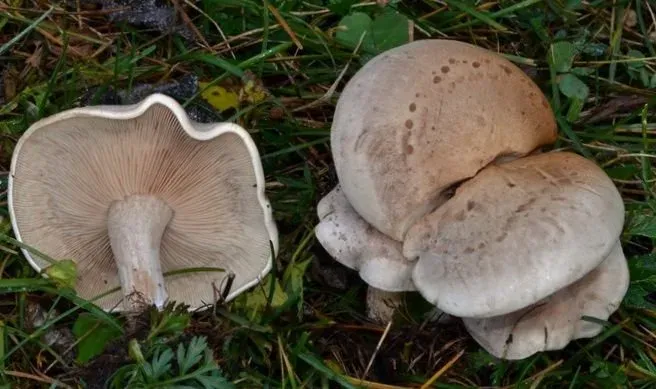
Description
Pathogen
Lepista luscina is a species of saprotrophic fungus within the Tricholomataceae family and does not function as a plant pathogen.
The fungus feeds on organic matter and decaying plant remains in the soil, which helps in the recycling of nutrients within the ecosystem.
It does not attack living crops or tissues of agricultural plants, as it lacks the enzymatic capabilities associated with phytopathogenic fungi.
The organism grows as a mycelium within the topsoil or organic litter layers, focusing entirely on decomposition rather than parasitism.
Classifying Lepista luscina as a plant disease is incorrect, as it has no negative impact on the growth or health of agricultural crops.
Conditions for development
Development of the fruit bodies of Lepista luscina is stimulated by high soil moisture levels and cool, temperate weather conditions.
The fungus is commonly found in meadow environments, pastures, and fields where there is an accumulation of decaying vegetable matter.
Optimal environmental conditions usually occur during the spring and autumn seasons when temperatures are moderate and rainfall is sufficient.
Well-drained but moist soils with high organic content provide the best environment for the mycelium to establish and spread.
The fungus can remain dormant during unfavorable dry spells, becoming active again when moisture levels return to the required range.
Why it matters
Lepista luscina is harmless to agricultural crops and poses no threat to the yield or quality of any cultivated plant species.
As a saprotroph, it performs the beneficial function of breaking down organic debris, which contributes to overall soil enrichment and health.
There is no economic harm associated with this species, and it is not a factor in any documented agricultural plant pathology.
Its interaction with other soil microorganisms is generally peaceful, and it does not produce metabolites that harm crop root systems.
Farmers do not need to consider this mushroom a threat, as it does not compete for nutrients required by cereal or vegetable crops.
Protection
No protective measures or control strategies are necessary for Lepista luscina because it is not a pathogen of agricultural crops.
Application of fungicides aimed at eradicating this fungus is highly discouraged as it can disrupt the natural beneficial soil microbiota.
Maintaining proper field management, including balanced fertilization and crop rotation, is sufficient to preserve soil health without targeting saprotrophs.
If the appearance of mushrooms is undesirable for specific agricultural aesthetic or operational reasons, simple physical removal is sufficient.
Focusing on genuine threats and pathogens remains the priority, ensuring that resources are not wasted on harmless saprotrophic fungal species.
Discussion
No discussions yet — be the first.