
Lepista irina
Lepista irina
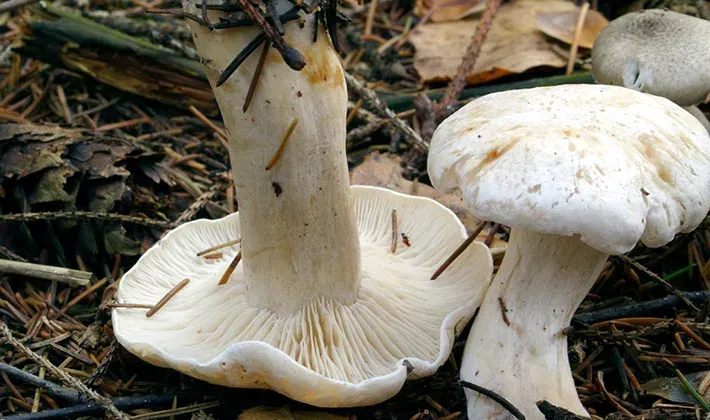
Description
Pathogen
Lepista irina, commonly known as the scented knight or irina blewit, is not a plant disease. It is a saprotrophic fungus belonging to the Tricholomataceae family.
The organism does not act as a pathogen or parasite on agricultural crops. Instead, it lives on decaying organic matter, functioning as an essential decomposer in the ecosystem.
From a biological perspective, this fungus is a complex organism that forms mycelial networks in leaf litter, soil, and woody debris to absorb nutrients through extracellular digestion.
Unlike parasitic fungi that invade living host tissue, Lepista irina lacks the mechanisms required to infect or damage agricultural plants.
Its identification is based on macroscopic features, such as its fragrant, fruity smell and pinkish-cream spore print, which distinguish it from harmful phytopathogenic fungi.
Conditions for development
The development of Lepista irina fruiting bodies is most frequent during the autumn season, triggered by sufficient soil moisture and mild temperatures.
The fungus thrives in habitats rich in organic matter, including orchards, wooded areas, and parks. It requires a stable environment to maintain its mycelial growth.
Optimum conditions for the fungus involve high humidity and high organic carbon content in the soil. It is sensitive to rapid desiccation and harsh climatic extremes.
Dissemination occurs via spores, which are dispersed by wind or insects. Once spores settle on suitable organic debris, the fungal network begins to colonize the substrate.
Agricultural practices that emphasize heavy tillage can disrupt the mycelium, as this fungus prefers undisturbed areas with high levels of organic accumulation.
Why it matters
Lepista irina poses no threat to agricultural crops. It does not cause root rots, wilting, leaf spots, or any other signs of plant pathology.
In fact, this fungus contributes to soil fertility by breaking down complex organic materials like cellulose and lignin, thereby releasing nutrients into the soil profile.
The metabolic activities of this species are entirely beneficial for the recycling of biomass within the field ecosystem, promoting biological diversity.
No economic damage is associated with the presence of Lepista irina. There is no need for fungicide application or any other control measure regarding this species.
In the context of farm management, it is considered a neutral or beneficial component of the soil mycobiota, indicating healthy biological activity in the soil environment.
Discussion
No discussions yet — be the first.