
Lepiota rufipes
Lepiota rufipes
Description
Symptoms
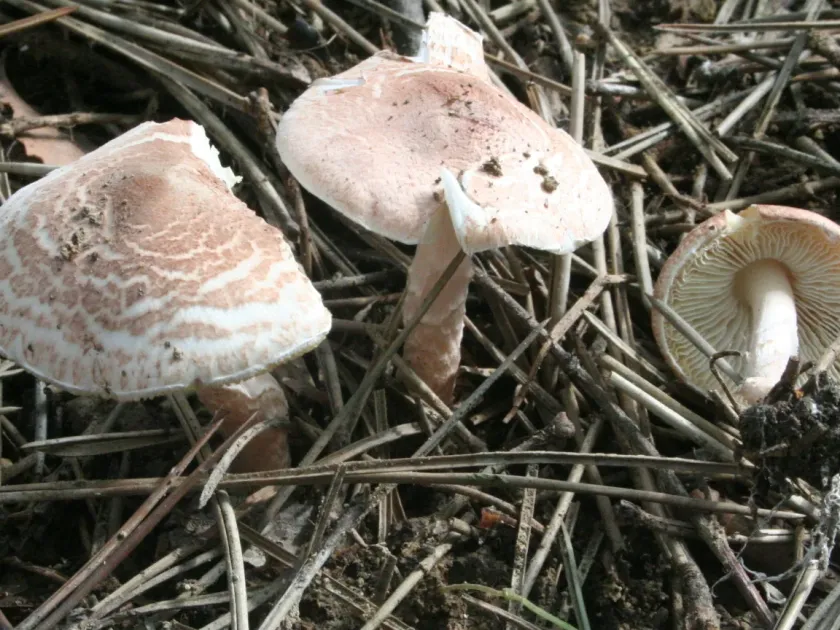
Lepiota rufipes is a gilled mushroom belonging to the Agaricaceae family. The cap is typically covered with fine scales, ranging from whitish to brownish in color depending on the maturity of the specimen.
The key diagnostic feature is the stem, which exhibits a distinct reddish or rufous tint, particularly towards the base, which distinguishes it from many other similar small Lepiota species.
The gills are free from the stem, crowded, and initially white, potentially turning cream-colored as the mushroom matures. Spore prints for this species are generally white.
These mushrooms are often found growing in small groups or scattered clusters in parklands, gardens, and well-maintained lawns rich in organic matter.
While often unnoticed due to their small stature, they become highly visible in damp weather when the caps expand, revealing the characteristic reddish tones on the stipe.
Pathogen
This species is a saprotroph, meaning it feeds on decaying organic material. It is not a parasite and does not cause diseases in living plants.
Biologically, it acts as a decomposer, breaking down plant debris, leaf litter, and small woody fragments within the soil profile, contributing to nutrient cycling.
Labeling it as a "disease" is a common misconception; it is simply a fungal colonizer that appears when organic conditions are favorable for its development.
The vegetative part of the fungus, the mycelium, spreads through the soil or mulch layer, secreting enzymes that digest organic matter into simpler nutrients.
The life cycle is typical for basidiomycetes, moving from a subsurface mycelial network to the emergence of fruiting bodies to release spores into the environment.
Conditions for development
High soil moisture is the primary driver for the development of Lepiota rufipes. Periods of heavy or persistent rain are usually required for fruiting bodies to emerge.
The ideal temperature for active growth ranges between 15°C and 22°C, making it a common sight during spring and autumn, or temperate summer months.
The presence of abundant organic mulch, such as wood chips or leaf mold, provides the essential energy source that allows this fungus to colonize an area successfully.
Soil with a neutral to slightly acidic pH is generally preferred, especially if it is well-structured and maintains a consistent, high humidity level.
Poor airflow and dense vegetation cover can create a humid microclimate near the soil surface, further encouraging the colonization and fruiting of these fungi.
Why it matters
Because it is not a parasite, it does not damage living crops directly. However, its presence can indicate management issues, such as poor drainage or excessive decaying organic matter.
The most significant concern regarding this species is the potential toxicity of the Lepiota genus. Many members contain lethal amatoxins, posing a risk if ingested by pets or children.
In nursery or greenhouse settings, intense mycelial growth can alter soil aeration and nutrient dynamics, which may indirectly affect the root health of sensitive potted plants.
For gardeners, mass fruiting can be an aesthetic nuisance, disrupting the visual uniformity of decorative lawns or ornamental landscape beds.
For individuals with respiratory sensitivities, the large-scale release of spores from clusters of these mushrooms may lead to localized allergic reactions.
Protection
The most effective management strategy is cultural: remove excessive mulch, leaf litter, and woody debris to eliminate the fungus's food source.
Improving soil drainage is essential to reduce the moisture levels required for the mushroom to fruit, essentially making the environment hostile to its growth.
Regular aeration and raking of the topsoil can help disrupt the underground mycelial network, making it difficult for the fungus to develop large clusters.
If mushrooms appear, they should be collected and disposed of carefully to prevent the dispersal of spores throughout the garden area.
- Keep lawns and beds free from fallen debris.
- Adjust irrigation schedules to prevent waterlogging.
- Ensure adequate ventilation for plantings to reduce humidity.
- Replace or remove infested potting soil if fungal growth becomes overwhelming.
Discussion
No discussions yet — be the first.