
Lepiota lilacea
Lepiota lilacea
Description
Symptoms
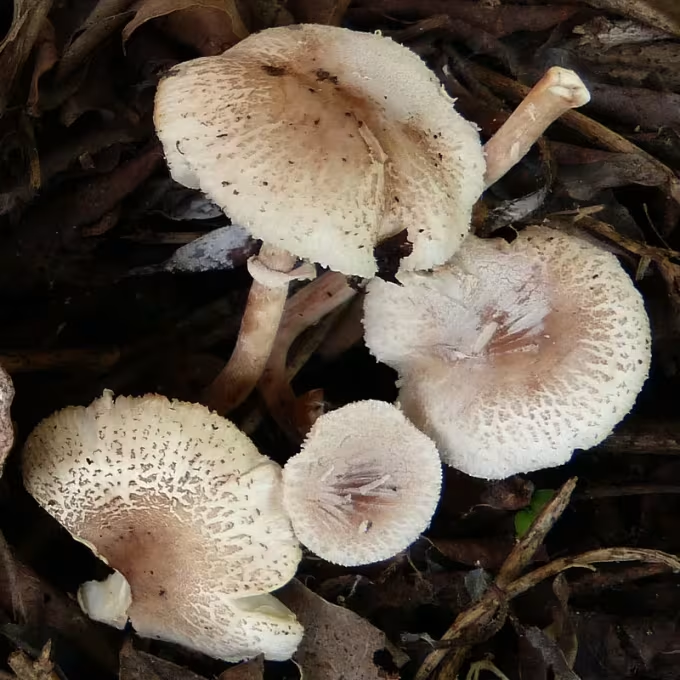
The primary sign of this fungus is the appearance of fruiting bodies on the soil surface. These mushrooms are recognized by their distinct lilac or pinkish cap, which is covered with fine, delicate scales.
The fruiting bodies are small, typically measuring 2 to 4 centimeters in diameter. As they mature, the cap transitions from a rounded shape to a more flattened profile, often retaining a small central bump.
The gills are free from the stem and possess a whitish or yellowish hue. This is a critical diagnostic feature when differentiating this species from other soil-dwelling mushrooms found in similar habitats.
The stem is slender and fibrous, frequently bearing a ring that may be fragile or disappear as the mushroom ages. The base of the stem might show slight fuzziness, characteristic of the mycelial network.
The occurrence of white mycelial mats within the upper soil layer indicates active growth. In some cases, a faint, non-specific fungal odor may be detected near the site of colony development.
Pathogen
Lepiota lilacea is a gilled mushroom species within the Agaricaceae family. From an agronomic perspective, it is not considered a plant disease as it does not infect living plant tissues or cause crop failure.
This fungus is classified as a saprotroph. It thrives by decomposing organic matter such as decaying leaves, plant debris, and humus found in soil, playing a key role in the natural cycle of nutrients.
The mycelium colonizes the soil surface and organic matter, effectively breaking down lignin and cellulose. Unlike parasitic fungi, it does not possess structures to invade or extract nutrients from living plant hosts.
Biologically, it serves as an essential part of the soil microflora, contributing to the breakdown of organic materials. However, its presence in greenhouses or nurseries can be problematic for agricultural management.
Scientific research on Lepiota lilacea remains focused on mycology and the classification of the genus Lepiota, which contains numerous species that require precise microscopic examination for identification.
Conditions for development
Lepiota lilacea favors moist and shaded environments with a high content of humus. The ideal conditions for fruiting include periods of high soil moisture and mild ambient temperatures.
While commonly found in forests, it can also appear in well-manured gardens, parks, and cultivated lands. It is particularly common in areas where large amounts of compost or organic fertilizers have been added.
Growth is significantly enhanced by persistent rains and lack of direct sunlight. A soil pH that is neutral or slightly acidic provides the most suitable medium for the mycelium to establish itself.
In protected cultivation environments like greenhouses, the introduction of this fungus is often linked to poorly composted organic matter or substrate that has not been properly sterilized before use.
The optimal temperature for fruiting is between 15°C and 22°C. Consequently, mass appearances are typically observed during the late summer or early autumn months when weather patterns are favorable.
Why it matters
The main concern regarding Lepiota lilacea is its toxicity. As an inedible mushroom, it poses a significant risk to humans and pets if accidentally ingested, requiring caution in gardens and parks.
Although it does not directly harm crops through infection, the dense growth of mycelium can lead to soil compaction, which may restrict oxygen availability to the root systems of young plants.
In nursery settings, the fungus may compete with young plants for space and moisture. Furthermore, a heavy presence of fruiting bodies can be aesthetically undesirable and difficult to manage in professional landscaping.
The presence of this fungus is often an indicator of excessive, undecomposed organic matter in the soil, which can indirectly create conditions favorable for other, more damaging soil-borne pathogens.
Beginners might confuse this fungus with edible varieties, which presents a safety hazard. Proper identification and awareness are essential for maintaining a safe agricultural or gardening space.
Protection
Management of Lepiota lilacea focuses on proper soil maintenance and the regulation of moisture levels. Chemical treatments are rarely needed and generally discouraged for this type of saprotroph.
Improving soil aeration through regular hoeing and the addition of amendments like sand or perlite creates an environment that is less favorable for the growth of fungal mycelia.
A key preventive strategy is to use only fully decomposed compost. Fresh or improperly processed manure is a common vehicle for the spores that lead to the appearance of such fungi in gardens.
Mechanical removal of the fruiting bodies before they begin to release spores is a highly effective way to curb their spread. Consistently clearing these mushrooms will eventually weaken the local mycelium.
Proper water management is vital; avoiding waterlogged conditions and ensuring efficient drainage significantly reduces the likelihood of the fungus becoming established in greenhouses or nurseries.
Discussion
No discussions yet — be the first.