
Lepiota ignivolvata
Lepiota ignivolvata
Description
Symptoms
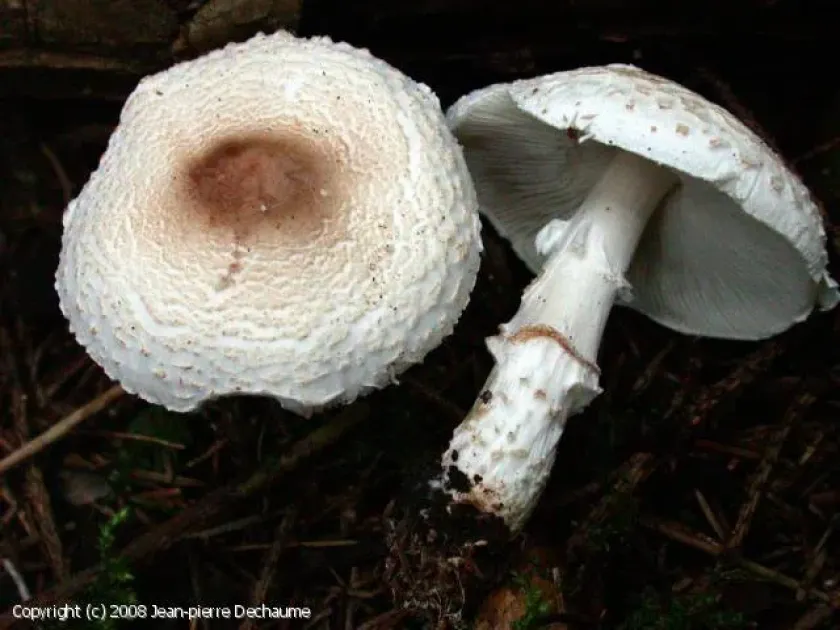
The cap of the mushroom ranges from 4 to 12 cm in diameter. It is characterized by a cream-colored surface covered in brownish or ochre scales, which are denser in the center, creating a prominent dark patch.
The gills are free, crowded, and initially white, but they may develop a yellowish tint as the mushroom matures or is handled. This color change is a key diagnostic characteristic for field identification.
The stem features a distinct ring with a reddish-brown or "fiery" edge, which gives the species its common name. The base of the stem is typically thickened and may show traces of dark residue.
The flesh is white and possesses a mild, flour-like odor. Despite this, the mushroom is considered toxic and should never be consumed, as it causes severe gastrointestinal distress.
These mushrooms often grow in clusters or "fairy rings" in areas with heavy mulch or high organic soil content, making them conspicuous during the late summer and autumn seasons.
Pathogen
Lepiota ignivolvata is a gilled mushroom in the Agaricaceae family. It is not a phytopathogen that targets living plant tissues, but rather a saprotrophic fungus that decomposes organic matter in soil, leaf litter, and garden mulch.
The mycelium of this fungus spreads through nutrient-rich soil, breaking down complex organic compounds. While it plays a natural role in decomposition, its excessive growth in garden environments can be undesirable for landscape management.
The organism exists primarily as an extensive underground mycelial network. The visible portion, the mushroom, appears when environmental conditions—specifically moisture and temperature—are optimal for reproduction.
Because it is a saprotroph, it thrives where there is an accumulation of decaying vegetable matter. Understanding its biological nature helps distinguish it from plant-pathogenic fungi that require living hosts to complete their life cycles.
Taxonomically, it is identified by specific features, including the ring on the stem and the scale pattern on the cap, distinguishing it from other species within the genus, including highly toxic look-alikes.
Conditions for development
Lepiota ignivolvata prefers moist, shaded habitats. It is commonly found in gardens under dense shrubs or trees where a stable microclimate with high humidity is maintained throughout the season.
Adequate soil moisture is the primary driver for mycelial activity and the subsequent emergence of fruiting bodies. Rainfall and prolonged periods of high humidity are essential triggers for its development.
Deep layers of organic mulch provide an ideal substrate for the fungus. If the mulch is not turned or replaced, it creates a long-term reservoir for the fungal network, allowing it to return annually.
The fungus thrives in moderate to warm temperatures. It is most active during the transition into autumn, when soil moisture levels are consistently high and the humidity levels are conducive to spore dispersal.
Spore dissemination occurs primarily via wind and rain. Because spores are microscopic and easily airborne, the fungus can colonize any new area that offers the necessary organic substrate and moisture levels.
Why it matters
The primary hazard of Lepiota ignivolvata is its toxicity to humans and pets. Ingestion can lead to acute poisoning, characterized by nausea, vomiting, and severe abdominal pain, necessitating medical attention.
For plants, the mushroom is not a direct pathogen, but its presence can indicate poor soil management. Heavy mycelial growth can alter soil aeration and compete for nutrients, potentially impacting sensitive ornamental plants.
The visual impact of mushroom clusters on lawns and flower beds can detract from the aesthetics of a garden. Many gardeners find the presence of such fungi undesirable in manicured areas.
The existence of the fungus often points to excessive moisture or poor drainage in the garden, which may be more harmful to the plants than the fungus itself. Addressing these issues is part of overall plant health management.
There is a specific risk to children and curious pets who might interact with the mushrooms. Due to the high toxicity, prompt removal of all fruiting bodies is necessary to prevent accidental ingestion.
Protection
The most effective control method is the physical removal of organic debris. Cleaning up fallen leaves and old mulch removes the food source that the mycelium requires to survive and reproduce.
Improving drainage and aeration is vital. By reducing soil moisture and keeping the surface layer dry, you create an environment that is hostile to the development of this fungal species.
Fruiting bodies should be removed as soon as they are spotted. When removing them, take a small amount of the surrounding soil to ensure the mycelial base is also extracted, and dispose of the material away from the site.
Chemical control is generally not recommended or necessary. Focusing on cultural practices, such as proper irrigation and the removal of stagnant organic matter, provides a sustainable and safe solution.
Replacing organic mulch with inorganic materials like gravel or landscape fabric can prevent the fungus from establishing itself in frequently affected areas, permanently removing the habitat for the mycelium.
Discussion
No discussions yet — be the first.