
Lepiota helveola
Lepiota helveola
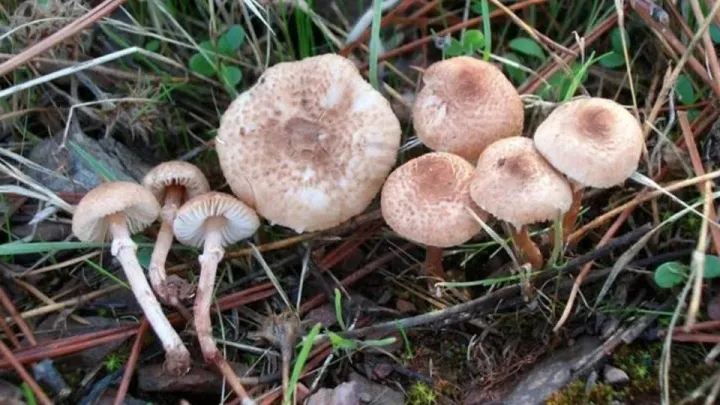
Description
Symptoms
Lepiota helveola is a small gilled mushroom with a cap diameter typically ranging from 2 to 5 centimeters. Young specimens start as hemispherical, later expanding to a flat or slightly convex shape, often featuring a distinct dark central bump.
The cap surface is covered in fine, reddish-brown or brownish-pink scales against a lighter background. This patterned appearance is a crucial diagnostic feature that helps distinguish it from other mushroom species.
The gills are free, crowded, and generally white or yellowish. Observing the arrangement and color of these gills is essential for amateur mycologists attempting to identify the specimen.
The stem is slender, cylindrical, and usually grows up to 5 centimeters in height. It has a smooth light area above a faint ring, while the section below the ring is covered in scales similar to those found on the cap.
The ring on the stem is often poorly developed and may disappear as the mushroom matures. When damaged, the flesh may show a slight reddish discoloration, which is a common trait in several species of this genus.
Pathogen
This object is a macromycete belonging to the Agaricaceae family. While not a pathogen that causes disease in agricultural crops, it is a significant biological hazard due to the potent toxins it contains, which pose a severe risk to humans and animals.
The fungus functions as a saprotroph, feeding on decaying organic matter in the soil, such as leaf litter or garden debris. Its mycelium spreads through the upper soil layers, producing fruiting bodies when conditions are favorable.
Scientifically known as Lepiota helveola, this species is classified as one of the most poisonous members of the Lepiota genus. It contains dangerous compounds that can cause systemic organ failure if ingested.
Reproduction occurs via spores produced on the surface of the gills. These microscopic spores are easily dispersed by wind, water, or insects, allowing the fungus to colonize new areas across a garden or farm property.
The fungus is highly adaptable to man-made environments. It is frequently observed in gardens, parks, and around paths where soil has been disturbed or organic fertilizers have been applied.
Conditions for development
Lepiota helveola thrives in environments with high humidity and moisture levels. Peak development typically occurs during the late summer and autumn months when temperature and rainfall patterns are optimal.
Soils rich in organic matter provide the ideal substrate for this mushroom to establish its mycelium. This makes well-tended garden plots with mulch or high humus content particularly susceptible to colonization.
The mushroom prefers moderate temperatures, generally ranging from 18 to 25 degrees Celsius. These conditions stimulate rapid growth of fruiting bodies, allowing them to appear quickly after periods of rain.
Light levels are not a limiting factor for this species. It can grow in full sun or deep shade, provided the surrounding microclimate offers sufficient moisture and organic nutrients for fungal development.
The presence of woody debris, leaf piles, or decomposing compost creates a perfect habitat for the fungus. In such environments, the colony can persist and produce mushrooms repeatedly over several seasons.
Why it matters
The primary risk associated with Lepiota helveola is its extreme toxicity. It contains cyanogenic compounds that are not broken down by boiling, frying, or any other standard culinary preparation methods.
Ingesting even a small amount of this mushroom can lead to severe poisoning, characterized by acute damage to the liver and kidneys. Medical attention must be sought immediately if ingestion is suspected.
Due to its deceptive appearance, which can resemble edible mushrooms, it poses a significant risk to casual foragers. Misidentification is the most common cause of accidental poisoning involving this species.
While the fungus does not directly affect crop health, its presence in a domestic or agricultural area poses a danger to children, pets, and uninformed individuals who might come into contact with it.
The toxins are stable and dangerous even upon contact. Handling these mushrooms with bare hands can be risky, especially if the fruiting bodies are broken, releasing spores or juices that may contain toxic substances.
Protection
The most effective control strategy is the regular removal of organic debris and garden waste. Eliminating the substrate where the mycelium feeds is the best way to prevent the formation of new fruiting bodies.
If suspicious mushrooms are found, they should be carefully dug up, including the mycelium-rich soil underneath, and disposed of properly. Burning or deep burial outside of the garden area is recommended.
Educating everyone on the property about the dangers of this mushroom is essential. Strict rules should be implemented to forbid the consumption of any wild mushrooms gathered within the garden premises.
Improving soil drainage and preventing waterlogging can help create an unfavorable environment for fungal development. Keeping the soil surface dry and well-aerated can reduce the frequency of mushroom appearances.
In cases of severe infestation, soil fungicides may be considered as a last resort. However, these should be applied cautiously, following expert advice to ensure they do not damage beneficial soil microflora or nearby crops.
Discussion
No discussions yet — be the first.