
Lepiota felina
Lepiota felina
Description
Pathogen
Lepiota felina, commonly known as the cat dapperling, is a basidiomycete fungus in the family Agaricaceae that acts as a soil saprophyte.
It is not a plant pathogen, but its presence indicates a high level of decaying organic matter or poorly managed debris in the topsoil.
The organism grows via a mycelial network that efficiently breaks down cellulose and lignin in forest floors or enriched garden soils.
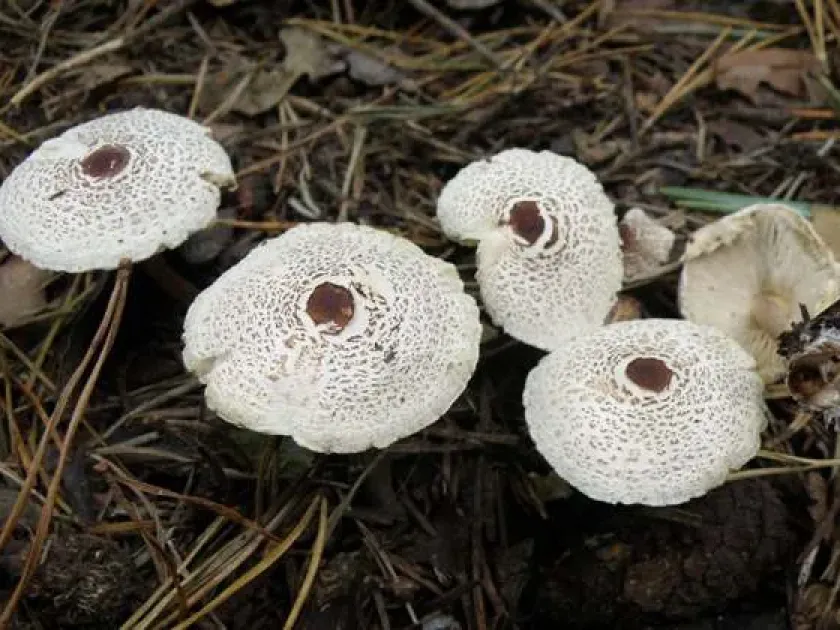
Morphologically, it is identified by its distinct dark, scaly cap and a well-defined annulus on the stem, which are characteristic of this species.
The reproductive strategy involves the dispersal of basidiospores, which germinate in damp, nutrient-rich environments to form new colonies.
Conditions for development
The growth of Lepiota felina is strongly favored by high humidity, shade, and moderate temperatures, typically found in late summer or autumn.
It prefers soils that are rich in partially decomposed woody organic material, making it common near tree stumps or wood-mulched garden beds.
Poor soil drainage and stagnant air flow around plants significantly increase the likelihood of colony establishment.
Inconsistent soil moisture, when combined with warm nights, creates the perfect environmental trigger for the emergence of fruiting bodies.
The fungus thrives in areas where organic debris is left on the soil surface without adequate incorporation or rapid degradation.
Why it matters
As a saprophyte, Lepiota felina does not attack or feed on live plant tissues, resulting in no direct damage to crop yields or plant health.
However, an abundant mycelial presence can displace beneficial soil bacteria and alter the local soil environment unfavorably for sensitive plants.
The primary concern is the toxicity of the mushroom itself; the species is poisonous and poses a health risk if accidentally encountered or consumed.
Dense mats of mycelium can occasionally impact soil aeration and water infiltration in small, localized areas within garden beds.
Frequent occurrence of this fungus is often a visual indicator that the garden soil requires better management of organic matter and aeration.
Protection
The most effective management strategy is rigorous site sanitation, including the removal of wood chips, twigs, and excessive dead organic debris.
Improving soil structure through regular tilling or aerating helps disturb the mycelial network and prevents deep colonization.
Ensuring proper drainage around planting zones minimizes the moisture levels required for the fungus to complete its life cycle.
Applying biological soil amendments, such as Trichoderma-based products, can promote a healthy soil micro-biome that outcompetes saprophytic species.
- Remove all fruiting bodies immediately upon sighting.
- Ensure adequate spacing between plants to improve airflow.
- Avoid using fresh, woody mulch in areas prone to dampness.
Discussion
No discussions yet — be the first.