
Lepiota erminea
Lepiota erminea
Description
Symptoms
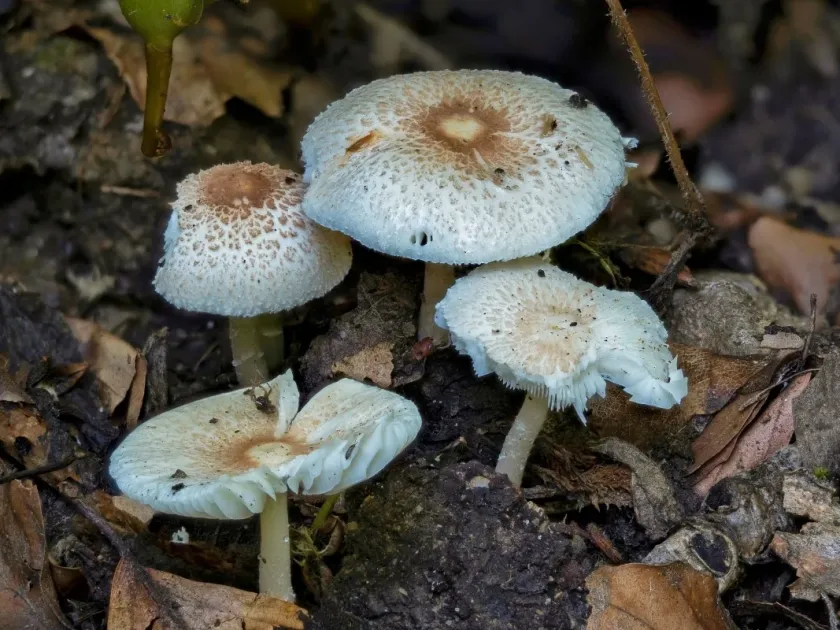
The most visible sign of its presence is the appearance of small, white to cream-colored mushrooms with fine scales on the cap surface (2–6 cm in diameter).
Within the soil, the presence of the fungus is identified by dense white mycelium mats that can resemble cobwebs, often located around the root zones of seedlings.
Plants affected by proximity to this fungus often show stunted growth, leaf yellowing, or general loss of vigor due to the competition for soil resources.
In greenhouses, the soil surface may develop a thin, white, powdery layer that becomes highly apparent after irrigation or heavy rainfall.
Massive colonies often grow in circular patterns or clusters around the stems, accompanied by a faint, characteristic fungal odor.
Pathogen
Lepiota erminea is a gilled saprotrophic fungus belonging to the Agaricaceae family. While not a typical parasite that infects living plant tissues, its mycelium thrives by colonizing organic-rich substrates in soil.
Biologically, it is classified as a saprotrophic soil fungus. Its mycelium forms extensive networks that compete with plant roots for vital nutrients and oxygen within the rhizosphere.
The fungus reproduces via spores, which are disseminated by wind, water, or mechanical means. Once in a favorable environment, these spores germinate to form new fungal colonies.
It is commonly found in greenhouses, cold frames, and heavily fertilized plots where organic matter availability supports its rapid expansion.
While it does not feed on living cells directly, the presence of Lepiota erminea indicates an imbalance in soil health, often linked to excessive organic load.
Conditions for development
Development is heavily dependent on soil moisture; optimal growth occurs when substrate humidity consistently remains above 70%.
High levels of non-decomposed organic matter, such as fresh manure, peat, or decaying plant residues, provide the primary energy source for the mycelium.
Warm temperatures in enclosed structures combined with poor ventilation create a perfect microclimate for the rapid expansion of fungal colonies.
The fungus prefers slightly acidic to neutral soil environments (pH 5.5–7.0) for active metabolic processes and spore germination.
Continuous cultivation of the same crops in the same soil without adequate sterilization promotes the annual buildup of fungal spores.
Why it matters
The primary harm is indirect, caused by intense competition with crop roots for essential soil nitrogen, phosphorus, and moisture.
Dense mycelial mats can restrict oxygen exchange in the soil, leading to root suffocation and increased vulnerability to water stress.
The fungus releases metabolic byproducts into the soil that can have an allelopathic effect, potentially inhibiting the normal development of delicate seedlings.
Weakened plants, struggling with poor nutrient access, become much more susceptible to secondary bacterial and fungal root pathogens.
The presence of large fungal biomass disrupts beneficial soil microbial communities, hindering long-term soil productivity and nutrient cycling.
Protection
The most immediate control step is the physical removal of fruiting bodies before they release spores, combined with deep soil tillage.
Improving irrigation management to prevent waterlogging and enhancing ventilation in greenhouses is crucial to reducing humidity levels.
Biological treatments, particularly those utilizing Trichoderma species, are effective in displacing Lepiota erminea and restoring soil health.
Avoid applying fresh, non-composted manure, as this directly fuels the expansion of saprotrophic fungi in the growing medium.
Adjusting the soil pH through liming can create an environment less favorable for this specific fungus while benefiting most common garden crops.
Discussion
No discussions yet — be the first.