
Lepiota clypeolaria
Lepiota clypeolaria
Description
Symptoms
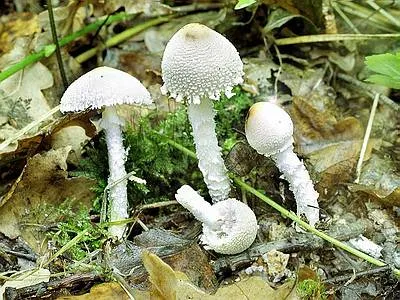
The fruit body of Lepiota clypeolaria is characterized by a cap that is 3–8 cm wide. Initially bell-shaped, it flattens with age and features a distinct dark, brownish-red center.
The cap surface is covered in delicate, woolly scales that are yellowish or brownish in color. These scales are loosely attached and can be wiped away easily.
The gills underneath the cap are free, crowded, and thin. They start as pure white but may develop a yellowish tinge as the mushroom matures.
The stem is long, slender, and fibrous, often reaching up to 10 cm. Young specimens possess a delicate ring, though this often disappears as the fungus ages.
The odor of the flesh is often described as pungent, earthy, or slightly chemical, which serves as a warning sign for those unfamiliar with the species.
Pathogen
Lepiota clypeolaria, commonly known as the shield dapperling, is a basidiomycete fungus in the Agaricaceae family. It is important to note that this organism is not a plant pathogen.
This fungus is a saprotroph, meaning it derives its nutrients from decaying organic matter such as leaf litter, twigs, and other woody debris found in soil. It does not infect or damage living plant tissues.
As a decomposer, it plays a beneficial role in the ecosystem by breaking down complex organic compounds into simpler forms, thereby cycling nutrients back into the soil.
It cannot initiate disease in agricultural crops, as it lacks the physiological mechanisms to parasitize living hosts. Its presence is usually an indicator of high soil organic content.
Agronomically, it should be categorized as part of the natural soil microbiota rather than a pest or disease agent that threatens crop production.
Conditions for development
Lepiota clypeolaria thrives in moist and shaded environments. It is most commonly observed appearing in late summer and autumn after significant rainfall.
It prefers areas with rich, leaf-covered soil, such as shaded borders, woodland edges, or thick garden mulch. It does not tolerate direct sunlight or extreme desiccation.
Optimal growth temperatures for the mycelium range between 15°C and 22°C. High humidity is crucial for the development of visible fruiting bodies.
The fungus colonizes areas where organic matter is accumulating and decaying, making it common in undisturbed parts of gardens or near compost heaps.
Spores are dispersed by wind and water, allowing the fungus to colonize new areas whenever moisture and organic nutrient conditions are met.
Why it matters
The primary concern regarding this fungus is its toxicity to humans and pets. It is considered an inedible and potentially poisonous mushroom.
Accidental ingestion can lead to severe gastrointestinal distress and other toxic reactions. It poses no physiological threat to agricultural or ornamental plants.
The risk is strictly restricted to health and safety. Gardens or parks where children and pets play should be monitored to prevent any chance of ingestion.
There is no economic harm to crop yields; rather, the fungus acts as a natural soil conditioner, though this does not outweigh the safety concerns in a human-frequented space.
No systemic disease is spread by this fungus, and it remains confined to the decomposition of non-living organic material on the soil surface.
Protection
Since the fungus is not a plant pathogen, there is no need for chemical fungicides or complex disease management programs.
- Manually remove and discard fruiting bodies to prevent spore dispersal.
- Reduce excess mulch or leaf litter in areas where mushrooms commonly appear.
- Improve soil aeration through regular shallow cultivation.
- Keep garden areas tidy to discourage colonization by saprotrophic fungi.
- Increase sunlight exposure by thinning dense canopy branches if necessary.
Discussion
No discussions yet — be the first.