
Lepiota boudieri
Lepiota boudieri
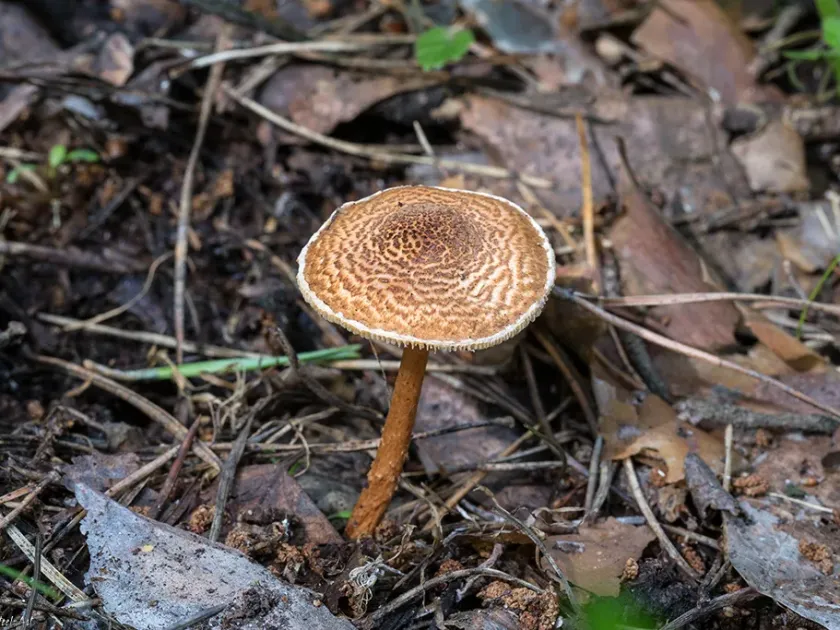
Description
Pathogen
Lepiota boudieri is a gilled mushroom species belonging to the Agaricaceae family. It is crucial to clarify that this organism is not a plant pathogen and does not cause any known plant diseases.
This species is a saprotroph, meaning it obtains its nutrients by decomposing dead organic matter. It lives in the soil and does not parasitize or infect living plant tissues.
The mycelium of this fungus thrives in humus-rich soil or leaf litter. It remains entirely independent of the crop's physiological processes, causing no harm to roots, stems, or foliage.
Taxonomically and ecologically, it functions as a decomposer, breaking down complex organic molecules into simpler substances, which actually contributes to soil health.
In conclusion, Lepiota boudieri should not be classified as a disease agent or a pest, as it is a natural component of a healthy soil ecosystem.
Conditions for development
The growth of Lepiota boudieri is highly dependent on the presence of organic matter. It prefers nutrient-rich substrates, often appearing in areas treated with compost or mulch.
Optimal environmental conditions for the development of fruiting bodies include periods of high humidity and moderate temperatures, typically occurring in late summer and autumn.
The fungus is commonly found in gardens, orchards, and agricultural fields where organic residues accumulate, providing a constant source of carbon for the mycelium.
Soil pH and moisture levels are key factors. The fungus thrives in moist conditions and neutral to slightly acidic environments that support rapid decomposition.
Spore dispersal occurs primarily via wind and physical contact. Once spores settle in a suitable moist, organic-rich environment, the colonization process begins.
Why it matters
Since Lepiota boudieri does not possess parasitic capabilities, it poses no threat to agricultural productivity or plant health. It is fundamentally non-pathogenic.
There are no reports of yield loss or crop damage attributed to this species. Its presence is generally considered an indicator of high soil organic matter content.
The only potential hazard associated with this fungus is the accidental ingestion of its fruiting bodies. Many mushrooms in the Lepiota genus are known to be poisonous.
The activity of this fungus assists in nutrient cycling. It aids in the mineralization process, making essential minerals more accessible to plant roots.
Farmers do not need to worry about this species, as it coexists harmlessly with crops and contributes to the overall breakdown of organic soil additives.
Protection
No chemical control measures or fungicides are required for Lepiota boudieri, as it does not negatively impact crop development or human-grown plants.
If the appearance of fruiting bodies is deemed undesirable in specific cultivation areas, simple physical removal of the mushrooms and shallow tilling can disrupt the mycelial growth.
Proper composting practices are recommended. Ensuring that organic fertilizers are fully decomposed before application reduces the substrate availability for saprotrophs.
Improving soil aeration and drainage can also make the soil surface less hospitable for mushroom fruiting, thereby reducing the prevalence of visible sporocarps.
Prevention is centered around standard agricultural practices that prioritize soil balance and appropriate organic matter management rather than chemical suppression.
Discussion
No discussions yet — be the first.