
Lepiota aspera
Lepiota aspera
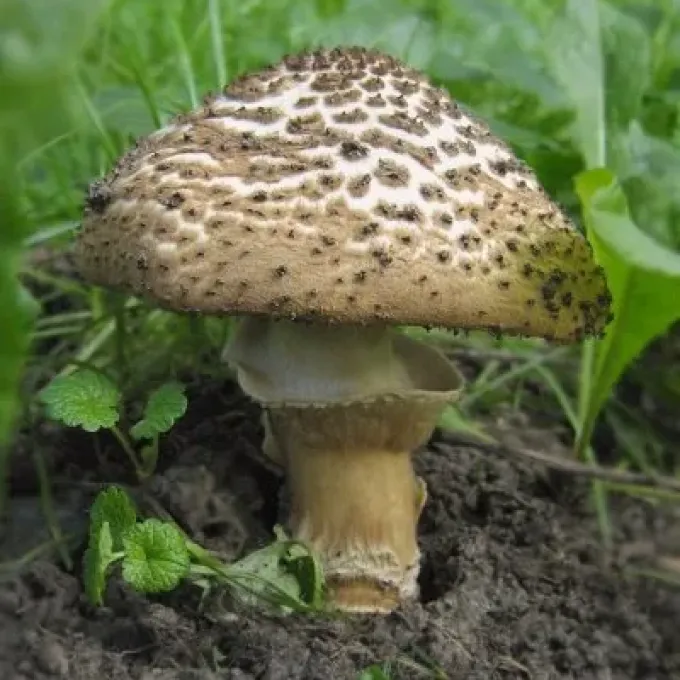
Description
Pathogen
Lepiota aspera, commonly known as the freckled dapperling, is a basidiomycete fungus belonging to the Agaricaceae family. In agronomy and plant pathology, it is classified strictly as a saprotroph rather than a primary plant pathogen.
This fungus performs a vital ecological role by decomposing organic matter, such as dead plant tissue, leaf litter, and wood debris. It secretes extracellular enzymes that break down complex organic polymers into simpler compounds, facilitating soil nutrient cycling.
The mycelium of Lepiota aspera thrives in nutrient-rich substrates, particularly those containing high levels of humus or decaying organic materials. It does not possess the biological mechanisms required to infect or damage healthy, living agricultural crops.
Mistaking this fungus for a disease-causing agent is a common misconception in home gardening and agricultural practice. Its presence in the field or orchard indicates that the soil is rich in organic matter and biologically active, rather than indicating an infection of the crops.
While Lepiota aspera does not pose a direct threat to plant health, its growth pattern demonstrates the high availability of substrate. It functions as a natural decomposer, helping to recycle carbon back into the soil ecosystem efficiently.
Conditions for development
The growth of Lepiota aspera is primarily dependent on the presence of suitable organic substrates. It prefers loose, well-mulched soils, damp woodland edges, and garden beds rich in decayed plant materials, wood chips, or organic amendments.
High relative humidity and moderate temperatures are essential for the development of the fungal fruiting bodies. These mushrooms typically appear in late summer and autumn when moisture levels in the soil and atmosphere are sufficiently high.
Soil pH and aeration also influence its distribution. While it can adapt to various soil types, it is most frequently observed in acidic or neutral soils that are kept consistently moist. Poorly drained soils provide an ideal environment for the extensive spread of its mycelial network.
The fungus propagates through spores, which are easily dispersed by wind, water splashing, or human activity. These spores are ubiquitous in the environment and will colonize any available organic debris that meets the necessary moisture and nutrient requirements.
To mitigate the conditions favoring this fungus, gardeners and farmers should focus on managing surface organic debris and ensuring adequate drainage. Reducing the volume of stagnant moisture in the root zone can effectively restrict the expansion of the mycelium.
Why it matters
Lepiota aspera causes no direct physiological harm to living plants. It does not feed on living tissues, nor does it obstruct nutrient uptake by roots under normal field conditions, making it benign to agricultural crops and ornamental plants.
The primary concern regarding this species is the toxicity of its fruiting bodies. Lepiota aspera is considered poisonous, posing a health risk to humans and domestic animals if ingested. It should be treated with caution, especially in areas accessible to children or pets.
Indirectly, large-scale mycelial growth can influence soil moisture dynamics. A dense mat of mycelium may temporarily reduce the soil's permeability to water, which might be a minor concern in areas with compacted soils or during periods of low rainfall.
In some nursery settings, the presence of these fungi might indicate an excessive amount of undecomposed organic matter, which could foster an environment conducive to other, more harmful soil-borne pathogens, such as species causing root rots.
In summary, the harm associated with Lepiota aspera is mainly related to its toxicity and aesthetic concerns in cultivated landscapes. It does not represent a threat to the productivity or survival of the plants themselves.
Protection
Since Lepiota aspera is a saprotrophic fungus and not a pathogen, the use of chemical fungicides is unnecessary and discouraged. Management strategies should focus on cultural practices that modify the habitat to make it less suitable for the fungus.
Good soil management is the most effective approach. Regularly incorporating organic matter into the soil through tilling or composting accelerates the decomposition process, leaving less raw material on the surface for the fungus to utilize.
Improving drainage systems is vital for controlling fungal proliferation. By ensuring that water does not accumulate in the topsoil, you create a less hospitable environment for the mycelium to survive and produce fruiting bodies.
For ornamental or high-maintenance areas, mechanical removal of the fruiting bodies is recommended. Carefully harvesting the mushrooms, including the base, and disposing of them in a bin or deep bury spot prevents the release of mature spores.
Maintaining a balanced soil pH through liming can also create conditions that are less favorable for certain saprotrophic species. Combining these cultural practices results in a healthier growing environment for crops while effectively managing fungal presence.
Discussion
No discussions yet — be the first.