
Leotia nana
Leotia nana
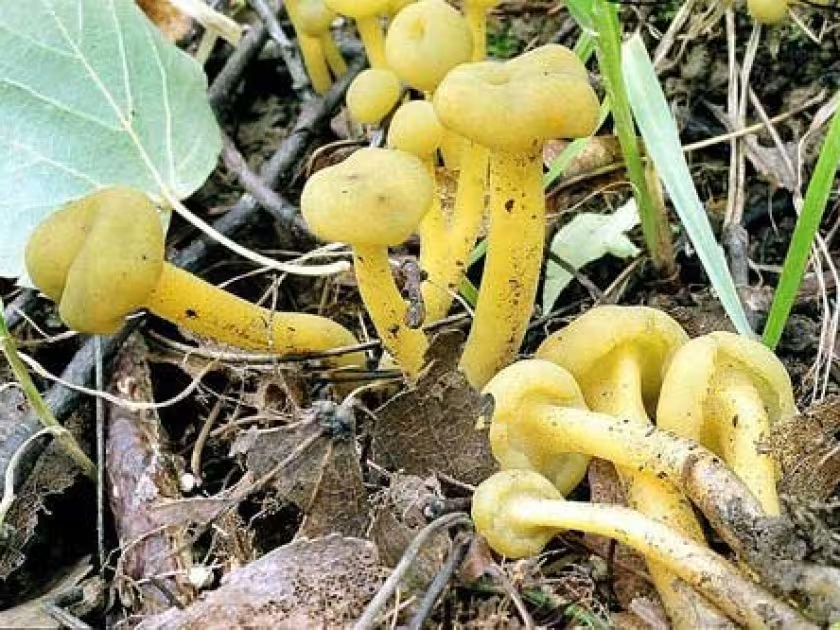
Description
Pathogen
Leotia nana (known as the dwarf jelly baby) is a species of fungus in the Leotiaceae family. It is recognized primarily as a saprotrophic organism that plays a role in the decomposition of organic matter in forest environments.
Biologically, it is classified as an ascomycete. The fruiting bodies are gelatinous and have a unique, often cap-like morphology, making them distinct subjects for mycological study in damp woodland areas.
While often grouped under fungal pathogens in broad contexts, this species does not cause significant diseases in agricultural crops; its primary function is the breakdown of forest litter.
The fungus propagates through spores that are dispersed by wind or water, colonizing moist organic substrates such as decaying leaves, pine needles, or nutrient-rich forest soil.
It typically occurs in localized colonies where the moisture level remains consistently high throughout the growing season, supported by dense vegetation cover.
Conditions for development
The development of Leotia nana is strictly dependent on soil moisture and ambient humidity levels. It thrives during periods of frequent rainfall and cloudy weather.
The ideal substrate for this fungus consists of leaf mold, humus, and decomposing woody debris in shaded, humid forest microclimates that prevent surface evaporation.
Temperature plays a crucial role; the fungus favors cool, temperate climates and stops growing during heatwaves or periods of prolonged drought, where its fruiting bodies quickly desiccate.
Soil acidity also influences its distribution, as the species is well-adapted to the slightly acidic conditions typically found in woodland soils and organic-rich substrates.
Shaded woodland edges and moss-covered areas provide the best conditions for the fungus to establish itself and develop its characteristic gelatinous structures.
Why it matters
Leotia nana is not considered a primary pathogen for crops. Its impact is mostly ecological rather than economic, though it can be a nuisance in forest nurseries.
In nursery settings, overpopulation of this fungus can indicate poor soil drainage and stagnant moisture conditions, which are indirectly harmful to the health of young seedlings.
It can compete for organic nutrients within the soil layer, which may subtly affect the rhizosphere of nearby plants if the fungal population becomes excessively dense.
While the fungus itself does not cause necrosis or tissue damage to living trees, its presence is a bio-indicator of excessive wetness in the soil profile.
Economic damage is generally negligible unless the presence of the fungus impacts the aesthetic value of nursery stocks or indicates conditions that promote more harmful soil-borne pathogens.
Protection
Effective management of Leotia nana relies primarily on habitat modification rather than chemical application, as its role in nature is largely benign.
The most important control strategy is improving soil drainage. By preventing the accumulation of stagnant water, nursery managers can significantly limit the fungus's ability to fruit.
Thinning out dense vegetation and improving air circulation near the soil surface helps to reduce micro-humidity, creating an unfavorable environment for this moisture-loving species.
Regular sanitation of the site, including the removal of excess leaf litter and decaying debris, removes the organic source the fungus requires for colonization.
In intensive forestry applications, if control is deemed necessary, standard fungicide treatments used for soil-borne pathogens can be applied, though cultural practices remain the preferred approach.
Discussion
No discussions yet — be the first.