
Lenzites trabea
Lenzites trabea
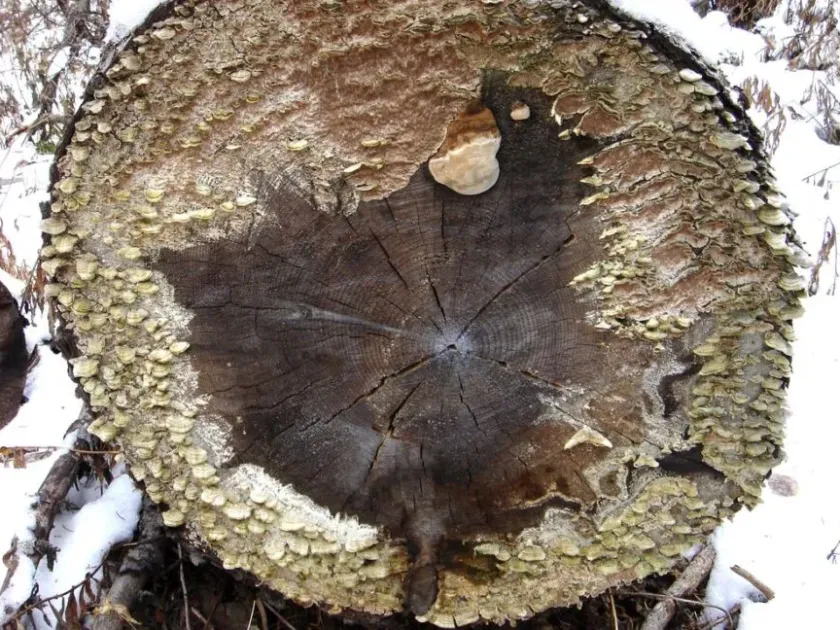
Description
Symptoms
The primary symptom of infection is the darkening of wood tissue, which takes on a characteristic deep brown color. As the rot progresses, the wood loses its tensile strength and elasticity.
A diagnostic feature of Lenzites trabea infection is the formation of deep cubical cracks. The wood eventually breaks down into small, fragile, cubic fragments that crumble easily into a powder when compressed.
The emergence of the fungus's fruit bodies on the wood surface indicates an advanced stage of internal colonization. These structures are typically found in areas with high moisture accumulation or poor ventilation.
Underneath the surface, deep within the wood fibers, a dense network of mycelium may be present. This fungal growth is responsible for the systematic breakdown of the wood's structural components.
- Discoloration of wood to a darker brown tone.
- Cubic cracking and fragmentation of wood fibers.
- Presence of gilled, bracket-shaped fruit bodies.
- Loss of structural strength and hardness of timber.
- Accumulation of mycelial mats within the wood structure.
Pathogen
Lenzites trabea is a basidiomycetous fungus belonging to the Polyporaceae family. It is a well-known pathogen responsible for causing destructive brown rot in various softwood and hardwood species.
The fungus secretes specialized enzymes capable of decomposing cellulose and lignin within wood fibers. This degradation process fundamentally alters the structural integrity and chemical composition of the host wood.
The fungal fruit bodies appear as bracket-like, semicircular, or effused-reflexed structures. They often grow in clusters and possess a distinct brownish, hairy surface that is easily recognizable.
A defining characteristic of Lenzites trabea is its lamellate (gilled) hymenophore. These gills are often branched and anastomosing, creating complex labyrinthine patterns that help distinguish it from other wood-decaying species.
The pathogen is highly resilient and adapted to diverse environmental conditions. It remains metabolically active across a broad temperature range, allowing it to colonize both living trees and processed timber effectively.
Conditions for development
Lenzites trabea requires relatively high moisture content in wood, ideally between 30% and 60%, to thrive. It is highly sensitive to moisture levels and becomes dormant under very dry conditions.
The optimal temperature range for the growth of Lenzites trabea is between 20°C and 30°C. In this range, the enzymatic activity is at its peak, leading to rapid degradation of the host material.
Poor ventilation and high-humidity environments create ideal conditions for the colonization of this fungus. Stagnant air allows spores to settle and germinate on exposed or vulnerable surfaces.
Mechanical damage, cracks, and insect boreholes act as primary entry points for infection. Once established, the fungus spreads throughout the wood, utilizing existing pathways to expand its colony.
The fungus spreads via spores that are easily carried by wind or wood-boring insects. This efficient dissemination method allows the pathogen to colonize new timber stocks or forest stands rapidly.
Why it matters
The main danger of Lenzites trabea is its ability to rot wood internally, meaning the exterior may appear sound even when the interior is severely degraded. This hidden decay poses significant safety risks.
In forestry, the pathogen causes substantial economic loss by reducing the commercial value of lumber and accelerating the mortality of stressed or wounded trees.
For construction, the presence of Lenzites trabea is critical. Structural elements like floor joists, beams, and support posts weakened by brown rot can lead to structural failure or building collapse.
The fungus is capable of infecting a wide array of wood types, including various coniferous species. Its ability to adapt to different substrates makes it a pervasive threat in many wood-related sectors.
Repairing damages caused by this pathogen is often labor-intensive and costly. In many cases, full replacement of the affected structural components is the only viable option to ensure safety.
Protection
Proactive management is the most effective way to combat Lenzites trabea. Treating timber with chemical preservatives during the production phase is essential for long-term protection.
Maintaining low wood moisture content is the most reliable preventative measure. Ensuring timber is dried to below 20% moisture inhibits the growth and germination of fungal spores.
Good ventilation in buildings and storage areas is crucial. Proper design prevents condensation buildup, thereby depriving the fungus of the moisture required to survive and grow.
In forest management, regular monitoring and sanitation, including the removal of infected trees and logging debris, can help prevent the spread of spores to healthy timber stands.
If an infestation is discovered, all affected wood should be physically removed, ensuring a margin of sound wood is also cut away. Following removal, the area should be treated with fungicides to prevent recurrence.
Discussion
No discussions yet — be the first.