
Lenzites betulina
Lenzites betulina
Description
Symptoms
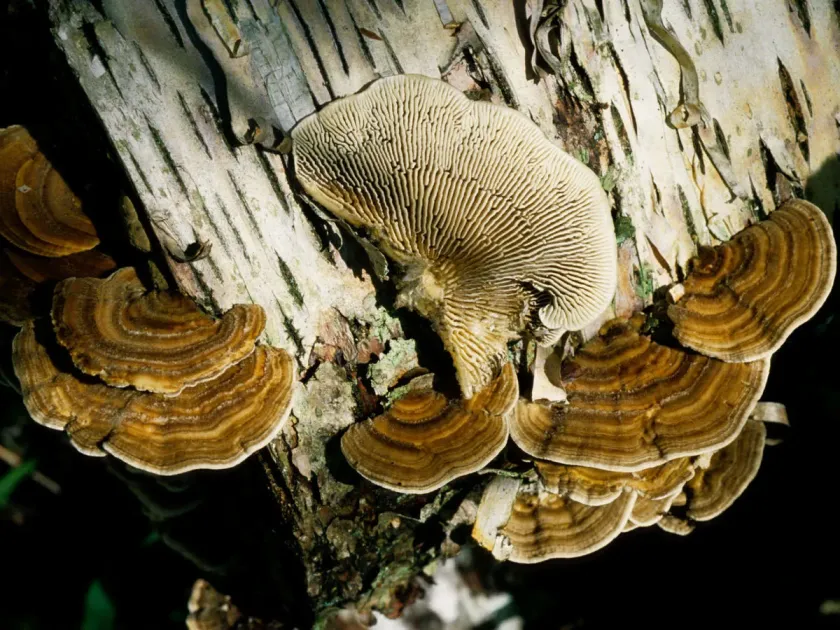
The primary symptom of infection is the appearance of fan-shaped or semicircular fruiting bodies growing in tiers on the bark or wood surface. These are tough, leathery, and often persist throughout the year.
The upper surface of the cap features a dense, velvety texture and is often decorated with distinct concentric zones of grey, beige, or brownish shades.
The underside (hymenium) is characterized by a gilled structure, which is a diagnostic feature. These gills are dense and often interconnected, distinguishing the fungus from other polypores that have pores.
Infected wood exhibits signs of white rot. It becomes bleached, loses density, develops longitudinal cracks, and eventually begins to shed its bark as the structural integrity of the wood fails.
Internal decay often leads to the wood becoming brittle and porous. Observation of these structural changes indicates that the fungal invasion has reached a deep, advanced stage within the tree's anatomy.
Pathogen
Lenzites betulina is a wood-decaying basidiomycete fungus. It acts primarily as a saprotroph, but it can also manifest as a weak parasite on stressed or weakened deciduous trees.
This fungus targets a wide range of broadleaf species, including birch, alder, beech, oak, and poplar. It is highly efficient at breaking down structural compounds like cellulose and lignin within the wood matrix.
The fungus colonizes the internal wood tissue, where the mycelium spreads to digest the structural components. This digestive process gradually transforms the solid wood into a soft, fibrous, and fragile substance.
The life cycle is marked by the production of distinctive fruiting bodies on the bark surface. These bodies release massive quantities of spores, which are dispersed by wind currents to colonize new substrates.
Biology-wise, Lenzites betulina is remarkably resilient. It possesses a high tolerance for varying climatic conditions, allowing the mycelium to persist within the woody host for many years.
Conditions for development
Lenzites betulina thrives in high humidity and moderate temperatures. It colonizes wood most effectively in environments with poor air circulation, such as dense, overgrown wooded areas.
The infection usually gains entry through wounds or physical damages. Frost cracks, pruning stubs, sunscald, or injuries from wildlife provide the necessary access points for spores to germinate.
Trees in a weakened physiological state are significantly more vulnerable. Factors such as nutrient deficiency, soil compaction, or long-term drought can predispose trees to successful fungal colonization.
The optimal temperature for fungal growth is between 15 and 25 degrees Celsius. However, the fungus can survive sub-zero temperatures, remaining dormant in the wood until favorable conditions return.
Proximity to decaying logs or untreated stumps creates an abundant reservoir of spores. The presence of such woody debris in the immediate vicinity is a major catalyst for the spread of the fungus.
Why it matters
The fungus is highly destructive, causing significant degradation of wood. In industrial forestry, this leads to substantial economic losses by reducing the quality and volume of usable timber.
In residential landscapes, the primary concern is tree safety and aesthetics. Infected trees lose their structural stability, creating a severe hazard of falling branches or whole-tree collapse.
Lenzites betulina acts as an opportunistic pathogen that can spread to healthy trees if those trees sustain even minor wounds, facilitating a gradual decline of the entire stand.
The interruption of nutrient and water flow caused by interior decay leads to dieback in the crown, significantly diminishing the tree's health and ability to produce foliage.
Management and removal of decaying trees incur high maintenance costs, especially when the trees are located near buildings or paths, requiring specialized arborist services.
Protection
Effective management begins with strict sanitation. Removing dead wood, fallen logs, and old stumps eliminates the primary breeding grounds for the fungus.
Preventative care is essential for healthy trees. This includes prompt treatment of wounds with appropriate protective dressings and careful pruning practices to prevent leaving large, exposed surfaces.
If fruiting bodies are detected, they should be removed and destroyed to limit spore production and dispersal within the area. Do not simply drop them on the soil, as this maintains the pathogen.
Promoting tree vitality is a long-term control strategy. Providing adequate irrigation and maintaining proper soil health increases the tree’s natural defenses against potential fungal invaders.
- Regular inspections to identify early-stage bark damage.
- Sanitizing pruning equipment to prevent cross-contamination.
- Maintaining proper spacing to ensure adequate airflow in the tree canopy.
Discussion
No discussions yet — be the first.