
Lenzites
Lenzites
Description
Symptoms
The most visible sign of infection is the emergence of characteristic fruiting bodies on the surface of bark or wood. These bodies are typically fan-shaped or shelf-like.
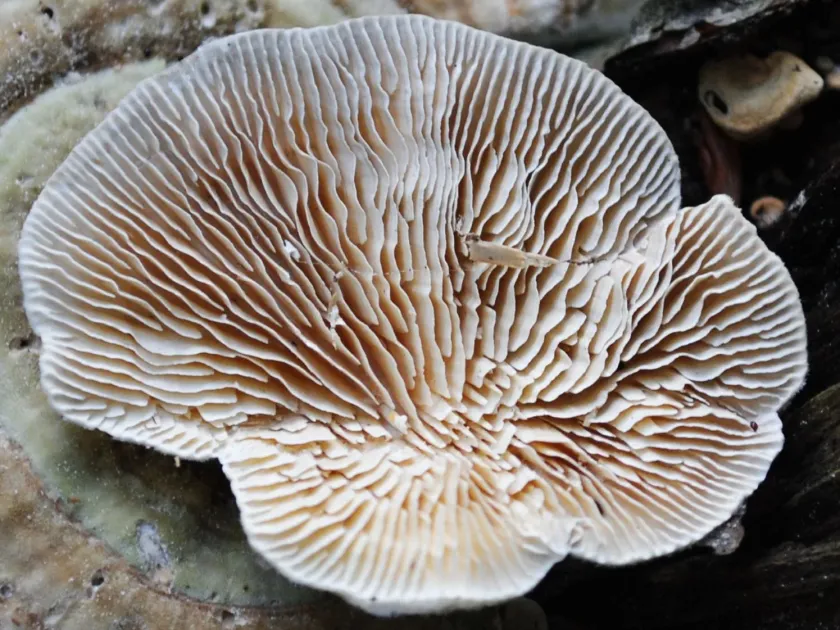
The hymenophore (the underside of the fruiting body) of Lenzites is characterized by lamellae or gill-like structures, which is a key diagnostic feature distinguishing it from other polypores.
Affected wood displays a distinct dark brown color. The tissues become brittle and prone to crumbling into small cubic fragments when subjected to mechanical stress.
White fungal mats, consisting of dense mycelium, can often be found inside the affected wood, indicating the deep progression of the fungal infection.
Trees lose their structural stability, frequently resulting in treefall or stem snapping, while wooden buildings may suffer from the failure of structural support beams.
Pathogen
Lenzites is a genus of wood-decaying basidiomycete fungi belonging to the family Polyporaceae. It acts primarily as a saprotroph, but can sometimes function as a facultative parasite, causing intensive brown cubical rot.
The primary hosts include various coniferous and deciduous tree species, as well as structural timber used in buildings. Lenzites betulinus is one of the most widely recognized species within this genus.
The fungus breaks down cellulose and lignin, leading to a rapid loss of structural integrity in wood tissues. Throughout its life cycle, it produces fruiting bodies capable of remaining viable for extended periods.
The fungal mycelium penetrates deep into the wood structure, creating an extensive network that gradually destroys the cell walls. Spores are dispersed over large distances by air currents.
The biology of Lenzites allows it to adapt to various humidity levels, making it a significant threat to both forest ecosystems and wooden building structures.
Conditions for development
Lenzites development thrives under conditions of high humidity and moderate temperatures. Moist, poorly ventilated environments create ideal conditions for spore germination and colonization.
The fungus prefers weakened living trees or dead wood with high moisture content. Temperature ranges between 20–25°C are considered optimal for mycelial growth.
Physical damage to the bark, frost cracks, or improper pruning cuts significantly facilitate the entry of fungal spores into the wood tissue.
In forest stands, the spread of the disease is promoted by overcrowding and the failure to perform timely sanitary thinning of infected trees.
In the construction sector, primary risk factors include the lack of antiseptic treatment for timber and direct exposure of wood to soil or trapped condensation.
Why it matters
The pathogenicity of Lenzites lies in its ability to degrade healthy wood into decay in a very short time, causing substantial economic losses in the forestry industry.
Infestation of orchard trees leads to premature decline and reduced yield. Infected trees serve as a constant source of spores for nearby healthy plants.
Wood rot caused by Lenzites is highly dangerous for wooden buildings, as it targets vital load-bearing beams, floor joists, and roof trusses.
The rapid destruction of wood tissue renders the material unsuitable for further use in construction or furniture manufacturing.
As structural damage often occurs internally, it often remains undetected until the stability of the entire structure is compromised, leading to significant safety risks.
Protection
The primary prevention strategy involves good agricultural practices: timely removal of dead branches and sealing tree wounds with specialized pruning paste.
It is essential to maintain dryness in wooden structures by ensuring proper ventilation and protecting timber from direct exposure to precipitation.
All detected fungal fruiting bodies must be cut off and destroyed, preferably by burning, to minimize the release and spread of spores.
To protect timber, professional antiseptics and fungicidal treatments should be applied, as they effectively inhibit mycelial development at early stages.
Regular monitoring of tree health and structural timber, combined with the prompt removal and disposal of infected wood fragments, is crucial for effective control.
Discussion
No discussions yet — be the first.