
Lentitheciaceae fungi
Lentitheciaceae
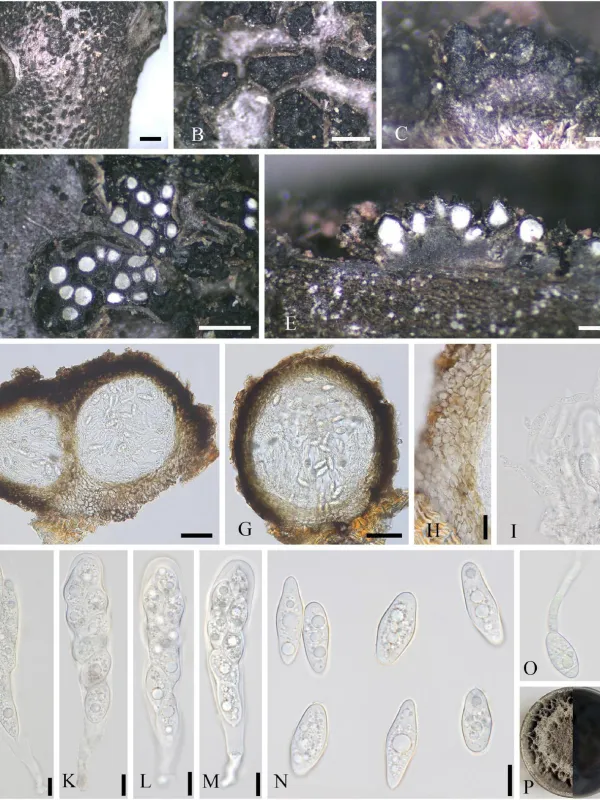
Description
Symptoms
Initial symptoms of infection typically manifest as chlorotic spots on leaf blades, which eventually turn brown or grey. As the disease progresses, the affected tissues die, resulting in localized necrosis.
Stems of infected crops often display dark streaks or depressed lesions. These symptoms indicate that the mycelium has successfully invaded the epidermis and begun degrading the internal fibers of the plant.
Under conditions of high humidity, microscopic black dots may appear on the surface of the lesions. These are pseudothecia, signaling the completion of the fungal development cycle and readiness for further spore dispersal.
Plants affected by Lentitheciaceae fungi exhibit general growth suppression and stunted development. Leaves may yellow and drop prematurely, which directly reduces photosynthetic capacity and final crop yield.
Examination of the root collar or base of the plant may reveal a specific mycelial growth or coating, particularly noticeable in early morning hours when dew is present.
Pathogen
Lentitheciaceae is a family of sac fungi belonging to the class Dothideomycetes. This diverse group of ascomycetes primarily functions as saprotrophs; however, certain species can exhibit pathogenic behavior, causing significant damage to plant tissues.
The pathogens in this family are characterized by the production of pseudothecia, which develop within host plant tissues or debris. These fungi possess high adaptive capabilities, allowing them to survive and propagate under varied climatic conditions.
The biological cycle often features the sexual stage (teleomorph) as the dominant form during the overwintering of the pathogen. The presence of ascospores enables the rapid and mass dispersal of the fungus at the onset of the growing season.
In agronomy, these fungi are often classified as causal agents of various spots, blights, and necrotic conditions. Accurate identification is crucial, as many species within the Lentitheciaceae family are highly specialized parasites.
The type of disease caused is typically defined as tissue necrosis, leading to the decay of leaves or stems. If the fungus penetrates deep into the vascular system, the infection can become systemic, severely impacting the plant's structural integrity.
Conditions for development
The development of Lentitheciaceae fungi is favored by periods of persistent rainfall combined with moderate air temperatures. High humidity acts as the primary trigger for the release of ascospores from fruiting bodies.
The optimal temperature range for the development of most species is between 18 and 25 degrees Celsius. However, spores often maintain viability even when subjected to significant temperature fluctuations during the transition seasons.
Overcrowded crop stands create a microclimate with poor aeration, which promotes disease progression. Restricted airflow prevents the surface of plants from drying quickly after rain, providing an ideal environment for spore germination.
Large amounts of crop residue left on the field significantly increase the primary inoculum level. Since the fungus persists on stubble and old weeds, failure to rotate crops becomes a critical risk factor for disease outbreaks.
Imbalanced nitrogen fertilization, which stimulates excessive vegetative growth, renders plant tissues more vulnerable to pathogen penetration. Weakened plants lack the physiological resistance to effectively combat fungal colonization.
Why it matters
The primary economic impact is a substantial reduction in the quality of agricultural produce. In cereal crops, infection can lead to shriveled grains, significantly lowering their commercial grade and nutritional value.
Harm also manifests through the premature drying of aerial plant parts. This shortens the grain-filling period or fruit development stage, resulting in significant yield losses that can reach up to 30-40% in severe epidemic years.
Infected plants exhibit increased susceptibility to secondary infections and pest attacks. Fungal colonization weakens the plant's immune system, allowing opportunistic pathogens to accelerate tissue degradation.
Economic damage includes both direct yield losses and the high cost of intensive protective measures. The necessity for fungicide applications and additional agronomic interventions significantly inflates the production costs.
For perennial crops, the disease may become chronic, progressively exhausting the plant over consecutive seasons. This often leads to the premature decline of plantations and the need for early replanting.
Protection
The primary management strategy is the implementation of a rigorous crop rotation schedule. Excluding host crops from the rotation for 2–3 years effectively reduces the inoculum density in the soil and on the field.
Deep plowing and the thorough incorporation of crop residues are essential preventive measures. These practices facilitate the rapid decomposition of stubble and the destruction of fungal pseudothecia by soil microorganisms.
Fungicide application remains a necessary tool during periods of active spore dissemination. Systemic fungicides are recommended, as they can penetrate plant tissues to halt mycelial development.
The use of genetically resistant varieties is the most sustainable approach to minimizing losses. Continuous breeding programs help mitigate the risks associated with Lentitheciaceae infections.
- Optimizing plant density to improve air circulation and canopy drying.
- Timely removal of weeds that act as secondary reservoirs for the pathogen.
- Balancing mineral nutrition with emphasis on potassium and phosphorus.
- Regular phytosanitary monitoring of crops during the early growing season.
Discussion
No discussions yet — be the first.