
Lentinus
Lentinus
Description
Symptoms
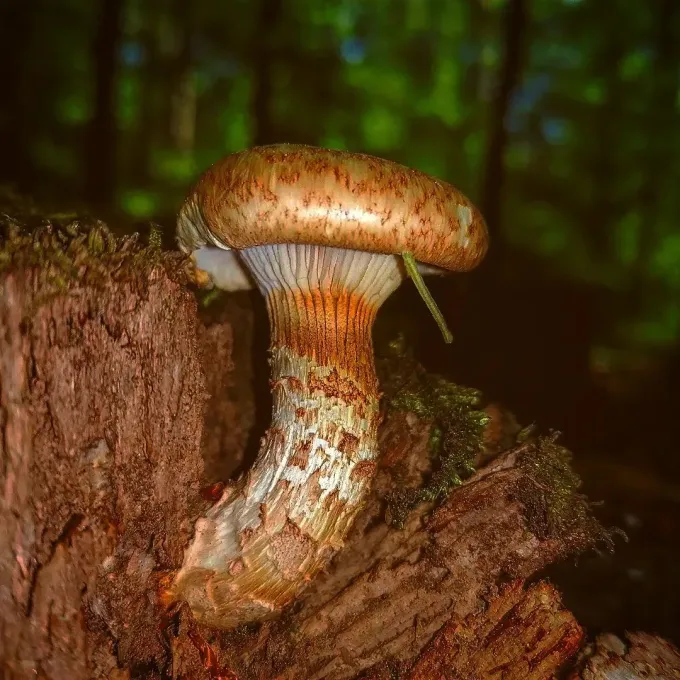
The most distinctive signs are the fruiting bodies, which appear as funnel-shaped caps with dark scales, often emerging from bark crevices or damaged areas.
The infected wood turns white, fibrous, and brittle. As the decay progresses, the structural integrity of the wood is compromised, leading to the formation of hollows.
Foliage on affected branches often shows symptoms of chlorosis, followed by wilting and premature drop, reflecting the disruption of water and nutrient transport.
Tapping the trunk may reveal a dull, hollow sound, indicating significant interior rot that is not visible from the exterior of the bark.
Bark in infected zones may peel off or crack, often revealing mats of fungal mycelium beneath the surface during humid conditions.
Pathogen
The disease is caused by wood-decaying fungi of the genus Lentinus, most notably Lentinus tigrinus, which induces white rot in timber. These fungi are potent saprotrophs and occasional parasites.
The fungus infiltrates the tree through bark wounds, pruning cuts, or frost cracks. Once inside, its mycelium penetrates the xylem, where it produces enzymes that break down complex wood polymers like lignin.
Reproduction occurs through spores released from the cap-shaped fruiting bodies. These spores are dispersed by wind and water, landing on susceptible surfaces to initiate new infections.
The fungus is highly resilient, capable of surviving long periods within the wood structure before producing visible fruiting bodies on the surface of the trunk or stump.
Biology of the pathogen involves a complex cycle of hyphal growth that effectively converts dense wood into a fragile, sponge-like substance over several growing seasons.
Conditions for development
High humidity and mild temperatures are the primary catalysts for the rapid growth and spread of Lentinus fungi throughout the year.
Trees that are under environmental stress, such as drought, extreme cold, or poor nutrition, are significantly more susceptible to successful fungal colonization.
Mechanical damage to the tree, often resulting from improper pruning or storm events, provides the perfect entry point for the fungus to establish its mycelial network.
Poor orchard or forest management, specifically leaving deadwood and stumps on the ground, creates a massive reservoir of inoculum that spreads to healthy trees.
Limited airflow within dense plantations creates microclimates with persistently high moisture levels, which favor the germination of fungal spores.
Why it matters
The pathogen causes severe structural damage, often leading to tree failure, windthrow, and the total loss of the tree's utility in orchards or timber lands.
Crop yields are significantly reduced because the compromised xylem cannot support the physiological demands of fruit production and general plant health.
The market value of wood is destroyed by the fungal rot, making it unsuitable for construction or high-quality carpentry even after the tree is harvested.
If left unmanaged, the fungus acts as a persistent source of infection, eventually decimating surrounding healthy trees in the vicinity.
Costs associated with the removal of hazardous, rotting trees often exceed the expenses of preventative maintenance measures.
Protection
Sanitation is the most effective management strategy, including the prompt removal of infected wood, dead branches, and stumps from the growing site.
All pruning wounds and physical injuries to the bark should be immediately sealed with protective wound paint or copper-based fungicides to prevent entry.
Maintaining vigorous tree growth through proper fertilization and irrigation helps the plant develop natural defenses against wood-decaying pathogens.
Routine inspections are essential; early detection allows for the removal of localized infections before the mycelium reaches the central core of the tree.
Application of broad-spectrum fungicides as a protective spray on tree trunks can be used in high-risk areas to inhibit the initial colonization by fungal spores.
Discussion
No discussions yet — be the first.